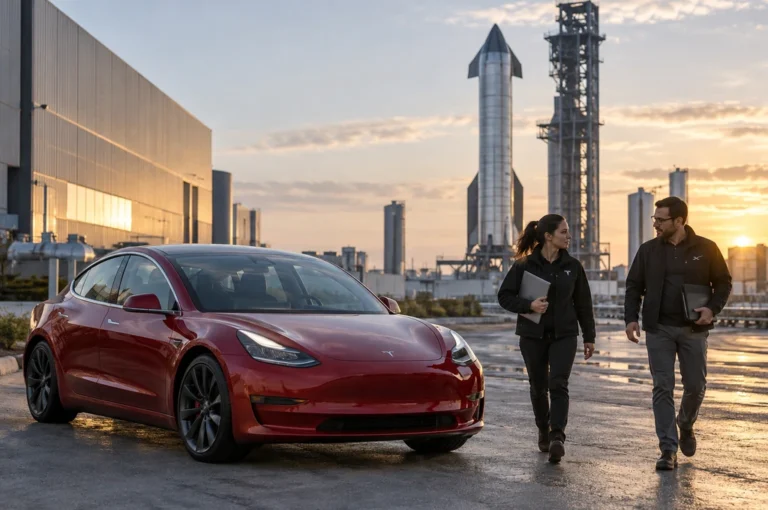
Trading sentiment around SpaceX and Tesla stocks turned volatile after reports emerged that independent board committees are reviewing a potential corporate tie-up. Elon Musk noted that an operational combination carries strategic merit. Yet blending a publicly traded automotive company with a capital-heavy aerospace venture introduces complex risks for ordinary shareholders. Before jumping into speculative positions, retail traders need to evaluate whether their portfolios can absorb the fallout from such an unprecedented consolidation.
⚡ Quick AI Overview & Key Recommendation
Value investors, pure-play electric vehicle enthusiasts, and income-focused portfolios should avoid SpaceX and Tesla stocks during active merger discussions. The proposed combination exposes electric car manufacturing cash flows to aerospace capital expenditure cycles, increases regulatory scrutiny under the U.S. Securities and Exchange Commission, and dilutes pure EV exposure with speculative launch economics.
Behind the corporate posturing lies a simple reality. Tesla operates in a fiercely competitive global car market where operating margins face continuous pressure. SpaceX consumes billions of dollars in development funding for orbital rockets and satellite constellations. A unified corporate structure alters how Wall Street values both enterprises.
SpaceX and Tesla Stocks: Quick Comparison & Key Specifications
Examining both entities side by side illustrates the financial divide between an established public automaker and a private orbital launch enterprise. Market watchers must weigh distinct balance sheets before deciding whether to own these equities together.
| Metric | Tesla Inc. (TSLA) | SpaceX (Space Exploration Technologies) | Combined Conglomerate Profile |
|---|---|---|---|
| Primary Sector | Electric Vehicles & Clean Energy | Aerospace, Defense & Satellite Comms | Industrial Tech Conglomerate |
| Reporting Status | Public (Nasdaq Listed) | Private Corporation | Proposed Public Entity |
| Primary Revenue Source | Automotive Sales & Regulatory Credits | Launch Contracts & Starlink Broadband | Diversified Transport & Data Services |
| Regulatory Oversight | NHTSA, SEC, State Regulators | FAA, DoD, FCC, NASA | Extensive Multi-Agency Scrutiny |
| Free Cash Flow Profile | Consistently Positive Operating Cash | Capital Absorptive Rocket Development | Unpredictable Consolidated Cash Margins |
| Main Competitors | BYD, Legacy Automakers, Rivian | Blue Origin, United Launch Alliance | Global Industrial Conglomerates |
Market analysts on fool[dot]com and ibtimes[dot]com[dot]au noted that combining these distinct entities requires significant balance sheet reconciliation. Investors assessing whether Is Tesla Or Rivian Stock The Better Buy for EV Investors Today? should realize that adding rocket hardware into the corporate equation radically alters automotive sector multiples.
Top Ranked Models: In-Depth Reviews & Real-World Performance
Different classes of market participants maintain conflicting financial goals. When analyzing SpaceX and Tesla stocks, three specific investor archetypes encounter immediate structural hazards.
1. The Pure-Play EV and Clean Tech Enthusiast
Pure-play clean mobility investors allocate capital specifically to drive zero-emission road transport and grid storage deployment. Tesla has served as the anchor holding for this demographic, backed by manufacturing scale and charging leadership. In fact, understanding How Tesla EV Chargers Optimize Clean Energy and Spare Powerwall Solar Output explains why purists value the energy transition angle.
A merger instantly fractures this investment thesis. SpaceX produces orbital launch systems powered by hydrocarbon and cryogenic propellants. While Starlink provides valuable communication infrastructure, it has zero connection to terrestrial emissions reduction. Pure-play sustainable portfolios may face mandate violations by holding heavy aerospace assets, forcing institutional divestment.
2. The Traditional Value and Free Cash Flow Investor
Traditional fundamental investors prioritize predictable operating cash flow, measurable price-to-earnings ratios, and clean balance sheets. Tesla fought for a decade to achieve consistent automotive profitability, finally delivering reliable annual cash flows. Data tracked on Bloomberg reflects the premium valuation multiple Tesla already carries relative to traditional carmakers.
Absorbing SpaceX disrupts this metric. Developing next-generation rockets demands perpetual capital expenditure with protracted payback horizons. Value managers who tolerate automotive cyclic risk will rarely accept aerospace development cycles where single operational testing failures write off tens of millions of dollars in seconds.
3. The Low-Volatility and Capital Preservation Investor
Conservative investors seeking long-term index stability often acquire large-cap market leaders to reduce drawdown risks. Yet holding shares exposed to dual-industry regulatory battles is dangerous. Regulatory disclosures monitored by the U.S. Securities and Exchange Commission indicate that cross-company transactions face thorough governance challenges.
Musk often floats experimental corporate alignments across his executive suite. For risk-averse accounts, holding equity in a company undergoing hostile shareholder suits or prolonged regulatory reviews introduces intolerable volatility. The headline risks alone can wipe out single-quarter portfolio gains.
Customer Buying Guide: How to Choose the Right Model for Your Needs
Retail market participants seeking automotive exposure must evaluate alternatives carefully. When examining SpaceX and Tesla stocks, you should run your strategy through three practical filters before executing trades through your brokerage account.
First, clarify your sector focus. If your portfolio requires targeted electric vehicle exposure, buying an aerospace hybrid introduces unwanted correlation risk. High-performance road engineering, like the heritage showcased in the Tesla Roadster Design Combines Sci-Fi Performance With Vintage Sports Car Heritage, relies on consumer automotive economics, not government launch procurement.
Second, review governance standards. Conglomerate mergers orchestrated by controlling executives frequently create corporate governance litigation. Independent committees must balance minority shareholder protections against strategic ambitions. Financial reporting published on Reuters underscores that cross-company stock deals frequently depress share values throughout the regulatory negotiation window.
Third, verify your timeline. Aerospace returns mature across decades. Automotive returns fluctuate with quarterly unit deliveries and trade tariffs. If you need liquidity over a short horizon, the unpredictability of a unified Musk holding company works against you.
Frequently Asked Questions
Why are SpaceX and Tesla stocks being discussed for a merger?
Elon Musk publicly suggested that combining the companies could streamline manufacturing expertise and software engineering across space and automotive lines. Independent corporate boards are assessing whether the business model creates long-term value for public shareholders.
How would a merger affect current Tesla shareholders?
Tesla shareholders could experience share dilution if Tesla issues equity to purchase private SpaceX shares. They would also gain ownership in orbital satellite communications and commercial spaceflight operations.
Can regular retail traders buy SpaceX stock right now?
SpaceX remains a private company, meaning retail investors cannot purchase shares on public exchanges. Ownership is limited to accredited institutions, venture funds, and employees through private secondary tender sales.
Would a combined company remain an electric vehicle stock?
No, Wall Street would classify a merged entity as an industrial or aerospace tech conglomerate. The electric car business would represent just one revenue division alongside space logistics.
What happens to Tesla’s automotive profit margins in a merger?
Automotive operating margins would blend with rocket launch development costs and Starlink network maintenance. This structural blending would make quarterly profit analysis far more volatile for equity analysts.
Are ESG funds allowed to hold aerospace defense contractors?
Many environmental, social, and governance funds maintain strict mandates prohibiting military rocket contractors and propellant manufacturers. A merger could trigger mandated institutional selling across global ESG indexes.
What regulatory hurdles would a SpaceX-Tesla deal face?
The merger would require clearance from the SEC for shareholder fairness and governance. It would also invite scrutiny from defense agencies regarding national security clearance for civilian foreign automotive investors.
How would this corporate tie-up impact EV competitors?
Rival automakers like BYD and Rivian would pitch themselves as pure-play automotive manufacturers. They could attract institutional automotive capital fleeing Tesla’s aerospace distractions.
Does financial history support tech conglomerate mergers?
Historical industrial conglomerates often trade at a structural discount because investors prefer allocating directly to specific sectors. Synergies between manufacturing road cars and orbital rockets remain unproven at scale.
Where can investors find formal filings regarding this proposal?
Investors can track regulatory 8-K filings submitted to the SEC or monitor independent financial reports across verified financial research outlets like Investopedia.
Protecting Your Capital Amid Aerospace and Automotive Speculation
Speculative excitement around SpaceX and Tesla stocks creates tempting headlines, but pragmatic portfolios demand clear sector boundaries and measurable earnings. Clean mobility purists, conservative dividend seekers, and value-oriented accounts will find better risk-adjusted returns elsewhere until corporate governance committees provide concrete, legally binding terms.
Source: The Motley Fool (fool[dot]com)