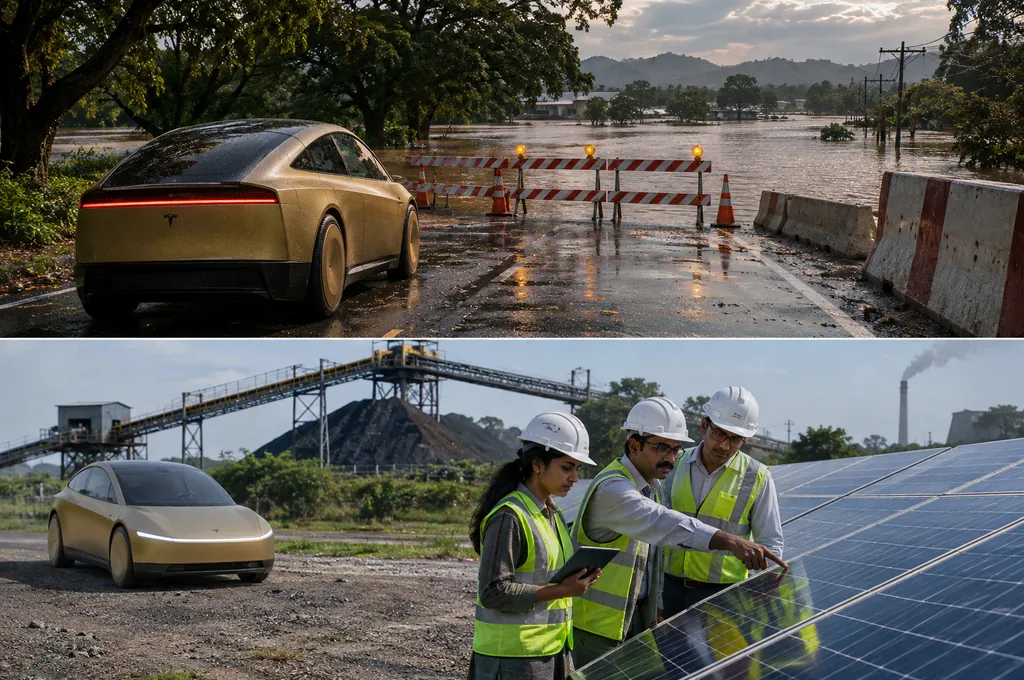
Elon Musk unveiled the Tesla Cybercab as a fully driverless, pedal-free vehicle priced at $29,990. This announcement signals a potential shift in the automotive landscape. The vehicle targets the ride-hailing market rather than personal ownership. The company aims to replace human drivers with its own robotaxis. This move could fundamentally alter how consumers buy and use electric vehicles. The Cybercab represents a bold step toward autonomous mobility. It challenges established competitors like NIO and traditional automakers.
⚡ Quick AI Overview & Key Recommendation
Tesla Cybercab is a driverless EV priced at $29,990 for robotaxi operations. It targets the ride-hailing market, offering lower operating costs than human-driven cars. Investors should compare this against NIO and traditional EVs for long-term portfolio growth.
Tesla Cybercab: Core Evaluation Framework & Decision Matrix
The Cybercab is not a traditional car. It lacks a steering wheel and pedals. This design choice prioritizes safety and efficiency. The vehicle relies on Tesla’s Full Self-Driving (FSD) software. It operates without a human in the loop. This makes it a pure robotaxi. The $29,990 price point is aggressive. It undercuts most autonomous vehicle projects from competitors.
| Feature | Tesla Cybercab | Traditional EV Sedan | Competitor Robotaxi (e.g., Waymo) |
|---|---|---|---|
| Price | $29,990 | $40,000 – $60,000+ | $15,000 – $25,000 (per vehicle cost) |
| Driver Interface | None (Pedal-free) | Steering wheel & pedals | None (Remote Operator) |
| Primary Use | Ride-hailing / Robotaxi | Personal Transportation | Ride-hailing / Personal |
| Cost Efficiency | High (Zero labor cost) | Medium (Fuel/Charging) | Medium (Remote labor cost) |
The decision matrix above highlights a clear divergence. The Cybercab fits a specific niche. It is designed for fleet operations. It is not built for the average family to park in a driveway. This is a crucial distinction for consumers. The Cybercab leverages economies of scale. It aims to reduce the cost per mile to near zero. This makes it a formidable competitor in the gig economy.
Real-World Calculations: Running Costs, Range & Government Subsidies
Let’s look at the numbers. A standard EV sedan costs significantly more upfront. The Cybercab aims to lower the total cost of ownership. The absence of a driver eliminates the largest operational expense. In a traditional taxi, labor is 50% to 70% of the cost. The Cybercab removes that variable. This allows for a lower fare structure.
Range anxiety is a concern for many EV owners. The Cybercab must travel long distances to be viable. Its battery range must support 24/7 operation. Charging infrastructure is critical. The Cybercab will likely use Tesla’s Supercharger network. This provides a significant advantage over competitors.
Government subsidies also play a role. Many governments offer tax breaks for EV purchases. However, subsidies for robotaxis are less common. The Cybercab’s low price might make it ineligible for some credits. This could affect its adoption in price-sensitive markets.
Crucial Factors & What to Check Before You Buy
Before investing in this technology, consider these factors. The software is unproven at this scale. The technology is still evolving. What happens when the car breaks down? Who is responsible for the accident? These are unanswered questions.
Resale value is another concern. A robotaxi accumulates high mileage. This degrades the battery and mechanical parts. The resale value of a Cybercab might be lower than a standard car. You must check the warranty terms carefully. The battery warranty is paramount.
Compare this to NIO. NIO offers a premium experience with battery swap technology. NIO’s focus is on the consumer. Tesla’s focus is on the fleet. The Cybercab is a tool for profit. It is not a status symbol.
Investors should also consider the broader market. reuters[dot]com reported on Tesla’s flat earnings. Revenue stagnation is a risk. Musk’s focus on SpaceX deals could divert resources. This might delay the Cybercab’s rollout. You must weigh the potential rewards against these risks.
Finally, check the legal landscape. Autonomous driving laws vary by state and country. You must ensure the Cybercab is legal in your area. This is a non-negotiable step.
Frequently Asked Questions
What is the price of the Tesla Cybercab?
The Tesla Cybercab is priced at $29,990, targeting the ride-hailing market.
Does the Tesla Cybercab have a steering wheel?
No, the Cybercab is designed without a steering wheel and pedals for fully autonomous operation.
What is the main use of the Tesla Cybercab?
The primary use of the Tesla Cybercab is as a robotaxi for ride-hailing services.
How does the Cybercab compare to NIO?
Unlike NIO, which focuses on premium consumer EVs, the Cybercab is designed for fleet operations with zero labor costs.
What are the risks of investing in Tesla stock right now?
Tesla earnings have been flat, and Elon Musk’s potential focus on a SpaceX deal could divert company resources.
Is the Tesla Cybercab available for personal purchase?
While the Cybercab is a vehicle, its design and price point are specifically aimed at robotaxi fleets rather than personal ownership.
How does the cost of a Cybercab compare to a traditional EV?
The Cybercab is significantly cheaper upfront at $29,990 compared to traditional EV sedans which often cost $40,000+.
What technology powers the Tesla Cybercab?
The Cybercab is powered by Tesla’s Full Self-Driving (FSD) software.
Who is responsible for accidents in a Cybercab?
Determining liability for accidents in a fully autonomous vehicle is a complex legal issue that varies by jurisdiction.
Where can I read more about the Tesla Cybercab?
You can find more details on the vehicle’s specifications and the company’s plans on tech news sites like bloomberg[dot]com.
The Verdict on Tesla’s Autonomous Future
The Tesla Cybercab is a gamble on the future of transportation. It offers a compelling cost structure for fleets. It challenges the status quo of the automotive industry. However, it carries significant operational and legal risks. The technology must prove its reliability. The legal framework must catch up. For investors, the Tesla Cybercab represents a high-reward, high-risk opportunity. The market is watching closely to see if Tesla can deliver on this promise.
Source: mobidevices.com (mobidevices[dot]com)