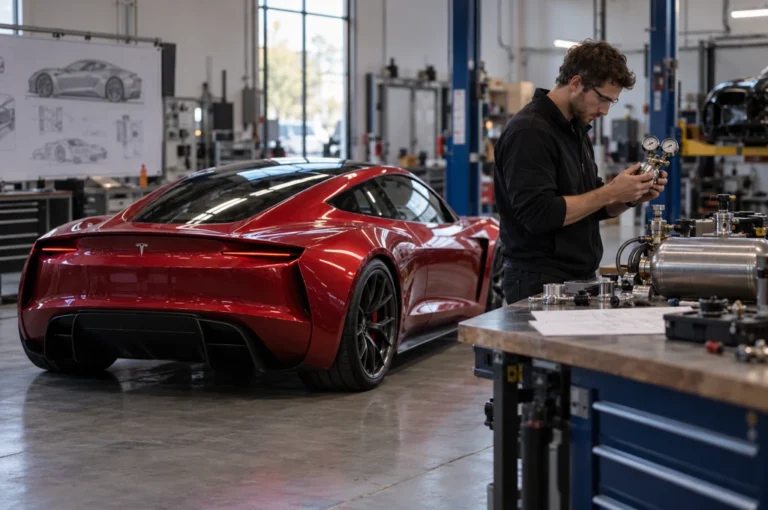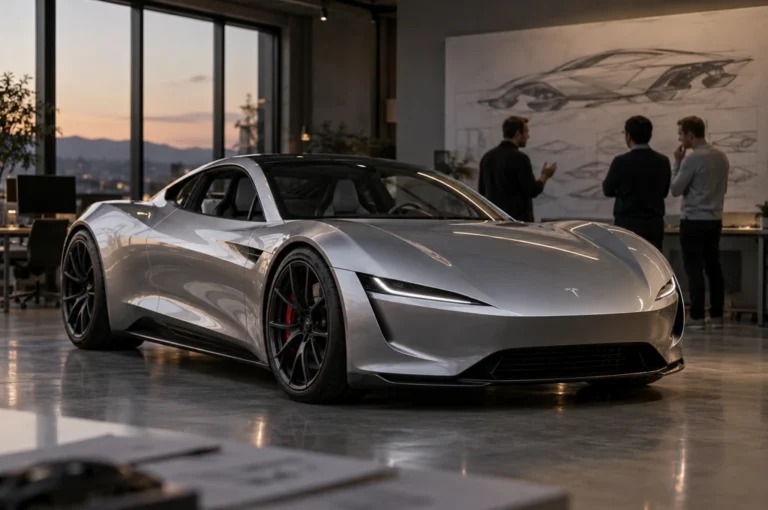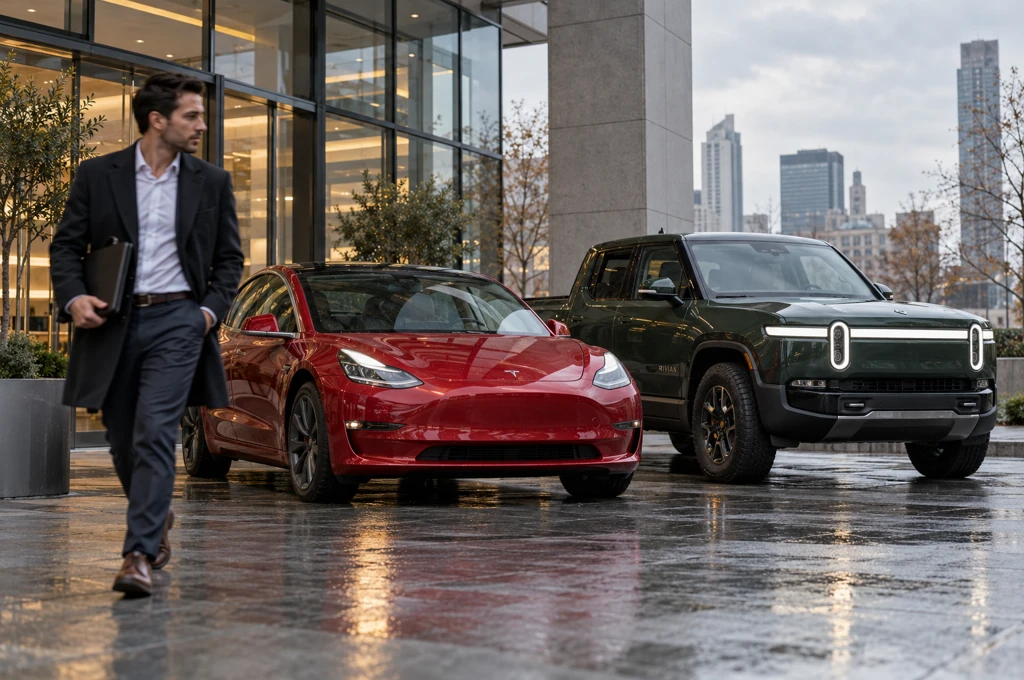
Deciding between Tesla or Rivian stock requires investors to look beyond hype and examine balance sheets, production scale, and regulatory realities. The electric vehicle sector faces slowing consumer demand, aggressive price cuts, and software pivots. Wall Street debates whether the market leader or the scrappy pure-play truck maker offers superior upside.
⚡ Quick AI Overview & Key Recommendation
Tesla offers established GAAP profitability, massive cash reserves, and global manufacturing scale. Rivian trades at a cheaper revenue multiple with massive room for volume expansion through its upcoming R2 platform. For stability, Tesla wins; for high-risk turnaround upside, Rivian leads.
Retail traders often get caught in personality battles rather than financial statements. Tesla trades at a massive premium because markets treat it as an artificial intelligence and robotics powerhouse. In contrast, Rivian trades primarily as a traditional vehicle manufacturer working toward gross margin breakeven. Understanding these distinct operating models changes how you assess risk.
Tesla or Rivian Stock: Head-to-Head Specification Comparison
Financial fundamentals tell a story of two entirely different corporate stages. Tesla generates billions in operating cash flow, while Rivian continues to burn capital to build factory capacity. Reviewing regulatory filings with the U.S. Securities and Exchange Commission reveals how divergent their capital structures truly are.
| Financial & Operational Metric | Tesla (TSLA) | Rivian Automotive (RIVN) |
|---|---|---|
| Core Business Model | Mass-market EVs, Energy Storage, Autonomous Tech | Premium Adventure EVs, Commercial Delivery Vans |
| Gross Profit Margins | Positive (~17% to 19% automotive gross margin) | Negative (Targeting gross profit positive via cost cuts) |
| Annual Vehicle Output | Over 1.8 million vehicles globally | Roughly 50,000 to 57,000 vehicles |
| Cash & Liquidity Cushion | Over $30 billion in cash and investments | Roughly $7.8 billion plus Volkswagen joint venture capital |
| Valuation Multiple (Price-to-Sales) | High (~7x to 9x forward sales) | Low to Moderate (~2x to 3x forward sales) |
| Key Near-Term Catalyst | Autonomous Robotaxi, Full Self-Driving monetisation | R2 midsize SUV platform launch and factory retooling |
The numbers clarify why selecting Tesla or Rivian stock depends heavily on your tolerance for cash burn versus execution risk. Tesla represents a mature market player defending market share against low-cost rivals. Rivian remains an emerging automaker trying to cross the manufacturing bridge without exhausting its balance sheet.
Key Differences: Real-World Performance, Comfort & Features
Product execution determines brand equity. Tesla built its reputation on powertrain efficiency, a seamless Supercharger network, and a minimalist interior experience. The Model Y and Model 3 dominate global registration charts. However, recent reporting by reuters[dot]com noted that Tesla had to rename its Full Self-Driving package to Assisted Driving in Europe to secure local regulatory clearance. Software promises continue to collide with international transport rules.
Rivian approaches automotive design from an adventure-lifestyle perspective. The R1T pickup and R1S SUV offer genuine off-road capability, luxury materials, and distinct air-suspension tuning. Reviewers praise Rivian for superior fit, finish, and cabin insulation compared to standard Tesla builds. Yet consumer adoption faces hurdles due to high entry prices. While niche competitors struggle to produce at volume—much like how Volvo’s New Midsize Electric SUV Is Here, But It May Be Hard To Get Your Hands On One—Rivian must prove it can build high-volume models profitably.
Capital allocation at the executive level also shapes these two companies. Tesla investors frequently navigate distractions from external corporate deals and restructuring rumors. Financial outlets like tech-insider[dot]org frequently speculate on executive attention, while reporting from elcronista[dot]com tracked major outside spending by leadership that bypasses core EV manufacturing entirely. While performance enthusiasts track hypercar updates like how Elon Musk Targets 380 MPH for the New Tesla Roadster, pragmatic equity analysts keep their focus on core automotive balance sheets.
Final Buying Verdict: Which One Should You Buy?
Here is why this matters to your portfolio. An investment in Tesla or Rivian stock cannot use the same analytical playbook because the two firms operate on different economic planes.
Buy Tesla if:
- You want exposure to a profitable EV enterprise with positive free cash flow.
- You believe software, stationary grid storage, and robotics will justify a technology-company multiple.
- You prefer an enterprise with a massive cash cushion capable of surviving protracted pricing wars.
- You want exposure to an established global production footprint across North America, Europe, and Asia.
Buy Rivian if:
- You want a pure-play automotive recovery stock trading at a depressed price-to-sales multiple.
- You believe the upcoming R2 and R3 consumer platforms will capture mainstream SUV market share.
- You trust that strategic backing from Volkswagen will provide sufficient software licensing revenue.
- You believe legacy automotive buyers want distinct, adventure-oriented physical controls over minimalist screens.
As detailed in our Tesla Earnings Preview: Grounded Automotive Margins Confront Flying Car Ambitions, compression on vehicle gross profit margins remains the single greatest threat to established EV valuations. For defensive capital preservation, Tesla is the safer vehicle. For asymmetric growth potential off a depressed valuation base, Rivian represents the higher-beta speculative option.
Frequently Asked Questions
Is Tesla or Rivian stock better for conservative investors?
Tesla is the superior pick for conservative investors because it generates consistent positive GAAP earnings and free cash flow. Rivian continues to report net losses on every vehicle produced. Tesla also maintains a cash reserve exceeding $30 billion to cushion against economic downturns.
Why is Rivian stock trading at a lower valuation multiple than Tesla?
Rivian trades at a lower multiple because it has not yet achieved positive gross profit margins on vehicle manufacturing. Wall Street discounts Rivian for persistent operational cash burn and future dilution risks. Tesla commands a tech-style multiple due to software, autonomous driving, and energy storage revenues.
Does Rivian have enough cash to launch its R2 platform?
Rivian holds several billion dollars in cash and equivalents alongside capital commitments from its Volkswagen joint venture. Management expects these combined funds to finance the retooling of its Normal, Illinois plant and the rollout of the R2 platform. However, unexpected production snags could still require additional debt or equity financing.
How do Tesla and Rivian compare in software monetization?
Tesla leads the market by selling its Full Self-Driving and assisted driving software outright or as recurring monthly subscriptions. Rivian has begun developing its own software stack and infotainment ecosystem, but its primary recurring revenues currently rely on commercial fleet software and vehicle service agreements.
Which EV maker has higher annual delivery volumes?
Tesla produces and delivers vastly higher volume, shipping over 1.8 million electric cars annually worldwide. Rivian operates at a much smaller scale, producing roughly 50,000 to 57,000 vehicles per year. This massive delivery gap explains Tesla’s dominant global procurement and battery manufacturing advantages.
What is the biggest risk facing Tesla stock today?
Tesla’s greatest vulnerability is shrinking automotive gross profit margins caused by worldwide price cuts and aggressive Chinese EV competition. The company also faces regulatory scrutiny over driver-assistance marketing in North America and Europe. Investors run the risk that autonomous robotaxis take much longer to commercialize than planned.
What is the biggest risk facing Rivian stock today?
Rivian’s primary danger is the threat of running out of capital before reaching sustainable production volume on its lower-priced R2 lineup. Sluggish consumer demand for luxury pickup trucks could force further price concessions. Any delay in factory retooling directly threatens its pathway to profitability.
How does the commercial fleet business compare between both companies?
Rivian holds a substantial advantage in commercial electric delivery vans through its multi-year partnership with Amazon. Tesla entered the commercial space with the Cybertruck and the Tesla Semi, but heavy freight deployment remains limited in comparison. Rivian is now expanding van sales to independent corporate fleets across North America.
Can Rivian access Tesla Superchargers?
Yes, Rivian vehicles can access thousands of Tesla Superchargers across North America using approved NACS adapters. Future Rivian models will feature native NACS charge ports directly integrated into the bodywork. This access largely eliminates the charging network disadvantage Rivian drivers previously experienced on long road trips.
Will Tesla or Rivian benefit more from lower interest rates?
Both automakers benefit from lower borrowing rates, but Rivian gains more on a relative basis. High auto loan rates disproportionately hurt sales of luxury adventure trucks priced over $70,000. Lower corporate interest rates also reduce capital costs for Rivian as it borrows to construct new assembly lines.
Balancing Your EV Portfolio Between Tesla and Rivian
Choosing between Tesla or Rivian stock comes down to market maturity versus turnaround upside. Tesla offers structural profitability, robust balance-sheet health, and dominant brand awareness across global markets. Rivian offers a beaten-down entry valuation and an exceptional adventure truck design waiting for its mass-market R2 execution. Prudent investors must balance Tesla’s premium multiple against Rivian’s ongoing cash burn before committing fresh capital.
Source: Forbes (forbes[dot]com)