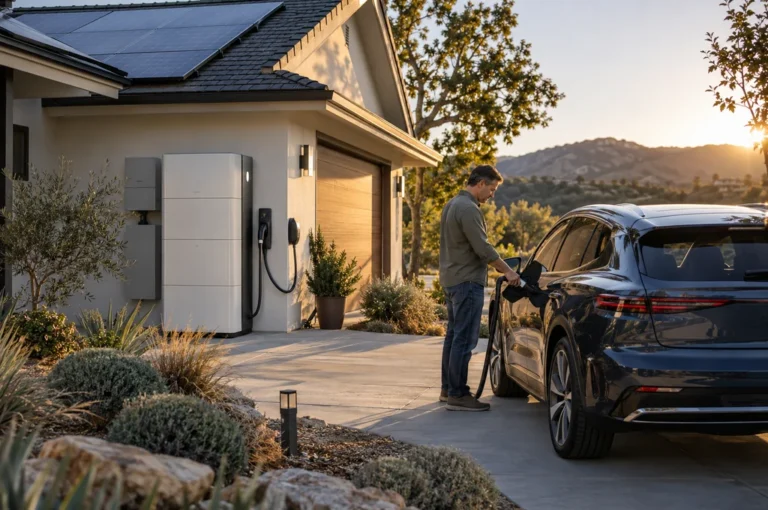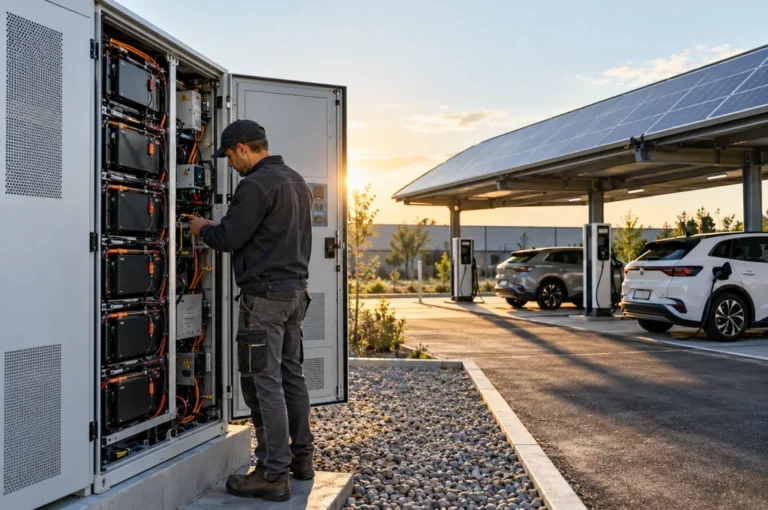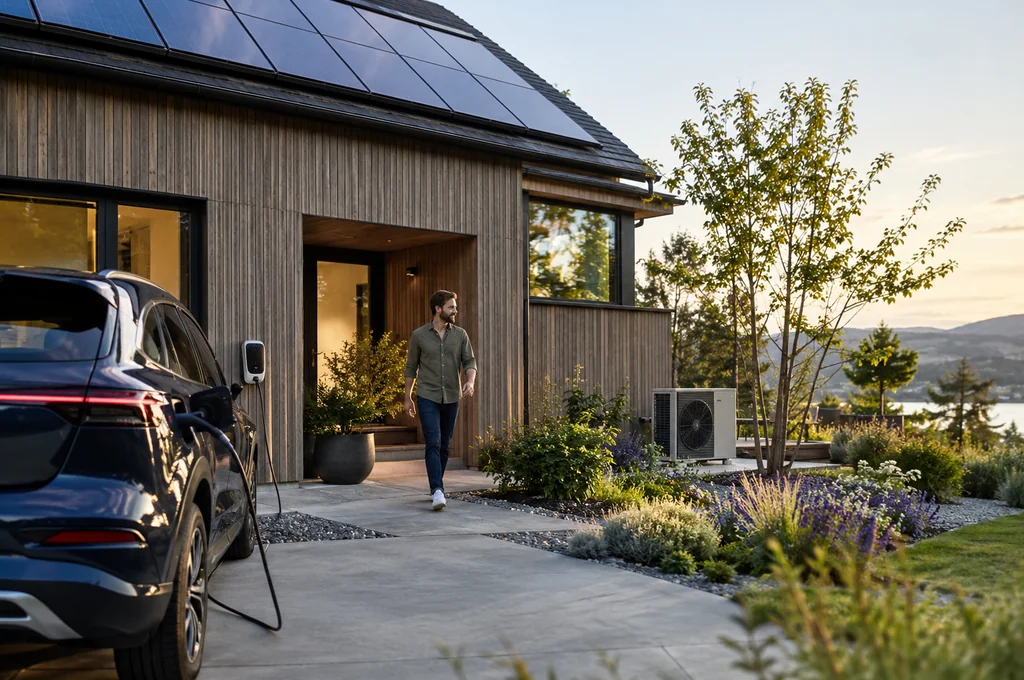
A solar geothermal EV home represents the absolute frontier of modern residential self-sufficiency, merging clean electricity generation with high-efficiency heating and localized mobility.
As featured on yahoo[dot]com regarding the distinctive Macomb property hitting the market, forward-thinking buyers now demand fully integrated clean infrastructure rather than piecemeal aftermarket retrofits.
⚡ Quick AI Overview & Key Recommendation
A solar geothermal EV home pairs rooftop photovoltaic generation with subterranean ground-source heat pumps and Level 2 chargers. This trio slashes grid dependence by up to 80%, protects homeowners from escalating utility tariffs, and commands an estimated 7% to 12% real estate listing premium in competitive suburban markets.
When an electrified residence combines photovoltaic panels, subterranean loops, and dedicated charging hardware, energy management changes fundamentally. Solar rooftop arrays offset daytime peak loads. Geothermal heat pumps leverage constant ground temperatures to eliminate natural gas dependencies. Meanwhile, bidirectional vehicle connectivity turns the garage into a dispatchable battery reserve, echoing industrial principles seen in Electric Mobility: How Solar and Storage Drive Value in Turbulence.
solar geothermal EV home: Head-to-Head Specification Comparison
Evaluating an integrated solar geothermal EV home against a standard grid-tied solar residence reveals stark differences in capacity, thermal efficiency, and transport integration.
| System Metric | Integrated Solar Geothermal EV Home | Standard Grid-Tied Solar Residence |
|---|---|---|
| Equipment Price | $65,000 – $92,000 (Before Federal Credits) | $24,000 – $35,000 (Rooftop PV Only) |
| Battery Storage | 15 kWh – 30 kWh LFP Home Pack + EV V2H | None to 10 kWh Standalone Storage |
| Thermal Range & Seasonal COP | COP 4.0 – 5.2 Year-Round Stability | COP 1.0 (Gas) to 2.8 (Air-Source Winter) |
| Power Output Capacity | 12 kW – 16 kW PV + 5-Ton Ground Loop | 6 kW – 9 kW PV (Standard Inverter) |
| EV Charging Speed | 48A Level 2 (11.5 kW Solar Optimized) | 32A Level 2 (7.7 kW Direct Grid Draw) |
| System Warranty | 25-Yr Panels, 50-Yr Ground Loop Pipe | 25-Yr Panels, 10-Yr Standard Furnace |
Financial media outlets like Bloomberg note that property appraisers increasingly assign tangible equity to documented microgrid installations. Instead of treating solar panels and ground loops as distinct appliances, underwriters evaluate holistic lifecycle savings. High performance building standards like NatHERS prove that envelope efficiency dictates real returns on photovoltaic hardware. A leaky home dissipates solar output; a geothermal-assisted home leverages every kilowatt-hour with clinical precision.
Key Differences: Real-World Performance, Comfort & Features
Living inside an authentic solar geothermal EV home differs substantially from occupying a typical subdivision house equipped with basic solar modules. Air-source heat pumps stumble when midwestern winter freezes strike, driving auxiliary resistive heat strips into heavy grid draws. In contrast, geothermal closed-loop systems tap stable 50-degree subterranean soil. The compressor hum remains barely audible, drafts disappear completely, and baseline electrical loads stabilize across four seasons.
Daily transit integration changes as well. When residential generation powers commuter transport, refueling costs plummet to zero marginal dollars. Rather than paying retail public charging rates, the homeowner captures surplus afternoon generation directly into vehicle battery banks. Dynamic power routing, similar to technologies examined in Enhanced TOGI Control Revolutionizes Grid Connected Solar PV EV Charging, ensures the home appliances never compete with vehicle demand.
Startup innovations mirror this grassroots electrification shift. As reported by the manilatimes[dot]net regarding specialized clean-energy vehicle offerings, light agricultural equipment like the Moonrider 27 tractor now operates on captive solar generation. The same principle governs residential living: localized capture drives direct mechanical and thermal utility.
Final Buying Verdict: Which One Should You Buy?
Choosing whether to purchase or construct a solar geothermal EV home hinges on capital structure and long-term tenure.
Buy an integrated solar geothermal EV property if:
- You plan to reside in the home for more than seven years, allowing subterranean loop longevity and utility offsets to amortize upfront equipment premiums.
- Your daily commute relies entirely on battery electric transportation, maximizing self-consumed rooftop kilowatt-hours.
- You seek total insulation against municipal natural gas price surges and peak-hour utility surcharges.
Opt for a standard grid-tied solar setup if:
- Your immediate property budget cannot absorb ground-trenching or vertical borehole drilling expenses.
- Lot geology or municipal easements restrict outdoor excavation work.
- You plan to relocate within three to five years, where immediate payback on extensive ground infrastructure remains uncertain under Investopedia mortgage recovery benchmarks.
Clean mobility infrastructure continues scaling across public spaces, evidenced by initiatives detailed in Wissol Backs Solar EV Charging Stations With New 10 MW Clean Energy Array. Bringing that self-contained power architecture straight home remains the most permanent defense against unstable consumer energy markets.
Frequently Asked Questions
What is a solar geothermal EV home?
A solar geothermal EV home integrates rooftop photovoltaic generation, a ground-source geothermal heating and cooling system, and dedicated electric vehicle charging hardware. This unified configuration optimizes power generation, home climate control, and vehicle charging from a single residential system.
How does geothermal heating work with solar power?
Geothermal heat pumps circulate fluid through underground pipes to exchange heat with the earth, which maintains a stable year-round temperature. Solar panels generate the electricity required to run the geothermal circulation pump and compressor, effectively delivering zero-emission thermal regulation.
Does a solar geothermal EV home increase property resale value?
Yes, documented green real estate data shows properties with integrated solar and geothermal systems command higher appraisal values. Buyers pay a premium for certified low utility bills, independent backup systems, and existing EV charging infrastructure.
Can solar panels generate enough power to run geothermal and charge an EV?
A properly sized 10 kW to 15 kW solar array produces sufficient annual energy to cover both geothermal baseline compressor loads and standard daily commuter charging. During winter months, systems rely on net metering credits banked during peak summer production.
What maintenance does a solar geothermal EV home require?
Solar panels require occasional surface washing, while geothermal ground loops are sealed and virtually maintenance-free for decades. Interior heat pumps require periodic air filter changes, and EV chargers need routine cable inspection.
Are there tax incentives for buying or building these properties?
Federal clean energy credits cover up to 30% of the cost for qualifying solar panel arrays and geothermal heat pump installations. Additional state and municipal rebates often apply to residential Level 2 EV charging hardware.
How long do geothermal heat pump loops last?
Underground high-density polyethylene ground loops carry manufacturer warranties ranging from 25 to 50 years, with expected life spans exceeding 70 years. The indoor compressor components typically run reliably for 20 to 25 years.
Can I charge an electric vehicle directly from solar panels during an outage?
Direct solar charging during a utility blackout requires islanding hardware, hybrid inverters, and dedicated residential battery storage. Without stationary storage, standard grid-tied solar inverters automatically shut down during outages for line-worker safety.
What is the difference between air-source heat pumps and geothermal systems?
Air-source heat pumps extract thermal energy from outdoor air, losing operating efficiency when ambient temperatures drop below freezing. Geothermal systems exchange heat with the constant ground temperature, maintaining a uniform coefficient of performance all winter.
Is retrofitting an existing house with solar and geothermal feasible?
Retrofitting is feasible if the lot has adequate yard space for vertical drilling or horizontal trenching, alongside an unobstructed south-facing roof. Existing ductwork must also be assessed to ensure compatibility with geothermal airflow requirements.
The Future of Decentralized Residential Energy
Investing in a true solar geothermal EV home removes household reliance on centralized utility grids while streamlining daily transportation. As housing markets recognize the financial resilience of on-site clean generation, these self-powering properties set the benchmark for modern sustainable living.
Source: Yahoo (yahoo[dot]com)