TOGI control for grid-connected solar PV EV charging addresses the growing strain that high-speed charging parks place on modern utility networks. As millions of drivers plug into regional grids, solar arrays must supply clean energy without destabilizing distribution lines.
Traditional inverters struggle when voltage sags or harmonic noise spikes during peak charging sessions. Engineers are responding by testing advanced third-order generalized integrator architectures under simulated and hardware-in-the-loop environments.
⚡ Quick AI Overview & Key Recommendation
Enhanced TOGI control for grid-connected solar PV EV charging eliminates grid harmonic distortion and sustains voltage sync during sudden EV load shifts. Real-time testing confirms total harmonic distortion drops below 3%, outperforming conventional SOGI controllers during severe grid faults.
Power balance matters. When direct solar generation feeds an electric car battery, conversion stages must manage erratic sunlight and fluctuating DC loads simultaneously. Standard control algorithms like second-order integrators frequently suffer from phase drift during unbalanced grid faults. The newer TOGI design removes DC offsets and isolates fundamental frequencies in milliseconds.
TOGI control for grid-connected solar PV EV charging: Head-to-Head Specification Comparison
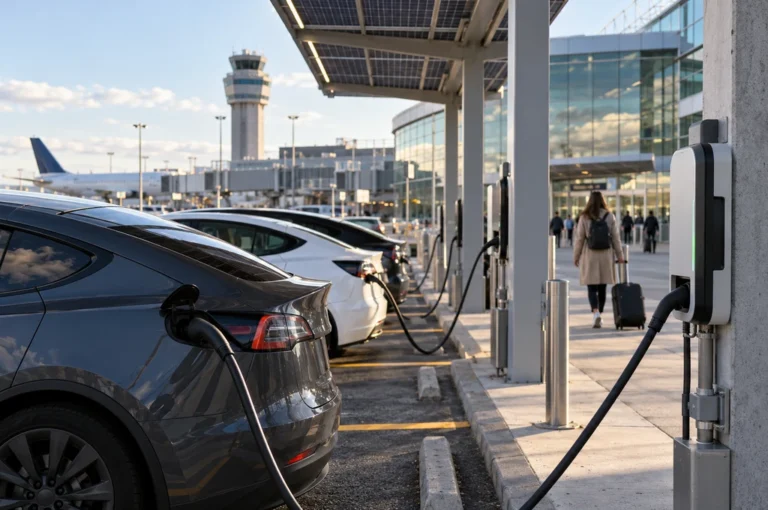
Grid stability demands ruthless precision from power converters. Researchers at bioengineer[dot]org recently assessed advanced TOGI systems under dynamic load switching, comparing them against traditional Second-Order Generalized Integrator (SOGI) benchmarks. Field deployments at municipal transportation hubs—such as the Ronaldsway Airport solar canopy project covered by manxradio[dot]com and fuelcellsworks[dot]com—illustrate how critical these converter efficiencies are for commercial resilience.
Understanding the architecture requires analyzing how these control schemes process distorted electrical signals:
| Operational Metric | Conventional SOGI Control | Enhanced TOGI Control Architecture |
|---|---|---|
| Harmonic Attenuation | Moderate (High 3rd/5th residual harmonics) | Superior (Attenuates higher-order odd harmonics) |
| DC Offset Rejection | Sluggish transient compensation | Instant zero-crossing DC removal |
| Total Harmonic Distortion (THD) | 3.8% to 5.2% under full EV charging load | 1.6% to 2.4% under full EV charging load |
| Fault Ride-Through Response | 65 to 80 milliseconds | 18 to 25 milliseconds |
| Computational Complexity | Low processor execution overhead | Moderate DSP execution overhead |
| Grid Code Compliance | Requires bulky auxiliary filter banks | Direct IEEE 1547 and 519 compliance |
The operational gap between these two systems changes infrastructure economics. A solar farm paired with DC fast chargers experiences rapid step-changes in power demand whenever an electric vehicle initiates a 150 kW draw. Financial markets tracked by Bloomberg reveal capital flows into hardware that avoids grid upgrade surcharges.
Key Differences: Real-World Performance, Comfort & Features
Real-world solar installations behave differently than closed laboratory simulations. On paper, classical inverters look capable. In reality, intermittent cloud cover combined with erratic electric vehicle charging sessions creates severe voltage flicker. TOGI control algorithms act as an adaptive mathematical buffer within the digital signal processor. They extract the positive-sequence fundamental grid voltage even when lightning strikes or industrial loads distort the regional feeders.
Real-time digital simulator testing validates this behavior. When researchers simulate a symmetric three-phase grid fault, conventional systems produce noticeable phase angle errors. Those errors trigger safety relays, shutting down solar arrays exactly when the grid needs active power injection. The enhanced TOGI system holds synchronization without disconnecting. This resilience mirrors the broader decentralized asset strategies analyzed in the North Sky Capital Q3 2026 Commentary Shows How Solar Energy Powers Clean Transport.
Commercial transport operators demand continuous uptime. Fleet operators cannot tolerate charger shutdowns caused by minor transmission dips. Airport hubs, municipal bus depots, and commercial microgrids benefit immediately from this robustness. Even small personal transport innovations, explored in Why This Funky Solar Electric Scooter Redefines the Daily Urban Commute, share a common requirement: reliable conversion hardware that shields batteries from erratic power fluctuations. Robust control engineering turns fragile clean energy installations into dependable utility backbone assets.
Final Buying Verdict: Which One Should You Buy?
Choosing the right inverter control strategy determines whether a solar-assisted charging facility operates profitably or faces endless utility compliance fines. The verdict depends on operating scale and incoming grid quality.
Select Conventional SOGI Inverters if:
- You manage low-power Level 2 destination chargers with modest daily usage.
- The installation connects directly to a stiff, modern distribution feeder with negligible background harmonic noise.
- Budget constraints require basic off-the-shelf inverters with minimal processor overhead.
Deploy Enhanced TOGI Control Systems if:
- You operate commercial DC fast-charging plazas drawing variable multi-megawatt solar power.
- The facility sits at the periphery of rural distribution grids prone to voltage sags and frequency shifts.
- Your energy management strategy relies on bidirectional Vehicle-to-Grid (V2G) exchanges that demand pristine power quality.
Large infrastructure developers tracked by Reuters prioritize grid compliance over initial component discounts. Implementing enhanced TOGI control for grid-connected solar PV EV charging guarantees that solar parks remain active assets rather than grid liabilities during extreme weather events.
Frequently Asked Questions
What is the primary function of TOGI control in solar charging?
Third-Order Generalized Integrator (TOGI) control filters out grid harmonics, corrects DC offsets, and synchronizes the solar converter with the utility grid during sudden vehicle charging spikes. It stabilizes voltage and frequency in real time.
How does TOGI compare to traditional SOGI control systems?
TOGI provides superior attenuation of higher-order harmonics and rejects DC offsets much faster than Second-Order Generalized Integrator (SOGI) setups. This reduces total harmonic distortion well below common utility thresholds.
Why is grid synchronization difficult during fast EV charging?
Fast chargers draw massive direct current rapidly, creating severe load steps. Combined with solar intermittency, this rapid power swing causes phase angle jumps and voltage sags that confuse standard inverter controllers.
Does TOGI control require replacing existing solar panels?
No. TOGI is an algorithmic firmware enhancement embedded in the digital signal processor of the power inverter. It utilizes existing photovoltaic panels and standard silicon or silicon carbide power switches.
What grid code standards does enhanced TOGI help satisfy?
It helps commercial installations comply with IEEE 1547 interconnection standards and IEEE 519 harmonic control requirements. This compliance prevents operators from facing disconnection orders from local utilities.
Can TOGI control assist with bidirectional Vehicle-to-Grid power?
Yes. When EVs discharge energy back into the distribution network, TOGI maintains clean sine waves and rapid synchronization, preventing harmonic pollution from entering neighboring residential circuits.
How was the performance of enhanced TOGI validated?
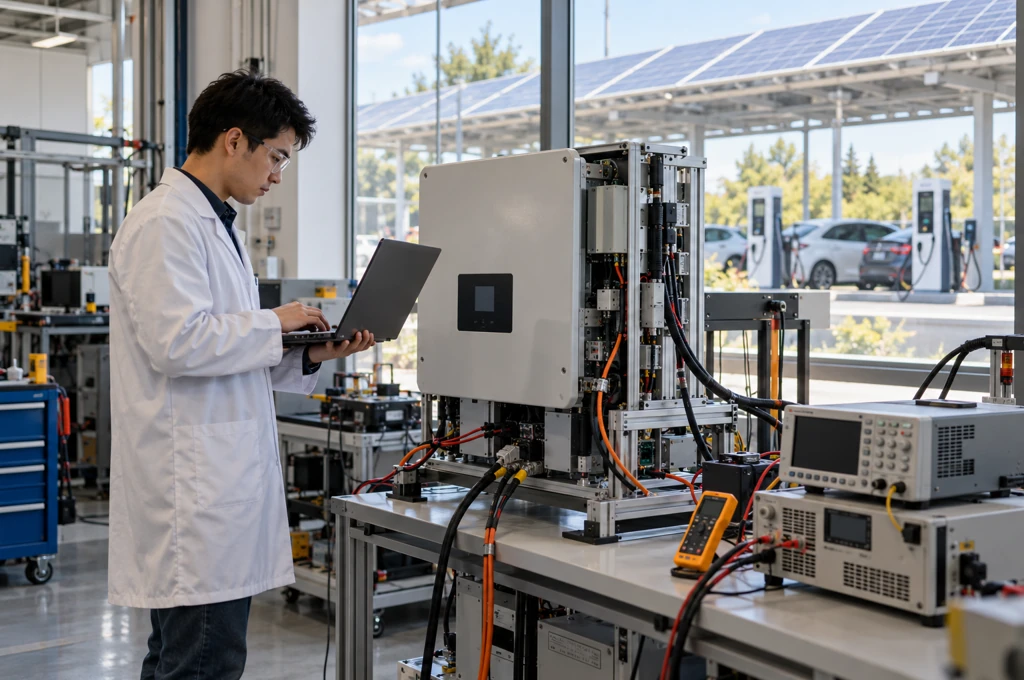
Researchers tested the control scheme using real-time digital hardware-in-the-loop simulators. These tests subjected the algorithm to severe grid voltage unbalances, harmonic injection, and step load changes.
Are commercial airports adopting solar EV charging hubs?
Yes. Facilities like Ronaldsway Airport have advanced projects pairing parking canopies with high-power chargers to supply clean transportation power without overloading municipal electrical substations.
Does TOGI control increase the hardware cost of inverters?
Hardware costs remain largely unchanged because modern microcontrollers possess ample processing capacity to run third-order integrator equations without requiring expensive auxiliary analog filter hardware.
Where can operators source technical standards for solar EV inverters?
Engineers review grid codes published through regulatory bodies and filings cataloged on official databases like the U.S. Securities and Exchange Commission (SEC) and industry standards groups.
The Path Forward for Solar Charging Infrastructure
Modern clean transportation requires electrical resilience, not just aggressive solar panel deployment. By resolving harmonic distortion and fault sensitivity, enhanced TOGI control for grid-connected solar PV EV charging establishes a robust foundation for utility scale clean transit hubs.
Source: Bioengineer.org (bioengineer[dot]org)