solar: Calls to rein in green subsidies have sparked fierce debate across the clean energy sector. As reported by theaustralian[dot]com, former Australian Prime Minister Malcolm Turnbull warned that government hand-outs must taper off as clean technologies become commercially viable.
⚡ Quick AI Overview & Key Recommendation
Recent proposals to rein in green subsidies reflect maturing technology costs. With solar panels and battery storage dropping in price, industry leaders recommend pivoting from direct public grants to private market structures, distributed generation, and co-located fleet charging networks.
Solar energy no longer operates as an experimental technology that requires permanent public charity. Production efficiencies and high-volume manufacturing pushed hardware costs down by more than 80 percent over the past decade. Yet, fiscal debates now center on when taxpayer backing should yield to pure commercial competition.
solar: Rein in Green Subsidies: Key Highlights & Market Impact
Government incentives created the modern solar boom. Feed-in tariffs, direct capital rebates, and production credits enabled early commercial scale. Now, finance ministries and energy watchdogs argue that unchecked aid distorts regional wholesale power prices.
When governments rein in green subsidies to protect public budgets, market participants must adapt quickly. We see this evolution taking three distinct forms across major global markets:
- Fiscal recalibration: Treasuries want private capital, not public debt, to build generation assets.
- Grid modernization: Transmission lines need upgrades rather than further uncontrolled additions of unbuffered solar capacity.
- Merchant risk exposure: Developers must rely on power-purchase agreements and retail arbitrage instead of guaranteed state tariffs.
Data tracked by energy analysts highlights the shifting economic balance. As reported by solarbytes[dot]com, distributed solar and storage could cut US power costs by $614 billion over coming decades. Distributed assets prove that local generation can stand on its own feet when paired with batteries. For private homeowners, evaluating systems without excessive policy expectations prevents buyers remorse, as discussed in the Solar Owner Regrets Skipping Panels: The EV Reality Check.
Detailed Breakdown: What Caused the Subsidy Pushback
The pushback stems from fiscal strain and grid saturation. In regions with dense rooftop solar adoption, midday electricity prices frequently drop below zero. Wholesale markets struggle with excess midday power, followed by severe evening demand spikes when the sun sets.
According to financial coverage from Bloomberg, traditional power utilities argue that non-solar households bear unfair grid maintenance costs. Regulators face mounting pressure to balance household equity with decarbonization targets. Consequently, when fiscal hawks demand that authorities rein in green subsidies, market dynamics change.
| Policy Model | Primary Mechanism | Market Outcome |
|---|---|---|
| Legacy Support | Direct feed-in tariffs, production tax credits | Rapid capacity buildout, grid bottlenecks |
| Targeted Storage Subsidies | Battery hardware grants, virtual power plants | Peak shaving, smoother daytime generation |
| Unsubsidized Merchant Model | Corporate power-purchase agreements (PPAs) | Strict capital discipline, co-located commercial loads |
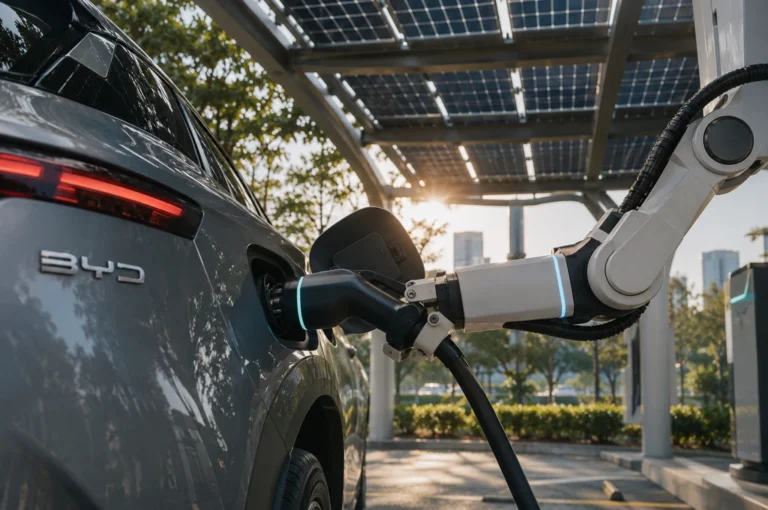
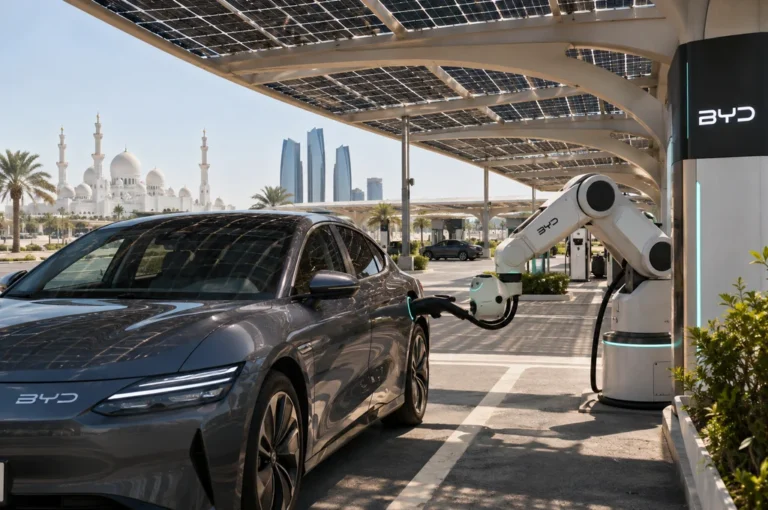
Major manufacturers are already building self-contained ecosystems that do not depend on retail credits. As reported by theevreport[dot]com, BYD launched a commercial project in Abu Dhabi pairing solar arrays, industrial battery storage, flash charging, and automated robotic arms. Integrated systems bypass congested utility transmission lines altogether by feeding electricity directly into transport fleets.
What This Means for Readers & Future Outlook
For investors and homeowners, navigating plans to rein in green subsidies requires agile power-purchase agreements and physical hardware pairings. Relying strictly on high feed-in tariffs is no longer a viable long-term strategy.
Businesses increasingly use renewable energy assets to support transport expansion. According to multibaggai[dot]com, Ravindra Energy is weighing solar asset monetization specifically to fund commercial electric vehicle growth. Clean energy generation is transforming from a passive revenue stream into an active industrial tool.
Decentralized infrastructure projects prove this direction. Cities are turning underused municipal areas into productive microgrids, detailed in our report on Why Solar Roofs at Train Stations Are the Key to Solving EV Charging. Community initiatives demonstrate similar adaptation, as seen in the Waynesville Energy Fair Showcases Newest Solar and EV Tech. In addition, financial markets tracked by Reuters and Investopedia show institutional investors favoring integrated solar-plus-storage projects over standalone generation farms.
Frequently Asked Questions
Why do some policymakers want to rein in green subsidies?
Policymakers push to rein in green subsidies because hardware costs have fallen dramatically, making clean power commercially viable on its own. Continued handouts strain government budgets and risk distorting competitive wholesale electricity markets.
Will solar power remain profitable without public funding?
Yes, solar power remains profitable without state handouts, particularly when developers pair arrays with battery storage. Solar generation generates cheap midday electricity that projects can store and sell during expensive evening peak hours.
What happens to rooftop solar owners when feed-in tariffs drop?
Rooftop solar owners shift their strategy toward self-consumption rather than exporting power to the grid. Installing residential battery banks and programming high-draw appliances to run during midday hours yields maximum financial return.
How do distributed solar systems cut broader power costs?
Distributed solar generates electricity right where consumers use it, eliminating expensive high-voltage transmission losses. Independent modeling suggests distributed solar and storage could lower overall grid operating costs by hundreds of billions of dollars.
Why are midday electricity prices turning negative in sunny regions?
Midday power prices turn negative because thousands of solar systems export electricity simultaneously during low-demand daytime periods. Without sufficient energy storage, grids become oversupplied and wholesale electricity prices plummet.
How does pairing electric vehicle charging with solar help grid stability?
Electric vehicles function as flexible battery loads that can absorb surplus midday solar energy. By soaking up excess local generation, charging depots prevent grid overload and reduce the need for fossil fuel peaker plants later in the evening.
What is corporate solar asset monetization?
Solar asset monetization involves refinancing or selling operational solar assets to raise liquid capital for higher-margin projects. Companies frequently use these liquidity events to build out fast-charging networks and fleet operations.
Are battery storage systems cheaper than they were five years ago?
Battery storage costs have dropped substantially due to expanding lithium iron phosphate manufacturing and improved supply chains. Cheaper batteries allow developers to capture and monetize solar energy without relying on state feed-in subsidies.
What is a virtual power plant in solar management?
A virtual power plant connects multiple decentralized rooftop solar systems and home batteries through software control. The combined network injects power into the grid during emergencies, functioning like a conventional utility power station.
How should commercial developers prepare for subsidy phaseouts?
Commercial developers must secure long-term corporate power-purchase agreements and integrate on-site storage. Aligning solar arrays directly with predictable commercial loads ensures bankable returns without government assistance.
The Path Forward for Unsubsidized Solar
Decisions to rein in green subsidies will test whether solar can stand entirely on market economics. Clean energy developers who pair low-cost generation with battery storage and direct commercial demand will thrive without state support.
Source: The Australian (theaustralian[dot]com[dot]au)