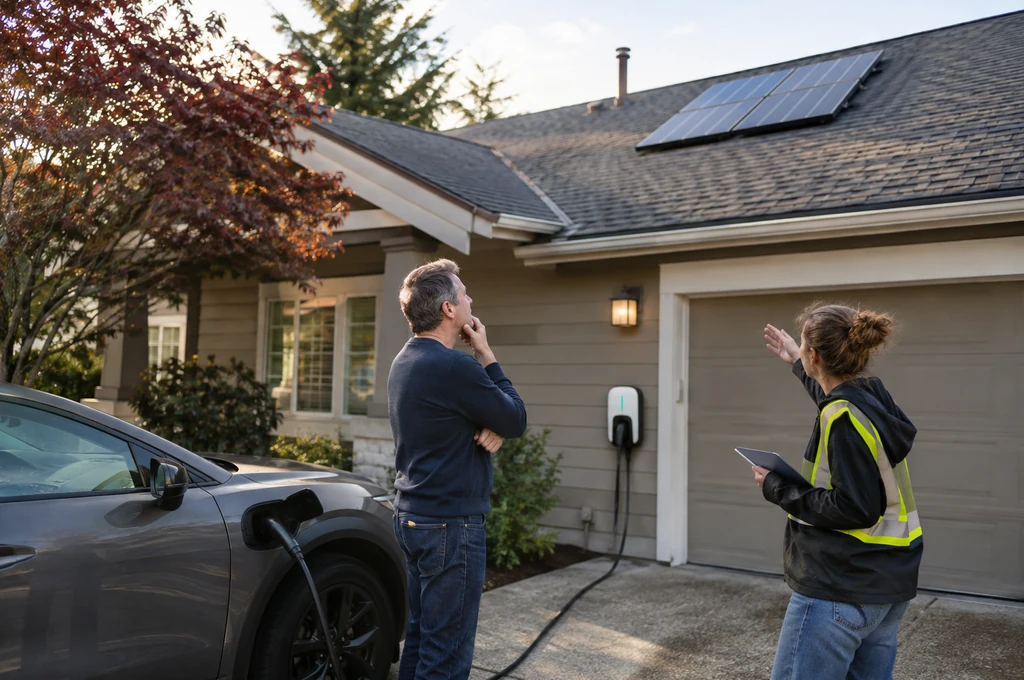
Solar owner regrets skipping panels during installation as EV enters the picture. The dream of a self-sufficient home often collides with the reality of high energy demand. A homeowner recently expressed deep regret after realizing their solar setup cannot handle an electric vehicle. They had sized their system for basic household needs. The sudden addition of an EV charger changed the math entirely. Now, they are paying more for electricity than they expected.
⚡ Quick AI Overview & Key Recommendation
Adding an EV to a pre-installed solar system often requires an upgrade. Many homeowners underestimate the energy consumption of electric vehicles. You must calculate your daily mileage against your solar production. If your system is undersized, you will rely on the grid. This eliminates most of the financial benefits of solar. Always oversize your system if you plan to charge an EV.
Solar Owner Regrets Skipping Panels: Core Evaluation Framework & Decision Matrix
The regret stems from a fundamental miscalculation of energy needs. A standard home might use 30 kWh per day. An EV can easily consume that amount in a single day of commuting. When the EV was not part of the original plan, the homeowner sized their panels accordingly. The math looked good on paper. It looked good for a household with two cars running on gasoline.
Once the EV arrived, the equations flipped. The solar panels could no longer generate enough power to meet the total demand. This created a gap that the grid had to fill. The homeowner now pays retail rates for that electricity. They lose the savings they were promised. This scenario is becoming more common as EV adoption rises. It highlights a critical gap in the sales process for solar installations.
The decision matrix for solar installation must evolve. It must account for future loads. Future loads include electric vehicles, heat pumps, and larger appliances. You cannot simply install a system for today and hope to upgrade later. Upgrading requires tearing up the roof and reinstalling panels. It is expensive and disruptive.
| Factor | Standard Home System | Home System with EV |
|---|---|---|
| Daily Energy Need | 25-35 kWh | 50-70 kWh |
| Solar Capacity | 5-7 kW | 10-15 kW |
| Grid Dependency | Low | High |
Real-World Calculations: Running Costs, Range & Government Subsidies
Let’s look at the numbers. A typical EV might consume 0.3 kWh per mile. Driving 50 miles a day requires 15 kWh. If a homeowner has a 5 kW solar system, they might generate 20 kWh on a good day. The math suggests they have enough power. However, weather, shading, and system inefficiencies reduce this output. The homeowner might only get 15 kWh of usable energy.
In this scenario, the EV is consuming the entire day’s production. The home still needs 10 kWh from the grid. This negates the savings on gasoline. The homeowner pays for the electricity they pulled from the grid at a premium rate. They also pay for the gasoline they would have saved. The financial return on investment (ROI) drops significantly.
Government subsidies can help offset the initial cost of a larger system. However, they do not cover the ongoing cost of grid electricity. The homeowner’s regret is not just about the initial investment. It is about the ongoing loss of savings. The system is underperforming relative to its potential.
Crucial Factors & What to Check Before You Buy
Before you sign a contract for solar, you must do your homework. Do not rely solely on the salesperson’s projection. Ask for a detailed load analysis. This analysis should include your current usage and your future usage. If you plan to buy an EV in the next year, include it in the analysis.
Check the warranty on your panels. A longer warranty provides peace of mind. It ensures that your system will perform well for decades. Consider the resale value of your home. A solar system with sufficient capacity adds value. A system that struggles to power an EV adds little value.
Research the local regulations. Some areas have net metering policies that favor solar owners. Other areas do not. You need to understand how the local grid will interact with your system. You also need to understand the interconnection process. This process can be complex and time-consuming.
Finally, consider a battery storage system. A battery can store excess energy for use at night. It can also provide backup power during outages. This adds another layer of security and independence. However, it also adds to the cost. You must weigh the benefits against the expense.
The lesson is clear. Solar energy is a powerful tool. But it must be deployed correctly. You must plan for the future. You must account for all your energy needs. A solar owner who regrets skipping panels did not do this. They paid the price. Do not let this be you.
FAQ
How much more solar capacity do I need for an EV?
You generally need a system that can generate at least double your current daily usage. An EV can consume 30-50 kWh per day depending on driving habits.
Can I add more solar panels to my existing system later?
Yes, you can add more panels. However, this often requires upgrading your inverter and electrical panel. It is a more expensive and complex process than a new installation.
Will an EV reduce my home’s solar production?
Yes. An EV charger is a high-draw appliance. If your system is already at capacity, the EV will pull power from the grid. This reduces your self-consumption rate.
What is the best time to charge an EV with solar panels?
The best time is during the day when your solar panels are generating the most power. This maximizes your self-consumption and minimizes your reliance on the grid.
Do government subsidies cover the cost of an EV and solar system?
Subsidies vary by location. They may cover a portion of the cost of the solar system. They rarely cover the cost of the EV itself. You must check the specific programs in your area.
Is it better to charge an EV with solar or grid power?
Charging with solar is cheaper and more environmentally friendly. It allows you to use the energy you generate. Grid power is more expensive and relies on fossil fuels.
What happens if my solar panels cannot keep up with an EV?
If your system cannot keep up, you will pay for the difference on your electric bill. You will lose the savings you expected to make. Your return on investment will be lower.
Can I use a home battery to store solar energy for my EV?
Yes, you can. A battery can store excess energy for later use. This is a good option if you have a small solar system.
How does net metering affect my decision?
Net metering allows you to sell excess energy back to the grid. This can help offset the cost of powering your EV when your panels are not generating enough.
What is the lifespan of a solar panel?
The lifespan of a solar panel is typically 25 to 30 years. This ensures that your system will last for the life of your EV.
Frequently Asked Questions
Why do solar owners regret skipping panels when getting an EV?
They regret it because an electric vehicle consumes a massive amount of energy, often doubling a home’s daily load and forcing reliance on expensive grid power.
How much extra solar capacity is needed for an EV?
You generally need a system that can generate at least double your current daily usage to comfortably charge an electric vehicle.
Can I upgrade my existing solar system to handle an EV?
Yes, you can add panels, but this often requires upgrading your inverter and electrical panel, making it a complex and costly process.
Does using a solar charger for an EV actually save money?
It saves money if your system produces more power than the EV consumes; otherwise, you simply pay retail rates for the difference on your electric bill.
What is the best way to charge an EV with solar energy?
The most efficient method is to charge during daylight hours when your solar panels are actively generating power to match the EV’s consumption.
How does an EV impact the return on investment for a solar system?
An EV that drains the grid power negates the savings on gasoline, significantly lowering the financial return on the solar investment.
Do government rebates cover the cost of expanding a solar system for an EV?
Rebates vary by location and typically cover a portion of the hardware costs but do not usually cover the full expense of expanding the system.
Is it better to buy a larger solar system upfront or add panels later?
Buying a larger system upfront is usually more cost-effective than adding panels later, which involves higher labor and permitting fees.
Can a home battery solve the problem of insufficient solar production?
A battery can store excess solar energy for later use, helping to bridge the gap when production is low, but it does not increase total energy generation.
What is the average daily energy consumption of a standard electric vehicle?
A standard EV consumes between 30 and 50 kWh per day depending on driving distance and vehicle efficiency.
The Verdict on Solar and EV Integration
The path to energy independence is clear. You must size your system correctly. A solar owner regrets skipping panels because they failed to plan for the future. Do not let this be your story. Plan for the EV. Plan for the future. Secure your energy freedom today.
Source: Yahoo (shopping[dot]yahoo[dot]com)