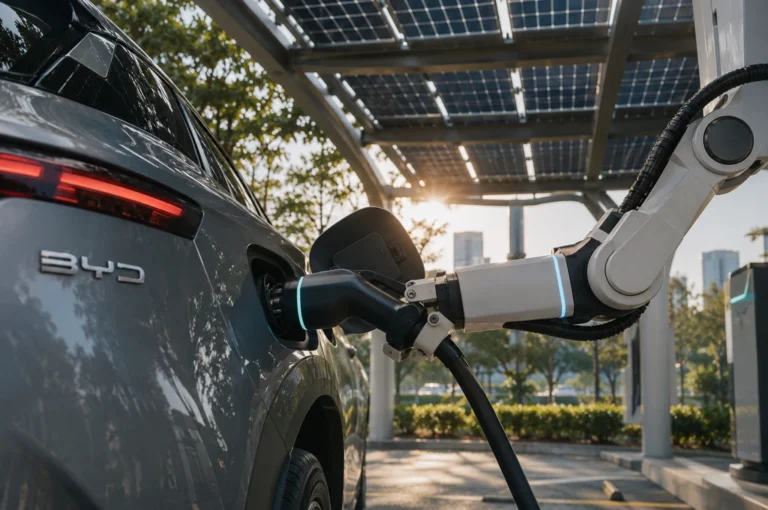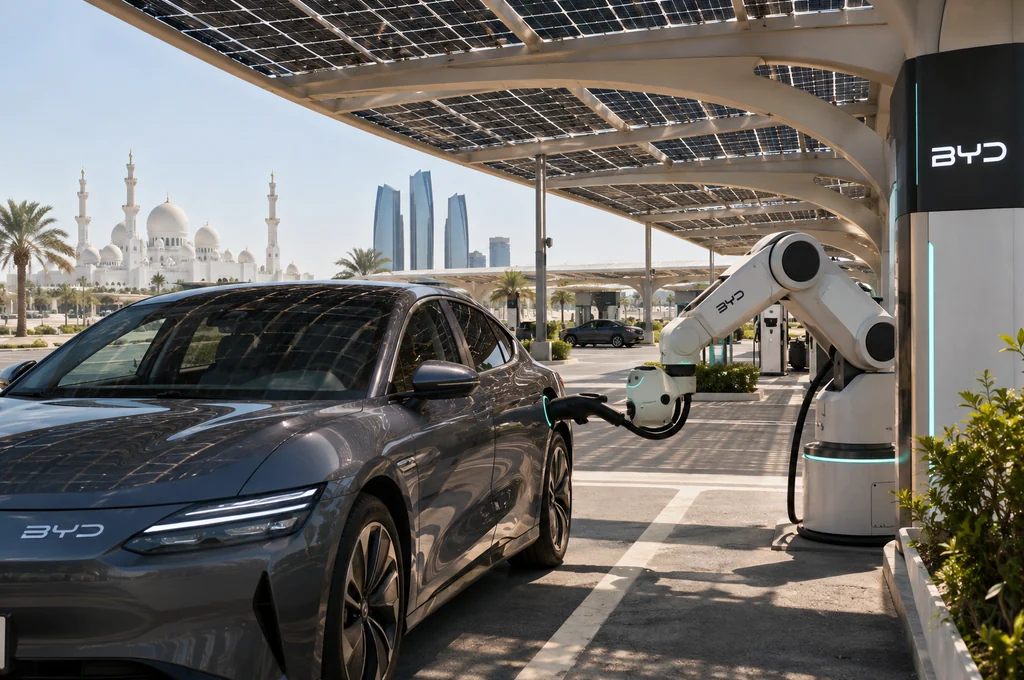
BYD solar-powered EV charging marks a massive shift in infrastructure strategy. The company launched a new facility in Abu Dhabi that integrates high-speed charging with rooftop solar generation and battery storage. This setup aims to decouple rapid charging speeds from the traditional power grid, offering a cleaner alternative for electric vehicle owners.
On paper, the concept sounds straightforward: charge cars using sunlight. In reality, the engineering required to maintain consistent power delivery during peak sun hours or cloudy days changes the entire balance of urban infrastructure planning. The new system places BYD at the forefront of integrating robotics into energy management.
⚡ Quick AI Overview & Key Recommendation
BYD solar-powered EV charging in Abu Dhabi combines ultra-fast flash charging with robotic arm technology and integrated battery storage. This system reduces grid dependency and lowers operating costs for fleets.
BYD solar-powered EV charging: The Engineering Breakdown
The core of this innovation lies in its integrated approach. The facility does not simply install solar panels over a parking lot. It pairs those panels with intelligent energy storage systems and high-power charging units.
Energy generated from the sun is stored in massive battery banks. When an electric vehicle arrives, the system draws power from these reserves rather than the main grid. This allows for charging speeds that would otherwise overload local infrastructure. The inclusion of a robotic arm suggests a maintenance advantage, potentially reducing the need for human intervention during charging sessions or panel cleaning.
This configuration addresses a specific pain point for EV adoption. Range anxiety often stems from long charging times. Flash charging capabilities mean drivers can spend less time plugged in and more time on the road.
Real-World Implications for Solar and EV Markets
This development signals a trend toward self-sufficient energy hubs. We see similar sentiments in other sectors. For instance, a recent project in Thailand saw DKSH mark 120 years by deploying a solar logistics fleet powered by electric vehicles. That initiative focused on decarbonizing transport routes. The Abu Dhabi project focuses on the energy source itself.
Furthermore, the financial mechanics of solar monetisation are becoming clearer. Ravindra Energy has been weighing options to monetize solar assets to fund further EV growth. This mirrors the capital-intensive nature of building robust charging networks. BYD is effectively creating a revenue-generating asset that produces its own fuel.
The technology also impacts the broader grid. By buffering energy usage, the system prevents localized strain. This is vital as electric vehicle adoption accelerates globally. It prevents the need for expensive grid upgrades in every neighborhood where charging stations are installed.
Comparing Infrastructure Models: BYD vs. Traditional Grid Charging
Traditional charging relies on the existing electrical grid. This creates bottlenecks during peak usage times. BYD solar-powered EV charging mitigates this through distributed generation.
Grid charging is often subject to variable rates and peak demand charges. The solar-integrated model stabilizes costs by generating free energy during daylight hours. It also ensures reliability. If the grid goes down, the storage system can keep the charging station operational.
Consider the logistics of maintenance. A traditional station requires human staff for monitoring and cleaning. The robotic element in the BYD system likely handles routine maintenance tasks, such as cleaning solar panels to ensure maximum efficiency. This automation increases uptime and reduces long-term operational expenses.
Why This Matters for the Future of Energy
This project is not just about cars. It represents a microcosm of the energy transition. It shows how electricity generation and consumption can be co-located. This reduces transmission losses and increases efficiency.
The synergy between solar panels and battery storage is the key. Solar is intermittent; batteries provide continuity. When combined with fast charging, they create a reliable ecosystem. This ecosystem is scalable, making it suitable for commercial fleets, airports, or large residential complexes.
Analysts watching this space note that such integrated systems set a new standard. They move beyond simple charging points to become energy management centers.
Frequently Asked Questions
What makes BYD solar-powered EV charging unique?
The system integrates ultra-fast flash charging with rooftop solar panels and intelligent battery storage, reducing reliance on the traditional power grid.
How does robotic technology benefit the charging system?
The robotic arm likely handles maintenance tasks like panel cleaning and system monitoring, reducing human intervention and increasing uptime.
Where was this new charging technology unveiled?
BYD unveiled this advanced charging infrastructure in Abu Dhabi, focusing on high-speed electric vehicle adoption.
Does solar-powered EV charging eliminate grid dependence?
It significantly reduces grid dependence by using stored solar energy for peak charging sessions, though some backup power may still be available.
What is the main advantage of flash charging?
Flash charging allows electric vehicles to gain significant range in a very short time, improving convenience for drivers and fleets.
How does this model impact electricity costs?
By generating and storing its own energy, the system lowers operating costs by utilizing free solar power instead of expensive grid electricity.
Is this technology applicable to commercial fleets?
Yes, the integrated storage and fast charging capabilities make it ideal for logistics and commercial fleets that require reliable power.
What role does battery storage play in this setup?
Battery storage acts as a buffer, capturing solar energy during the day and releasing it during peak charging demand or cloudy periods.
How does this compare to standard EV charging stations?
Standard stations rely on the grid and are limited by grid capacity, whereas this BYD system is self-contained and scalable.
Can this technology reduce carbon emissions?
Absolutely, by utilizing renewable solar energy for charging, the system significantly lowers the carbon footprint compared to fossil-fuel-based power.
The Future of Energy Is Local and Autonomous
BYD solar-powered EV charging proves that the future of transport infrastructure lies in integrated energy solutions. This system offers a blueprint for sustainable urban mobility.
Source: Electric Cars Report (electriccarsreport[dot]com)