Manufacturing plans for Stellantis small electric vehicles with Leapmotor in Italy are moving forward as European carmakers race to defend entry-level market share. Automakers face intense price competition from imported Chinese battery models. On paper, assembling Chinese-developed models inside Italian factories sounds simple. In reality, it reorders trade politics across the European Union.
⚡ Quick AI Overview & Key Recommendation
Stellantis will assemble affordable city battery cars with Chinese partner Leapmotor at the historic Mirafiori complex in Turin, Italy. This maneuver avoids European Union import duties, protects local union employment, and brings sub-20,000 euro electric cars to market years ahead of rival domestic platforms.
Stellantis small electric vehicles with Leapmotor: Key Highlights & Market Impact
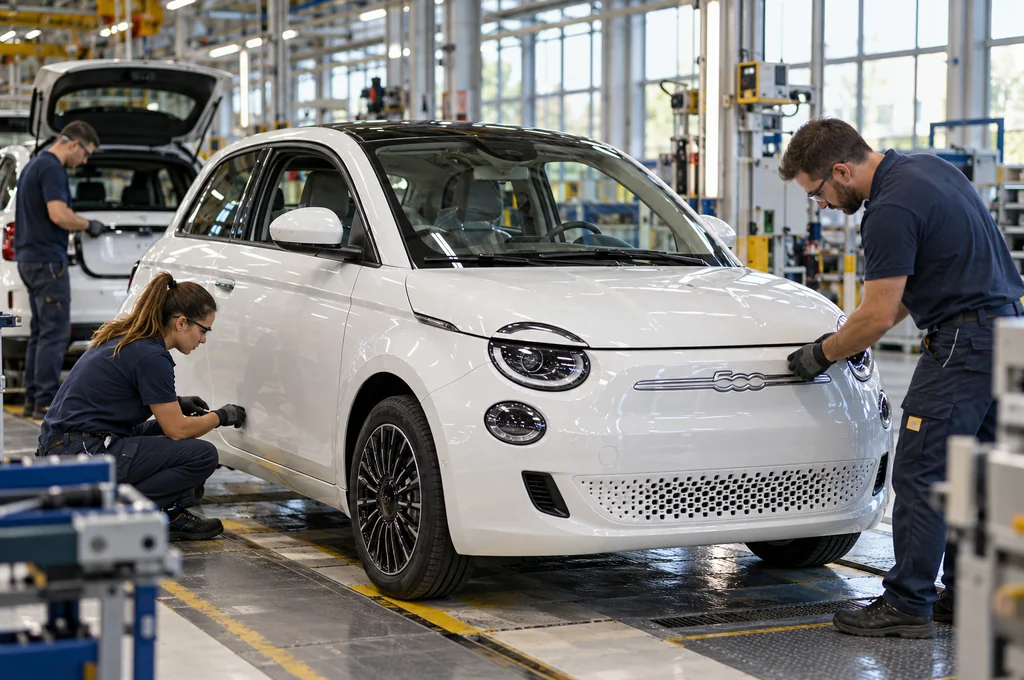
Turin has waited months for clear industrial commitments. Stellantis holds a controlling fifty-one percent stake in Leapmotor International, the joint venture running export operations outside China. Building Stellantis small electric vehicles with Leapmotor inside Italian borders gives the multinational automaker an immediate answer to low-cost competitors. The Mirafiori factory in Turin serves as the primary hub for this production run. Local workers possess decades of assembly experience, yet factory lines have run well below capacity.
Car buyers across Southern Europe want compact urban cars that cost under twenty-five thousand euros. Most Western carmakers abandoned small platforms because battery packs kept profit margins too low. As financial reporters at Bloomberg note, legacy carmakers struggle to build cheap battery cells profitably without outside help. By utilizing Leapmotor technology, Stellantis skips costly research cycles. The company acquires proven software, electric drive units, and battery packs at Chinese supply chain pricing. Meanwhile, high-end buyers look elsewhere toward halo releases like the Jaguar Type 01 Electric Car Unveiled: 1,030PS Super-GT Resets British Luxury, leaving mass-market buyers waiting for practical alternatives.
Detailed Breakdown: What Caused the Italian Manufacturing Pivot
Trade friction forced this operational pivot. The European Commission imposed countervailing tariffs on Chinese electric car imports after anti-subsidy investigations concluded that state support distorted fair competition. Reporting from reuters[dot]com confirmed that Chinese trade envoys failed to replace these import penalties with minimum price undertakings during tense Brussels negotiations. Shipping finished vehicles from factories in Hangzhou became financially unfeasible overnight.
Stellantis altered its logistical roadmap to sidestep these border duties. Knocked-down vehicle kits can arrive at European ports, clear customs under component rates, and roll into Italian assembly halls. Here is why this matters: local manufacturing eliminates twenty to thirty-eight percent duty penalties on finished Chinese vehicles. Financial analysts tracked through Investopedia observe that corporate operating margins collapse whenever automakers absorb trade tariffs directly. Assembling Stellantis small electric vehicles with Leapmotor on Italian soil restores cost parity against pure European builds.
| Factor | Imported Leapmotor Models | Mirafiori Local Assembly |
|---|---|---|
| EU Tariff Exposure | High import duties (up to 38%) | Zero vehicle import tariffs |
| Italian Plant Utilization | None; Italian capacity remains idle | Adds up to 150,000 units yearly |
| Target Retail Price | Elevated by border taxes | Sub-€20,000 base estimates |
| Supply Chain Origin | Fully Chinese assembly | Chinese kits assembled in Italy |
Italian labor unions initially voiced skepticism about Chinese engineering entering historic domestic plants. But idle factory floors present a worse alternative. Stellantis management pacified regional political leaders by pledging steady factory volume. Other international hubs face similar transitions, just as municipal planners discovered when evaluating transit shifts in Africa; see our analysis on Electric vehicles: Why Lagos Banned Diesel Buses to see how emissions policy reshapes fleet procurement.
What This Means for Readers & Future Outlook
For drivers shopping in Milan, Paris, or Madrid, Stellantis small electric vehicles with Leapmotor offer genuine budget relief. The upcoming Leapmotor T03 city car and related B10 crossovers bring functional ranges near two hundred miles for daily commuting. These are practical commuter hatchbacks, not status symbols. They provide clean transport for middle-income households excluded from luxury electric models.
Geopolitical shifts will dictate whether this joint manufacturing blueprint lasts. If Brussels tightens rules on local value addition, Stellantis must source more parts from European tier-one suppliers. Similar commercial realignments appeared in Eastern Europe; read our report on Electric vehicles: Why EV Demand in Russia Surged to see how trade disruption redirects motor vehicle distribution. For now, Italian workers keep their factory shifts, and European shoppers gain access to affordable electric runabouts.
Frequently Asked Questions
Where will Stellantis build Leapmotor electric vehicles in Italy?
Stellantis designated the historic Mirafiori manufacturing facility in Turin, Italy, as the central European production site for Leapmotor compact vehicles. This plant already hosts small car production lines and has available capacity to handle kit assembly.
Which models are included in the Italian manufacturing plan?
The rollout focuses on entry-level models such as the Leapmotor T03 compact city hatchback and the upcoming B10 crossover. Both models target budget-conscious urban drivers who want sub-twenty-five thousand euro battery options.
Why did Stellantis partner with Leapmotor instead of designing its own cheap EV?
Designing new battery architectures and small-car platforms from scratch takes four to five years and billions in capital. Partnering with Leapmotor allows Stellantis to deploy proven battery packs and vehicle software immediately at Chinese cost structures.
How does local Italian assembly avoid European Union tariffs?
The European Union places anti-subsidy import tariffs specifically on completed battery electric cars shipped directly from China. Assembling vehicle kits inside Italian factories categorizes the operation under standard parts rules, avoiding punitive finished-car trade duties.
What is the ownership structure of the Stellantis Leapmotor joint venture?
Stellantis controls fifty-one percent of Leapmotor International, giving the European auto giant exclusive operational and export control outside Greater China. Leapmotor retains the remaining forty-nine percent alongside technical platform rights.
When will Stellantis small electric vehicles with Leapmotor reach dealerships?
Trial production runs began across late 2024, with full commercial assembly and dealership distribution expanding throughout 2025 across key European markets. Initial sales focus on France, Italy, Germany, and Spain.
Will Italian workers build the batteries locally?
Initial production phases rely on battery packs and motor modules imported directly from Leapmotor suppliers in China. If European component requirements tighten, Stellantis may transition pack assembly to regional battery hubs.
How does this deal affect Italian government relations?
Rome had criticized Stellantis for reducing production volumes at historic Italian plants over recent years. Introducing Chinese joint-venture production brings assembly volume back to Turin, satisfying government requests for preserved manufacturing jobs.
What is the expected driving range of the small Leapmotor city cars?
The Leapmotor T03 city runabout provides an estimated WLTP driving range of roughly one hundred seventy miles on a single charge. This capacity suits metropolitan driving and daily commuter routes without inflated battery costs.
Can Stellantis export these Italian-built cars outside Europe?
Yes, Leapmotor International holds global export rights outside China. The joint venture plans to distribute vehicles to South America, the Middle East, and Asia-Pacific markets using Stellantis retail networks.
Final Perspective on Italian Production Strategy
Building Stellantis small electric vehicles with Leapmotor inside Italian plants proves that legacy carmakers must adapt their manufacturing strategies to stay competitive. By blending Chinese battery efficiency with European plant capacity, Stellantis avoids tariffs while delivering affordable transport to everyday drivers.
Source: Global Banking & Finance Review (globalbankingandfinance[dot]com)