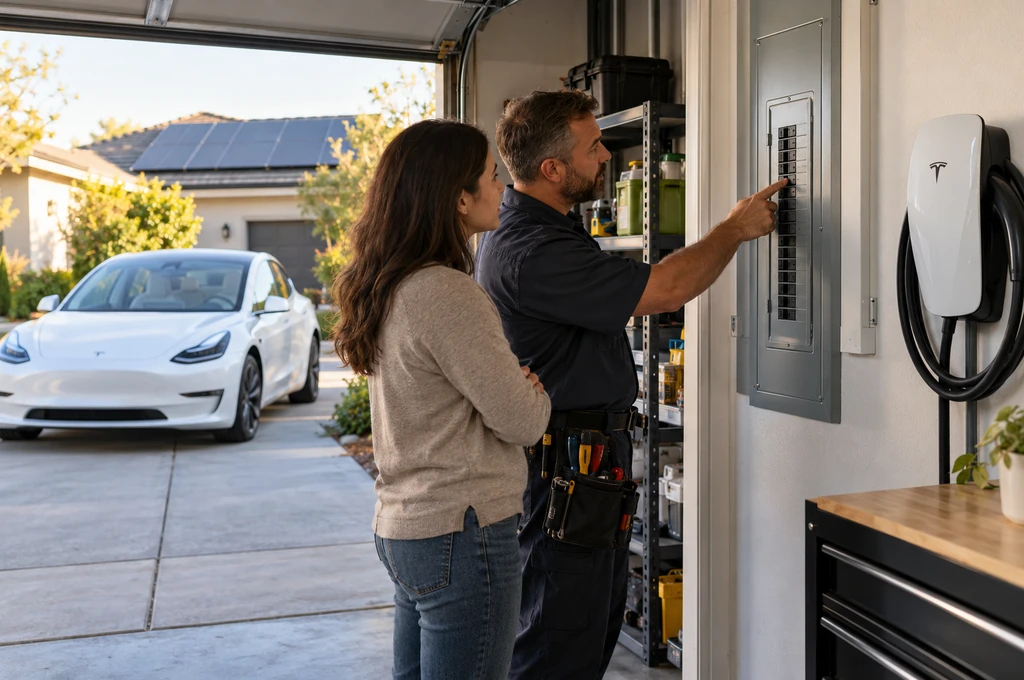
Tesla solar charging should run cleanly without friction, but standard residential electrical panels often place hard caps on simultaneous energy generation and delivery. When one homeowner encountered a strict 63-amp main breaker threshold that severed power transmission between their rooftop panels and vehicle, standard software automations failed to bridge the gap.
⚡ Quick AI Overview & Key Recommendation
When residential electrical supplies enforce a 63-amp breaker cap, charging an electric vehicle straight from photovoltaic panels causes systemic circuit tripping. The permanent solution requires installing automated dynamic load balancing hardware or secondary smart subpanels, allowing households to divert solar excess directly to electric cars without overloading utility connections.
Rooftop installations face physical limits. Grid operators in many international territories cap single-phase residential supplies at 63 amps or 100 amps to safeguard local transformers. The incident covered by thecooldown[dot]com underscores what happens when real-world electrical physics clash with consumer software expectations. The homeowner discovered that attempting to run heat pumps, household appliances, and electric vehicle hardware caused the main protection switch to drop instantly.
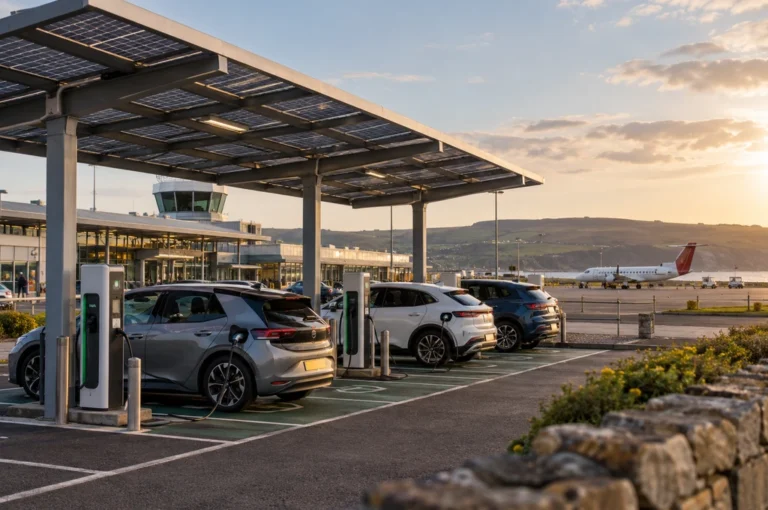
Reports compiled by financial outlets like Bloomberg indicate that domestic electrification projects are straining localized low-voltage networks. A standard level-2 EV charger draws 32 to 48 amps on its own. When combined with domestic baseload requirements, headroom evaporates fast. Commercial projects adapt through utility coordination, as seen when airport hubs develop custom infrastructure like the Ronaldsway Airport solar project reported on by manxradio[dot]com and fuelcellsworks[dot]com. Residential owners must build their own answers.
Tesla Solar Charging: Head-to-Head Specification Comparison
Managing domestic generation requires choosing the right electrical pathway. Below is a detailed breakdown comparing standard unmanaged home circuits against dynamic load-managed solar setups.
| System Metric | Standard 63-Amp Unmanaged Circuit | Dynamic Load-Balanced Workaround |
|---|---|---|
| Max Vehicle Draw | 32A (Fixed) | 6A to 32A (Variable) |
| Panel Saturation Point | Hard trip at 63A continuous load | Automatic throttle prevents circuit overload |
| Solar Capture Ratio | Under 45% direct solar self-consumption | Over 85% self-consumption without exports |
| Overload Protection | Thermal magnetic breaker shutoff | Microcontroller automated load shedding |
| Installation Hardware Cost | Minimal ($0 extra) | $350 to $1,200 for smart meters and relays |
| Software Integration | Basic app scheduling | Real-time CT clamp monitoring |
Relying on basic split-phase panels without telemetry is an invitation to service disruptions. Homeowners who research Victoria’s Best-Rated Solar Installers: 2026 Ratings Guide will note that experienced technicians now refuse to wire unmanaged high-draw chargers to restricted main feeds.
Key Differences: Real-World Performance, Comfort & Features
The core issue lies in continuous power calculations. Standard electrical codes mandate an 80 percent continuous load factor on residential breakers. On a 63-amp panel, maximum continuous draw cannot exceed 50.4 amps safely. If your heat pump pulls 16 amps, an oven draws 20 amps, and your car demands 32 amps, the system trips within minutes.
The workaround constructed by the homeowner relies on automated current-transformer (CT) clamping. Instead of allowing the vehicle to demand maximum output regardless of household needs, smart energy monitors track real-time consumption at the utility entrance meter. If domestic demand surges, the EV wall connector receives a dynamic signal lowering its charge rate to 10 or 12 amps. As soon as the stove or dryer turns off, Tesla solar charging ramps back up to siphon clean rooftop kilowatt-hours.
This level of active load balancing mirrors commercial fleet designs, similar to how large-scale depots function when a Tesla Solar Stunt Proves Renewable Power Can Anchor Fleet Hubs across high-demand corridors. At the municipal level, decentralized power management preserves utility continuity while maximizing green driving miles.
Final Buying Verdict: Which One Should You Buy?
Electrification requires planning before hardware lands on the wall. Selecting the proper energy architecture determines whether you enjoy seamless green miles or endure constant trips to your circuit breaker box.
Choose a standard unmanaged install if: Your home already possesses an upgraded 200-amp main utility connection, your base electricity usage remains low, and you never plan to charge simultaneously with running heavy mechanical heating or cooling equipment.
Choose a dynamic load-managed solar workaround if: You operate within a strict 63-amp to 100-amp grid allocation, you experience recurring main switch trips, or you want to redirect pure rooftop production into your battery pack without drawing costly peak grid power. Similar smart distribution setups also power international installations, much like the Solar EV Charging Station Debuts at Mahaicony Technical Centre in Guyana to maintain local balance on restricted grids. Regulatory reporting tracked by Reuters confirms that national grid operators increasingly favor households utilizing active load modulation over passive high-draw appliances.
Frequently Asked Questions
Why does a 63-amp limit stop Tesla solar charging?
A 63-amp breaker caps total household energy draw. When domestic appliances and an EV charger pull power together, the total load exceeds 63 amps, which trips the breaker and stops all charging.
What is dynamic load balancing?
Dynamic load balancing uses sensors to measure total household electrical use in real time. It automatically lowers the EV charging rate during high consumption to prevent circuit overloads.
Can software alone solve breaker capacity issues?
Tesla solar charging software can monitor solar production, but it cannot measure total home circuit consumption without physical current transformer clamps connected to the service panel.
How much does it cost to install a dynamic load monitor?
Dedicated smart energy monitors cost between $300 and $1,200 including installation. This is far cheaper than paying thousands to upgrade utility infrastructure to 200 amps.
Does direct solar charging damage the vehicle battery?
Direct solar charging does not damage vehicle batteries. Modern electric vehicles are engineered to handle variable charging currents smoothly without harming battery chemistry.
What is the 80 percent continuous load rule?
Electrical codes dictate that electrical circuits should not run past 80 percent of their rated capacity for longer than three hours continuously to avoid overheating.
Can I manually lower the charging amps in my car app?
You can manually set a lower charging amperage in the car application. However, this does not adjust dynamically when heavy home appliances suddenly turn on.
Are 63-amp main breaker supplies common?
A 63-amp single-phase supply is very common in residential areas across the UK, parts of Europe, and older suburban housing developments worldwide.
Will solar exports trip a main breaker?
Solar exports alone rarely trip the main switch because electricity flows out to the grid. Tripping occurs when home consumption and EV intake combine to overload incoming limits.
Do heat pumps interfere with electric vehicle charging?
Heat pumps demand substantial electrical current during startup cycles. Without active load balancing, their sudden draw easily pushes a constrained 63-amp panel over safe limits.
Mastering Clean Energy Inside Physical Grid Limits
Adapting your home setup through active monitoring protects infrastructure and preserves vehicle readiness. Implementing modern load management unlocks reliable Tesla solar charging without relying on costly utility upgrades.
Source: The Cool Down (thecooldown[dot]com)