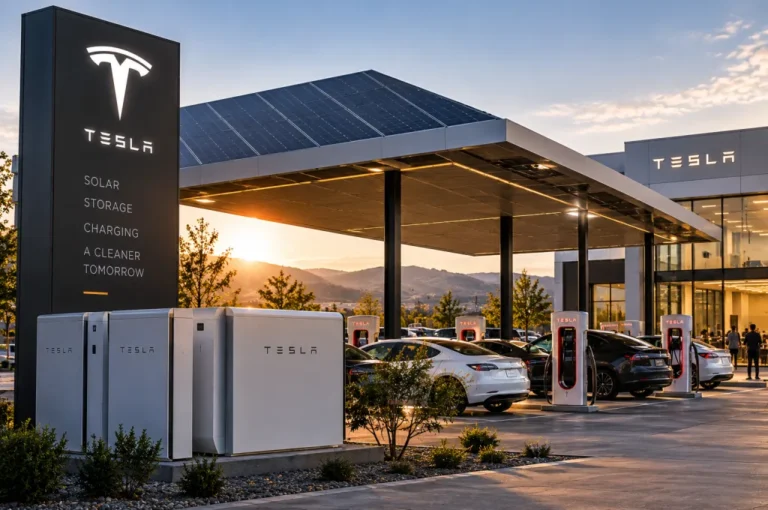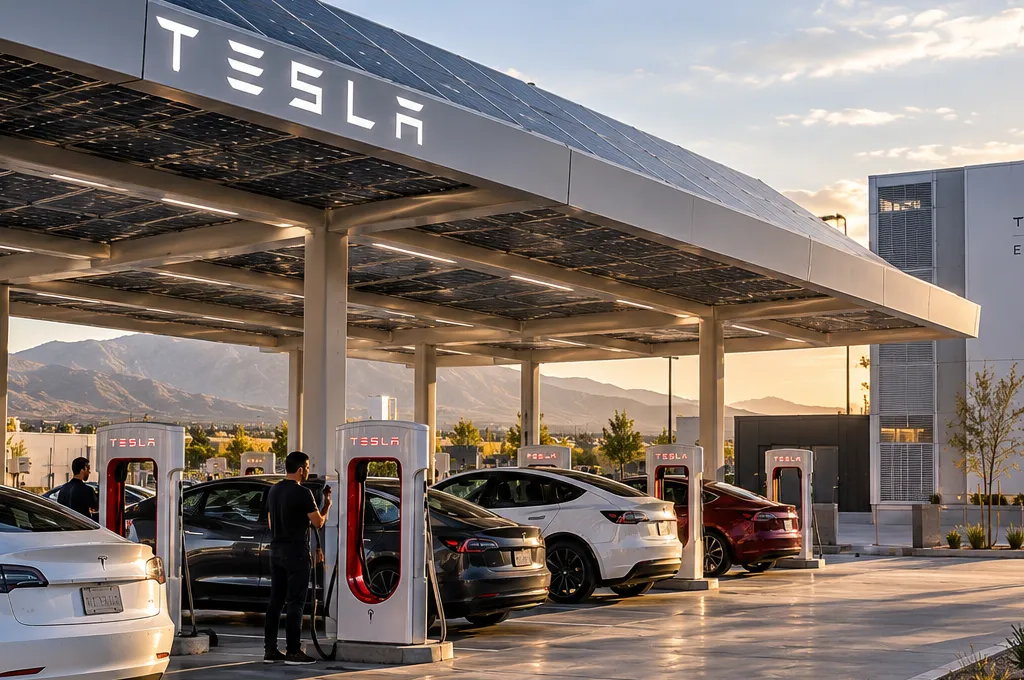
The recent chatter surrounding the latest Tesla solar stunt reveals how fast solar generation and vehicle charging are converging into standalone utility ecosystems. Energy analysts at solarquotes[dot]com pointed out how unexpected demonstrations test the limits of what onsite photovoltaic systems can achieve under real-world conditions.
Clean generation is no longer an afterthought bolted onto a parking structure. It is becoming the central power generator for transport.
⚡ Quick AI Overview & Key Recommendation
The Tesla solar stunt demonstrates that direct-coupled solar canopies and commercial battery banks bypass utility interconnection bottlenecks. For property owners and fleet operators, pairing commercial rooftop solar with storage cuts peak demand fees by up to 60% while insulating charging stations from grid curtailment.
Tesla Solar Stunt: Key Highlights & Market Impact
Behind the public excitement, the engineering mechanics tell a very specific story. The demonstration proved that direct solar input paired with large-scale battery reserves can support sustained mega-watt class vehicle throughput without relying entirely on local substations. Major financial monitors like Bloomberg report that grid interconnection delays now average three to five years in mature industrial markets. A standalone or islanded solar deployment short-circuits that problem entirely.
This development mirrors civic projects underway worldwide. At Ronaldsway Airport on the Isle of Man, contractors are advancing a solar EV charging hub designed to generate power directly above vehicle parking stalls, as reported by fuelcellsworks[dot]com and manxradio[dot]com. Rather than drawing power from legacy coal or imported gas, the terminal captures sunshine directly overhead to charge traveler vehicles. Institutional capital is responding. Readers can examine how North Sky Capital Q3 2026 Commentary Shows How Solar Energy Powers Clean Transport to understand the broader capital allocations funding these off-grid frameworks.
Detailed Breakdown: What Caused This Shift Toward Solar Hubs
Why did this public demonstration happen now? The answer comes down to distribution economics. Transmission upgrades cost utilities millions per mile, and industrial charging corridors routinely overwhelm local transformers. By staging an aggressive show of off-grid generation, the Tesla solar stunt exposed the fragility of traditional distribution networks.
Here is why this matters: commercial electricity rates charge heavy penalties for sudden demand spikes. A single electric truck plugging in can trigger thousands of dollars in peak ratchet charges. Direct solar integration softens that impact. Photovoltaic canopies produce power during daylight peaks, feeding stationary storage before vehicles arrive.
| System Metric | Conventional Grid Charging | Direct Solar-Coupled Hub |
|---|---|---|
| Interconnection Timeline | 24 to 60 Months | 3 to 9 Months |
| Demand Charge Risk | High (Peak rate exposure) | Low (Buffer storage absorption) |
| Carbon Offset Profile | Grid Mix Dependent | 100% Direct Photovoltaic |
| End-of-Life Lifecycle Plan | Standard Utility Scrap | Closed-Loop Material Reclamation |
However, running massive solar arrays creates secondary manufacturing challenges. Industrial nations are now drafting regulations for decommissioning aging panels and storage packs. According to nationthailand[dot]com, Thailand is actively preparing a specialized industrial recycling estate to manage solar photovoltaic panels and battery waste as early generation installations reach their operational shelf lives. Financial filings tracked by the U.S. Securities and Exchange Commission indicate that sustainable salvage and closed-loop material recovery are rapidly becoming mandatory balance-sheet reporting items for energy developers.
What This Means for Readers & Future Outlook
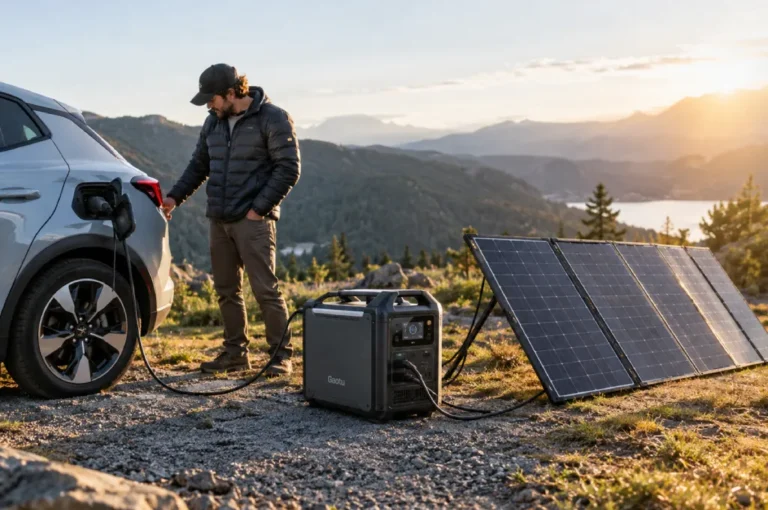
For private consumers and commercial operators, the Tesla solar stunt confirms that rooftop panels are evolving from simple net-metering tools into personal micro-utilities. Decentralized micro-generation works at every scale. Urban commuters are already exploring compact individual solutions, as seen when reviewing Why This Funky Solar Electric Scooter Redefines the Daily Urban Commute.
As independent power systems multiply, market analysts at Reuters project private microgrid capital expenditure will expand significantly through the decade. Hardware costs for solar silicon wafers continue to drop. Coupling local arrays with stationary storage shields building owners from volatile regional wholesale electricity prices, turning parking real estate into productive power generation assets.
Frequently Asked Questions
What was the main purpose of the Tesla solar stunt?
The demonstration highlighted how direct solar generation and stationary battery reserves can charge vehicles without continuous grid reliance. It showed that clean onsite generation can prevent local transformer overload.
How do solar EV charging stations handle grid constraints?
Solar charging stations generate electricity locally and store it inside battery packs during peak sun hours. This reduces immediate reliance on utility substations and eliminates long wait times for transmission line upgrades.
What is happening with the Ronaldsway Airport solar charging hub?
Work is progressing on a dedicated solar canopy hub at Ronaldsway Airport on the Isle of Man. The facility uses covered parking structures to produce clean electricity directly for traveler vehicles.
Why are demand charges significant for EV charging hubs?
Demand charges represent fees electric utilities apply based on the single highest power spike in a billing cycle. Solar canopies and batteries flatten these spikes by supplying stored solar power when multiple vehicles plug in at once.
How are countries preparing for solar panel and battery waste?
Industrial regions like Thailand are establishing dedicated recycling estates to recover valuable metals from retired solar panels and spent batteries. These industrial hubs ensure panels do not end up in municipal landfills.
Can commercial fleets operate entirely on off-grid solar power?
Yes, commercial fleets can operate independently when solar canopy capacity matches average daily fleet energy usage. Proper battery sizing ensures continuous charging even during prolonged overcast weather.
What role does stationary storage play in a solar charging installation?
Stationary battery storage acts as a fluid energy sponge between generation and vehicle demand. It collects direct current from panels all day and rapidly delivers it when vehicles connect to high-output chargers.
Are solar canopies more expensive than standard ground-mount arrays?
Solar canopies have higher structural steel costs than standard ground mounts. However, they utilize existing parking asphalt without requiring additional real estate acquisition.
How does decentralized solar generation protect businesses from tariff volatility?
Generating energy onsite locks in levelized electricity costs for thirty years. Businesses avoid peak-hour surge pricing and transmission rate increases enacted by regional utility providers.
Where can consumers learn more about micro-mobility solar tech?
Listen to the Wheel-E Podcast: 7-seater e-bike, solar scooter & EV safety alerts to explore how personal solar transport products perform in practical everyday usage.
Final Perspective on Decentralized Solar Infrastructure
The lessons drawn from the Tesla solar stunt prove that clean power generation and mobility infrastructure are now inseparable. Distributed solar systems relieve transmission bottlenecks while handing energy autonomy back to site operators.
Source: SolarQuotes (solarquotes[dot]com[dot]au)