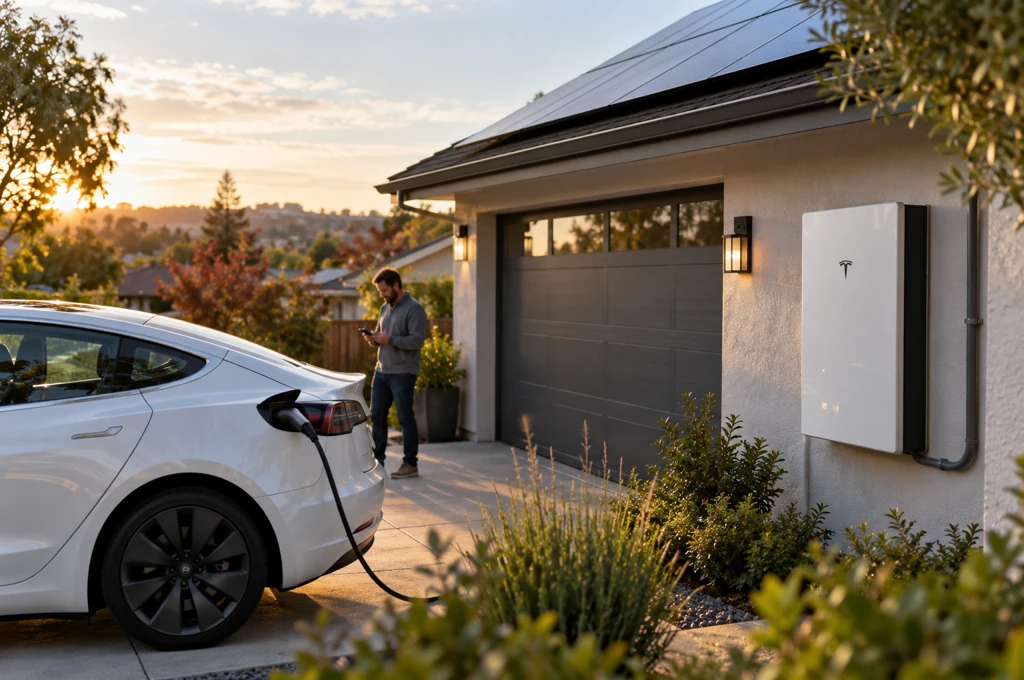
Tesla virtual power plants connect home batteries and electric vehicle systems directly to utility markets. They are changing how households purchase and consume grid electricity. Behind the software coordination, an ambitious energy network is forming.
⚡ Quick AI Overview & Key Recommendation
Tesla virtual power plants combine residential Powerwall units and connected electric vehicle charging hardware into unified, software-driven utility assets. They stabilize regional grids during peak demand events while paying homeowners premium rates for stored kilowatt-hours, outperforming traditional stationary battery setups in speed and dispatch flexibility.
Utilities struggle with peak demand spikes during extreme weather events. Instead of firing up dirty peaker plants, energy operators can tap aggregated battery reserves across thousands of garages. Reports from slashgear[dot]com show these networks perform critical frequency regulation and voltage support. The economic model is simple. Homeowners store cheap solar or off-peak grid energy. When regional demand surges, the network injects that electricity back into the power lines for cash credits. It creates a distributed buffer that keeps localized circuits stable.
Hardware scale matters. As discussed in recent coverage of Outage-Ready Electric Cars: How Vehicle-to-Home Power Is Redefining Grid Backup, combining automotive battery packs with stationary home storage unlocks massive capacity. Financial analysts at Bloomberg note that distributed storage networks offer utilities faster response times than conventional turbine generators. Tesla manages the telemetry through automated software, adjusting flow rates in fractions of a second.
Tesla Virtual Power Plants: Quick Comparison & Key Specifications
Understanding how Tesla manages distributed assets requires comparing the primary energy equipment tied to residential networks. Here is how current setups compare across capacity, cost, and functional utility integration.
| Model | Price Range | Real Range | Battery Capacity | Fast Charging Time | Best For |
|---|---|---|---|---|---|
| Powerwall 3 | $9,300 – $11,500 | N/A (Stationary) | 13.5 kWh | N/A (Grid Inverter) | Whole-home grid balancing |
| Model Y Long Range | $47,990 – $52,490 | 310 miles | 75 kWh | 15 min (Supercharger) | Commuters seeking bidirectional integration |
| Cybertruck Dual Motor | $79,990 – $99,990 | 340 miles | 123 kWh | 20 min (800V DC) | Heavy vehicle-to-load backup power |
| Model 3 RWD | $38,990 – $42,490 | 272 miles | 57.5 kWh | 15 min (Supercharger) | Budget daily urban transport |
Top Ranked Models: In-Depth Reviews & Real-World Performance
Connecting automotive packs to fixed residential circuits requires balancing vehicle availability against utility commitments. Here is an evaluation of the primary hardware involved in these energy programs.
Powerwall 3 Hardware Suite
The unit incorporates an integrated solar inverter with 11.5 kW continuous output. Real-world testing confirms seamless islanding when grid voltage drops. Homeowners enrolled in programs across California and Texas report earning $350 to $700 during intense summer heatwaves. The integrated design reduces installation labor. However, users cannot easily expand capacity using older generation hardware without auxiliary boxes. It suits single-family households seeking automated bill reduction and local utility incentives.
Tesla Cybertruck Powershare System
With its high-voltage architecture, the truck delivers up to 11.5 kW of direct off-grid power via native onboard circuits. During grid strain, its 123 kWh capacity represents nearly ten residential Powerwalls parked in a driveway. Owners gain massive emergency run-time. The downside involves physical presence. If the truck is commuting during a regional peak event, the virtual plant loses that node. It serves contractors and rural homeowners who require mobile heavy electricity alongside domestic backup.
Model Y Utility Integration Fleet
The Model Y remains the volume vehicle across global markets. Software-managed charging pauses vehicle intake during peak demand windows, dropping thousands of megawatts of load instantly. That sudden drop acts like virtual generation. This vehicle provides exceptional efficiency and vast fast-charging access. It lacks dedicated bidirectional AC hardware out of the box. Urban commuters who prioritize low fuel costs and smart home scheduling get the greatest return here.
Customer Buying Guide: How to Choose the Right Model for Your Needs
Choosing equipment for distributed energy programs depends on your local grid utility policies. Financial regulators registered at U.S. Securities and Exchange Commission review corporate energy commitments, but local municipal regulators dictate export compensation rates. Check your utility tariff schedule before purchasing storage units.
Evaluate your daily driving distance. If your vehicle leaves early and returns late, a stationary Powerwall is required to bank mid-day solar production. Those working remotely can exploit vehicle charging controls directly. Balance the upfront equipment investment against your regional net-metering rules. In areas with high time-of-use rate variance, participating in Tesla virtual power plants pays for hardware amortization substantially faster.
Frequently Asked Questions
What are Tesla virtual power plants?
They are decentralized networks of customer-owned Powerwall batteries linked by automated software. The system coordinates thousands of units to supply energy to local electric grids during peak demand hours.
How do participants earn money from virtual power plants?
Homeowners receive financial credits on their utility bills for exporting stored battery power during demand events. The software automatically sells electricity when spot prices surge.
Do virtual power plants drain vehicle batteries completely?
No, user-defined safety reserves prevent batteries from discharging below specified limits. You maintain full control over minimum reserve thresholds inside the mobile app.
Can electric cars directly export energy to virtual power plants?
Currently, stationary Powerwall units handle direct grid export in most utility territories. Bidirectional vehicle-to-grid capabilities are rolling out gradually under select pilot programs.
How fast do virtual power plants respond to grid distress?
The software network responds within milliseconds to frequency dips and voltage drops. This reaction speed is significantly faster than firing up traditional natural gas turbines.
Are virtual power plants active during widespread blackouts?
Yes, enrolled batteries island the home instantly during an outage to keep local circuits live. They stop exporting to the street to protect utility repair crews working downstream.
Do virtual power plant cycles degrade battery health rapidly?
Dispatch events occur only a few dozen times per year during critical grid emergencies. Tesla warranties cover Powerwall hardware through full operational lifecycles under active program participation.
Which states currently support Tesla energy programs?
Major operational programs exist across California, Texas, Massachusetts, and Puerto Rico. Regulators and utilities continue to expand program approvals to new service territories.
Does participating require a home solar panel system?
Solar panels maximize value by charging batteries with clean free power during daylight hours. However, some utility regions allow grid-only charging based on off-peak rates.
How do electric vehicles support the grid without bidirectional hardware?
Vehicles support grid stability through coordinated automated charging curtailment. Pausing thousands of vehicle charging sessions instantly frees up generation capacity during sudden electrical shortages.
The Expansion of Tesla Virtual Power Plants
Tesla virtual power plants prove that distributed battery networks provide real stability to aging infrastructure while delivering financial returns to vehicle and storage owners.
Source: SlashGear (slashgear[dot]com)