
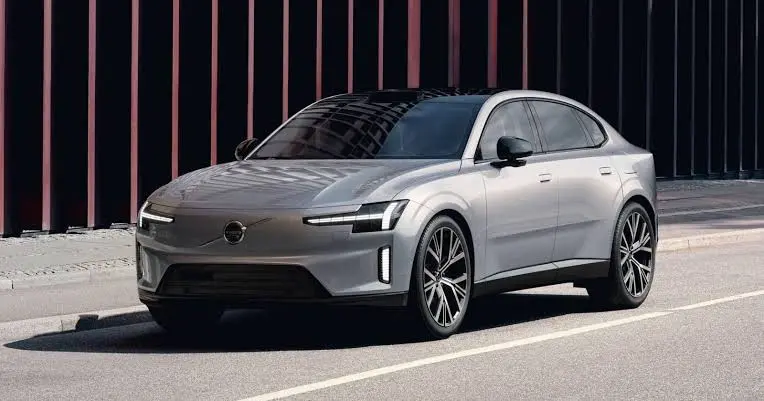
fast charging: The Volvo ES90 marks the return of a dedicated executive three-box silhouette to the Swedish carmaker’s lineup, arriving tomorrow as an all-electric flagship. When the brand discontinued the conventional S90 in 2024, it left a noticeable void in the luxury executive garage. Tomorrow changes that equation. The electric four-door debuts alongside its high-riding sibling, the EX90 SUV, establishing a twin-flagship strategy.
fast charging: Volvo ES90: Key Highlights & Market Impact
Here is why this matters. High-end buyers spent the past three years buying electric SUVs simply because premium sedans were scarce. The arrival of the Volvo ES90 gives traditional saloon enthusiasts a genuine long-wheelbase alternative. Imported directly as a completely built unit (CBU), the flagship sedan will carry an estimated ex-showroom price tag between Rs 1 crore and Rs 1.20 crore.
Import tariffs remain stiff. That reality puts this car squarely against established electric luxury sedans from German rivals. According to market trackers at Bloomberg, executive buyers in emerging markets still demand low-slung, chauffeur-friendly rear seats despite the commercial rush toward utility vehicles. Volvo targets that exact preference with long legroom and a quiet cabin layout.
| Specification | Rear-Wheel Drive (RWD) | All-Wheel Drive (AWD) |
|---|---|---|
| Battery Capacity | 92 kWh | 106 kWh |
| Claimed Range (WLTP) | 664 km | 702 km |
| Power Output | 333 hp | 456 hp to 680 hp |
| Peak Torque | 480 Nm | 670 Nm+ |
| DC Fast Charging | Up to 350 kW | Up to 350 kW |
| 10-80% Charge Time | 22 minutes | Under 25 minutes |
| 0-100 kph Time | 6.6 seconds | Sub-4.0 seconds (top trim) |
Detailed Breakdown: What Caused the Swedish Sedan Revival
Engineering teams built the Volvo ES90 on the group’s dedicated 800-volt SPA2 architecture. Shared directly with the EX90, this platform solves two historic pain points: thermal degradation and slow charging. The 800-volt electrical hardware supports sustained DC fast charging speeds up to 350 kW. Drivers can replenish the smaller 92 kWh battery from 10 to 80 percent in just 22 minutes at a compatible high-output public hub. Drivers can read more about how EV fast charging actually works: the charge curve explained to understand how high-voltage systems sustain peak speeds.
Power outputs split across clear tiers. The base configuration uses a single rear-axle motor that generates 333 horsepower and 480 Nm of torque. It accelerates from zero to 100 kph in 6.6 seconds. Top speed is capped at 180 kph across all variants, consistent with the brand’s global safety cap. The larger 106 kWh battery pack pairs exclusively with a twin-motor all-wheel-drive system. In standard AWD tune, it develops 456 horsepower. The range-topping performance calibration pushes that figure to a ferocious 680 horsepower. Claimed WLTP range tops out at an impressive 702 km on the larger pack.
Hardware compatibility matters just as much as pack size. The sedan features standard public terminal integration, and owners can check EV charging connectors explained: CCS2, Type 2 and what fits your car before planning long-distance interstate routes.
What This Means for Readers & Future Outlook
Behind the launch headline, there is another story. Premium electric mobility is shifting away from compromise. Early luxury EVs were essentially adapted combustion platforms with cramped floors and middling efficiency. The bespoke SPA2 underpinnings in this sedan provide a flat floor, lower aerodynamic drag, and substantial energy storage without stealing passenger head space.
With the Volvo ES90, the brand is targeting executive owners who split their week between the driver seat and the left rear recliner. The low roofline cuts frontal drag compared to tall SUVs, translating directly into real-world highway range. Industry analysts quoted by Reuters note that luxury sedan aerodynamics remain the cleanest tool carmakers have to break the 700-kilometer range barrier without loading vehicles with excessive battery weight.
Frequently Asked Questions
When will the Volvo ES90 officially launch?
The electric sedan officially launches tomorrow. It debuts alongside the EX90 electric SUV as the brand’s dual flagship lineup.
What is the expected price of the car?
The car will arrive as a completely built unit import. Industry estimates place the ex-showroom price between Rs 1 crore and Rs 1.20 crore.
Which architecture underpins the new sedan?
The car uses the dedicated 800-volt SPA2 architecture. It shares this hardware foundation directly with the EX90 electric SUV.
What battery sizes are offered internationally?
The model offers two battery pack choices: a 92 kWh pack and a larger 106 kWh pack. Both support high-voltage DC charging.
What is the maximum driving range on a single charge?
The larger 106 kWh battery pack delivers a claimed WLTP driving range of up to 702 km. The 92 kWh battery yields up to 664 km.
How quickly can the battery charge from 10 to 80 percent?
Using a 350 kW DC fast charger, the battery can charge from 10 to 80 percent in approximately 22 minutes. The 800V architecture makes these speeds possible.
What are the powertrain options for the sedan?
Buyers can choose between a single-motor rear-wheel-drive layout producing 333 hp and a dual-motor all-wheel-drive setup delivering up to 680 hp. Both deliver instant electric response.
Is the top speed restricted on this model?
Yes, top speed is electronically capped at 180 kph. This restriction matches the company’s global policy across all passenger vehicles.
Will the sedan be manufactured locally or imported?
The sedan arrives initially as a completely built unit import. Local assembly has not been confirmed for the first allocation phase.
Which cars will the new electric sedan compete with?
It competes directly against top-tier luxury electric sedans like the BMW i5, Mercedes-Benz EQE sedan, and Porsche Taycan. It balances executive comfort with high-voltage charging capability.
Final Outlook on the Volvo ES90
Tomorrow’s debut of the Volvo ES90 proves that executive saloons still command authority in the electric age. With 702 km of potential range, 800-volt charging architecture, and genuine flagship presence, the new model gives discerning luxury buyers a compelling reason to skip the standard SUV queue.
Source: Autocar India (autocarindia[dot]com)