Tesla vs SpaceX risk profiles shifted dramatically after political headwinds and market tremors erased $457 billion across the broader technology sector following contentious midterm ballots. Electric vehicle investors watched public market valuations swing violently while private space assets recalibrated their funding models under fresh regulatory scrutiny.
⚡ Quick AI Overview & Key Recommendation
Tesla carries higher immediate downside risk than SpaceX due to consumer exposure, margin compressions, and retail liquidity shocks. While SpaceX relies on long-term defense contracts and private market shielding, Tesla faces fierce automotive pricing wars, slowing Cybertruck output, and public quarterly scrutiny.
Market swings do not happen in a vacuum. When legislative power shifts, capital reallocates overnight. Publications like ibtimes[dot]com[dot]au and tech-insider[dot]org documented how recent midterm results sparked fresh policy debates around green energy subsidies and commercial space contracts. A notable political race where candidate Hinojosa secured a 52.8% win in South Texas drew attention directly to local operational corridors, as reported by shattered[dot]io. Meanwhile, auto enthusiasts read reports on techspot[dot]com stating that Tesla started moderating Cybertruck assembly lines in Austin despite leadership denying demand fatigue. Investors now ask a straightforward question: where does real structural risk live?
Tesla vs SpaceX: Head-to-Head Specification Comparison
Comparing a publicly traded electric vehicle pioneer against a closely held aerospace defense contractor requires looking at underlying liquidity, debt obligations, and revenue structures. The table below analyzes operational and financial metrics across both businesses to assess asset durability.
| Core Metric | Tesla (Public EV OEM) | SpaceX (Private Aerospace) |
|---|---|---|
| Primary Valuation Anchor | Public market cap on Nasdaq via SEC filings | Private venture funding rounds and tender offers |
| Primary Revenue Engine | EV sales (Model Y, 3, Cybertruck) & Energy Storage | Starlink internet subscriptions & launch missions |
| Customer Base | Retail automotive consumers & commercial fleet buyers | Government agencies, military, & satellite subscribers |
| Liquidity & Daily Volatility | Instant exchange liquidity; exposed to sharp sell-offs | Illiquid shares; pricing insulated from daily market panic |
| Regulatory Exposure | NHTSA safety recalls, clean vehicle tax credit policy | FAA launch licenses, defense procurement mandates |
| Capital Expenditure Profile | Gigafactory tooling, battery cells, autonomous compute | Starship flight testing, orbital infrastructure |
Tesla must answer to public shareholders every 90 days. Its financial reports appear on U.S. Securities and Exchange Commission databases with complete line-item transparency. In contrast, SpaceX sets share prices through controlled secondary tender offerings. That structural insulation protects SpaceX founders from sudden retail panic, even when broader macro liquidity dries up.
Key Differences: Real-World Performance, Comfort & Features
Consumer sentiment dictates automotive survival. Unlike aerospace contracts that span multiple fiscal years, passenger car deliveries depend on immediate buyer purchasing power. High borrowing rates crush monthly auto loan affordability. When buyers pull back, automakers bleed margins.
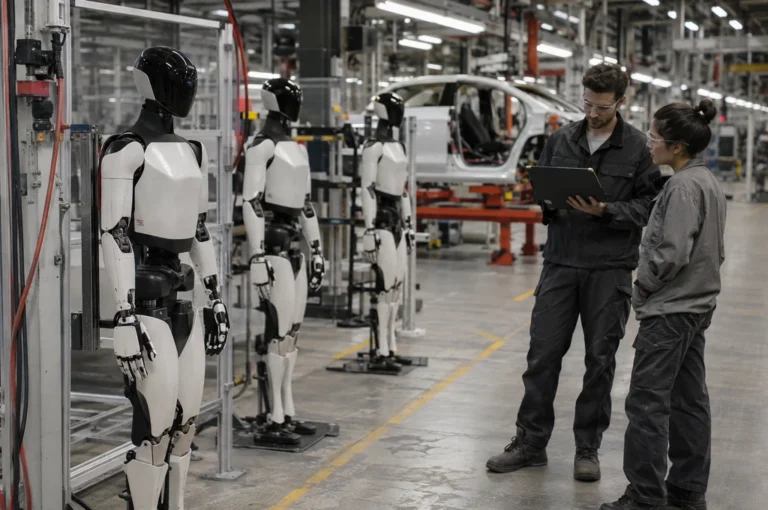
Tesla felt this pinch directly across its manufacturing footprint. Analysts tracking recent legislative shifts saw Tesla, SpaceX Shares Fall Amid Democratic Control of Congress as tax incentives and regulatory audits came under intense political review. While Tesla expands its footprint internationally through moves like the Tesla’s Argentina Entry: Cencosud Store Confirmed for Late November, domestic execution remains bumpy. In Austin, reports confirm that line technicians adjusted Cybertruck shift patterns. Executive statements disputed demand drop-offs, yet dealership lots and transit yards tell a different story.
SpaceX operates on an entirely different commercial plane. Institutional clients do not cancel rocket launches because of consumer credit card debt. Starlink expanded its recurring subscription cash flow, providing stable baseline revenue that rivals traditional defense contractors. Coverage from Bloomberg and Reuters continues to show institutional appetite for Starlink cash generation. While local political battles in South Texas create zoning and environmental headwinds, SpaceX preserves guaranteed federal payloads that keep its launchpads active regardless of economic cycles.
Tesla also faces real industrial competition. Legacy automakers and overseas rivals flood showrooms with competitive electric SUVs at discounted price points. Tesla cut prices repeatedly throughout North America and Europe to protect delivery volume. Those reductions hurt gross automotive margins. Production scaling requires immense capital, as seen when local authorities vetted the Fort Bend County Approves $10B Tesla Deal with 8,700 Jobs initiative. Tesla must spend billions continuously to refresh its vehicle catalog, solve full autonomous driving software, and modernize production lines.
Final Buying Verdict: Which One Should You Buy?
Evaluating an investment or strategic position requires matching asset characteristics to your personal risk tolerance. Both enterprises share single-key-man reliance, yet their exposure pathways diverge completely.
Choose Tesla if you want:
- Instant market liquidity with immediate entry and exit capabilities on standard brokerage platforms.
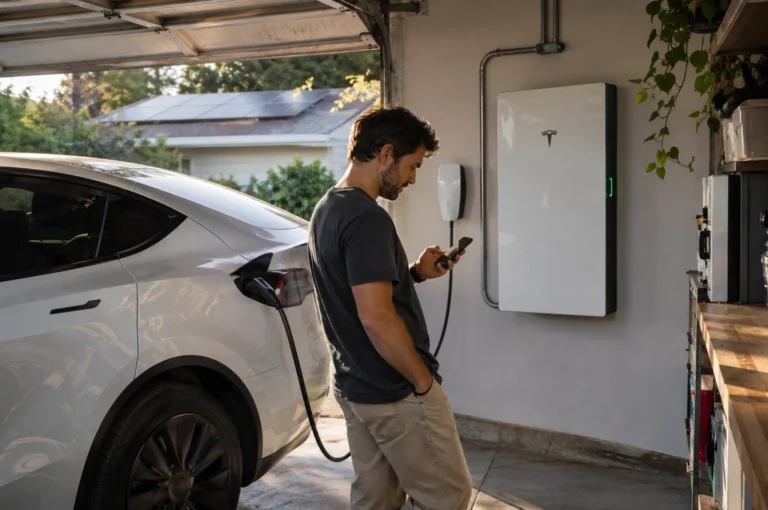
- Direct upside exposure to commercial energy storage growth, battery grid deployments, and robotics development.
- Audited financial disclosures verified by public regulatory bodies.
- A pure-play electric mobility asset with established manufacturing scale and proprietary charging networks.
Choose SpaceX exposure if you want:
- Insulation from daily public market panic and short-seller campaigns.
- Revenue anchored by sticky multi-year national defense and space agency contracts.
- Global telecommunications growth through thousands of active low-earth orbit satellites.
- A quasi-monopoly in heavy orbital launch mechanics where competitors struggle to achieve reuse capabilities.
Market data on Investopedia confirms that private equity investments trade liquidity for stability during broad downturns. Tesla vs SpaceX presents a classic choice between immediate retail liquidity with high price turbulence and illiquid venture assets anchored by government spending.
Frequently Asked Questions
Why did Elon Musk companies experience a $457 billion market drop?
The valuation drop stemmed from broader market sell-offs following political midterm shifts, rising interest rates, and investor concerns over regulatory scrutiny. Publicly listed equities like Tesla absorbed the brunt of that valuation shock.
Is Tesla riskier than SpaceX right now?
Yes, Tesla faces higher near-term market risk because it operates in a cyclical, consumer-facing automotive sector. SpaceX benefits from multi-year government contracts and private market pricing insulation.
How do political elections affect Tesla and SpaceX operations?
Elections alter federal clean vehicle subsidies, carbon credit trading programs, and commercial spaceflight oversight. Changes in local leadership can also affect zoning, launch licenses, and state tax exemptions.
Why is Tesla moderating Cybertruck assembly volume?
Automotive reports show adjustments to production schedules amid high financing rates and changing early-adopter order backlogs. While leadership denies demand weakness, manufacturing pacing aligns with real-world delivery absorption.
Can everyday retail investors purchase SpaceX stock?
Direct retail purchases are generally unavailable because SpaceX remains a private corporation. Only accredited institutions and select pre-IPO venture funds participate in secondary private share offerings.
What is the primary revenue driver for SpaceX today?
SpaceX generates substantial operational revenue through its Starlink satellite broadband subscription network alongside heavy payload launch contracts for commercial satellite operators and NASA.
How do automotive margin cuts hurt Tesla valuation?
Vehicle price reductions lower gross profit margins per unit sold, which directly compresses earnings per share. When earnings shrink, growth-multiple equity valuations contract sharply.
Does SpaceX carry debt obligations similar to Tesla?
SpaceX relies primarily on equity financing rounds, commercial launch revenues, and private capital raises rather than public debt bonds. Tesla maintains a clean public corporate balance sheet with strong cash reserves.
Where does Tesla face its toughest electric vehicle competition?
Tesla faces intense competition in China from agile local EV manufacturers, as well as in Europe and North America where established legacy brands offer aggressive lease pricing.
What role does key-man risk play in Tesla vs SpaceX valuations?
Both companies rely heavily on Elon Musk for vision, brand influence, and strategic capital allocation. If executive focus splits between multiple ventures, investor confidence in execution timelines declines.
Balancing Automotive Volatility Against Aerospace Monopoly
Every vehicle delivered to a showroom floor carries market risk, and the Tesla vs SpaceX debate ultimately highlights the stark divide between consumer retail sensitivity and government-backed aerospace contracts. For electric vehicle investors, monitoring automotive gross margins and delivery metrics remains the surest path to navigating upcoming economic turbulence.
Source: International Business Times Australia (ibtimes[dot]com[dot]au)