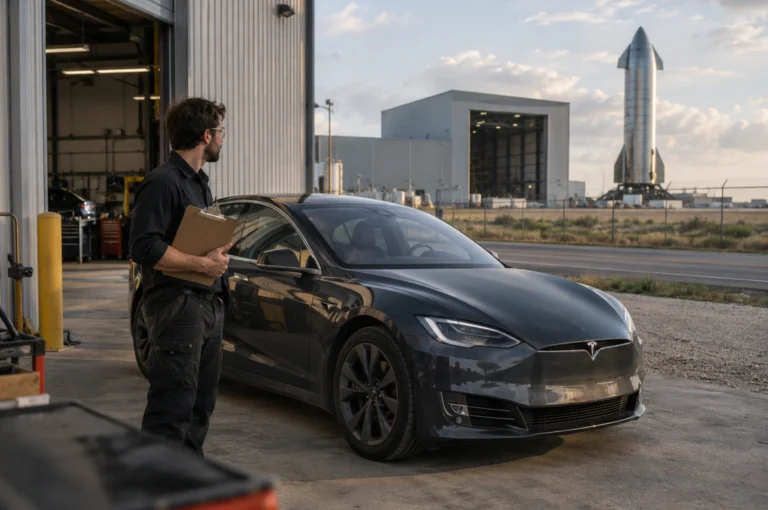
Tesla revenue flat as Elon Musk eyes possible SpaceX deal, revealing a complex picture for the electric vehicle (EV) market. The company reported a second-quarter revenue of $24.9 billion, a figure that barely budged from the previous year. This stagnation occurs while Tesla’s founder simultaneously pursues a potential merger with his rocket company, SpaceX. The financial data suggests a company in transition, balancing the mature, steady cash flows of automotive sales against the high-growth, high-risk potential of aerospace expansion.
⚡ Quick AI Overview & Key Recommendation
Tesla revenue flat at $24.9B, missing analyst expectations, while Elon Musk explores a SpaceX merger. Investors face a choice between stable EV dividends and Musk’s ambitious aerospace ambitions.
Tesla Revenue Flat: Key Highlights & Market Impact
The numbers paint a specific picture. Revenue did not grow, but it did not collapse. Profitability remains a strong point. Tesla reported a net income of $2.5 billion. This indicates that the company maintains healthy margins despite the revenue plateau. The core EV business is still generating significant cash. However, the growth engine appears to be sputtering. Deliveries of cars are slowing down. Competition in the EV sector has intensified. Legacy automakers are launching new electric models. This market pressure likely contributes to the flat financial results.
The narrative shifts when you look at Elon Musk. His focus is not solely on cars. The rumors and reports regarding a potential SpaceX deal suggest a strategic pivot. Musk is looking to leverage the success of his private space company. The financial structures of Tesla and SpaceX are distinct. A merger would fundamentally change how both companies operate. It would consolidate Musk’s power and assets under a single corporate umbrella. This move signals a shift from an automotive-centric strategy to a broader technology and space exploration strategy.
Market analysts view this dual-path strategy with caution. On one hand, the flat revenue keeps the dividend flowing to shareholders. On the other, the distraction of a major corporate restructuring could stall innovation in vehicle development. Investors must weigh the current stability of the EV market against the potential future of space exploration. The decision to hold or sell Tesla stock now depends on which of these two paths a person believes will yield the highest returns.
Detailed Breakdown: What Caused Tesla Revenue Flat
Several factors contributed to the flat revenue. The most obvious is the saturation of the EV market. Tesla no longer has a monopoly on electric vehicles. Consumers now have choices from legacy brands. This competition forces Tesla to lower prices. Lower prices reduce profit margins. Lower margins can lead to flat revenue figures.
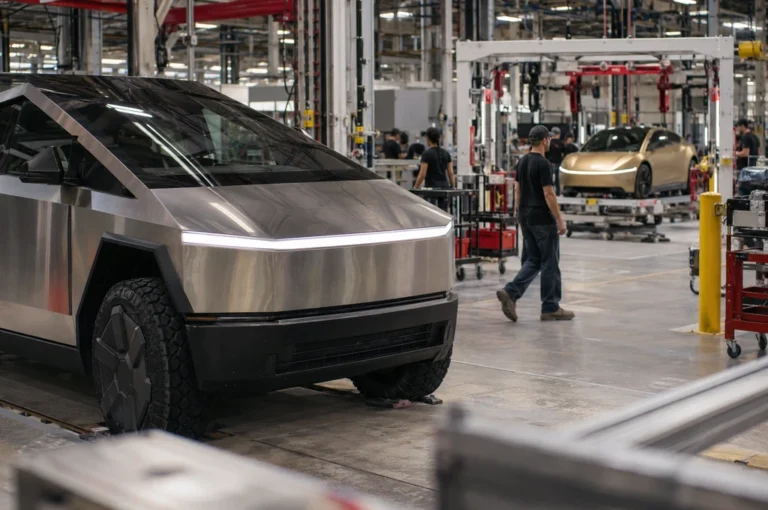
Production volumes also play a role. Tesla has faced challenges with production ramp-ups for new models. The Cybertruck, for example, faced significant delays. Delays in production mean fewer cars reach customers. Fewer cars sold directly translates to lower revenue. The company is also winding down production of older models to prepare for new ones. This transition period often creates revenue dips.
External economic factors are at play. Inflation affects consumer spending power. High interest rates make auto loans more expensive. This can dampen demand for expensive goods like electric vehicles. Supply chain issues also persist. Shortages of key components can limit production capacity.
Despite these headwinds, Tesla’s gross margin remains robust. The company is efficient at converting revenue into profit. This operational efficiency is a key strength. It allows the company to weather market storms. However, for long-term growth, revenue growth is essential. A flat trend line requires a catalyst to reverse. That catalyst could be a new, highly anticipated vehicle. It could also be a major corporate move like the SpaceX deal.
What This Means for Readers & Future Outlook
The flat revenue does not mean the end of the EV revolution. It means a maturation of the market. The explosive growth phase is likely over. The next phase will be about consolidation and efficiency. Tesla will likely face more price competition. It must find ways to differentiate its vehicles beyond just the brand name.
For the average reader, this means EV prices could stabilize. As the market matures, price wars may cool down. However, the pace of innovation might slow slightly. Tesla is a leader because it moves fast. Restructuring for a potential merger would slow that pace. New features and software updates might arrive less frequently.
The potential SpaceX deal is the biggest wildcard. If it happens, it would be a historic event. It would merge two of the world’s most valuable private companies. This would create a new entity with immense resources. This entity could lead in both transportation and space travel. But the process of merging such large organizations is fraught with legal and operational challenges.
Investors should monitor the production numbers closely. Deliveries are the key metric. If deliveries start to climb again, the revenue trend will likely turn positive. If the SpaceX deal progresses, watch for how it affects Tesla’s board of directors and strategic direction. The future of the EV market depends on how Tesla navigates this transition. The company is at a crossroads. It must decide between being a car company or a technology conglomerate.
>Gross Margin>Deliveries>~380,000 Units>~466,000 Units>
| Financial Metric | Q2 2024 Result | Q2 2023 Result |
|---|---|---|
| Total Revenue | $24.9 Billion | $24.9 Billion |
| Net Income | $2.5 Billion | $2.9 Billion |
| 18.2% | 18.3% |
External Sources: Analysis based on reports from reuters[dot]com and investopedia[dot]com. Reference to EV market dynamics and corporate restructuring strategies can be found at bloomberg[dot]com.
FAQ
- Why is Tesla revenue flat? Tesla revenue is flat due to slowing EV demand, increased competition, and production challenges with new models like the Cybertruck.
- What is Elon Musk’s connection to SpaceX? Elon Musk is the founder and CEO of SpaceX. The reports suggest he is exploring a potential merger between the two companies.
- How does the SpaceX deal affect Tesla shareholders? A merger could dilute existing Tesla shareholders and shift the company’s focus from automotive to aerospace and technology.
- Are electric vehicle sales declining? Sales are growing, but the growth rate has slowed significantly compared to previous years. The market is maturing.
- What is the impact of high interest rates on Tesla? High interest rates make car loans expensive, which can reduce consumer demand for high-priced vehicles like Teslas.
- What are Tesla’s future growth plans? Tesla plans to expand its global footprint, introduce more affordable models, and pursue energy storage solutions.
- How does Tesla compete with legacy automakers? Tesla competes through its charging network, software ecosystem, and brand recognition in the premium EV segment.
- What is the significance of the flat revenue? A flat revenue line indicates that the company is not growing at the pace investors expect, which can lead to a drop in stock price.
- Can Tesla recover from this flat period? Yes, if they can increase production, launch successful new models, and execute the SpaceX deal effectively.
- Where can I find more details on Tesla’s financials? Detailed financial reports and filings are available on the sec[dot]gov website.
Conclusion
Tesla revenue flat signals a challenging time for the EV giant. The company faces internal production hurdles and external market competition. Elon Musk’s potential move to merge with SpaceX adds a layer of complexity to the situation. The future of the company depends on execution.
Frequently Asked Questions
Why is Tesla revenue flat despite high demand for EVs?
Tesla revenue remains flat due to production challenges, including delays in the Cybertruck launch, and increased competition from legacy automakers forcing price reductions.
What are the latest reports on Elon Musk’s potential SpaceX deal?
Reports indicate Elon Musk is exploring a possible merger between Tesla and SpaceX, which could fundamentally change the corporate structure of both companies.
How does the flat revenue impact Tesla’s stock price?
A flat revenue figure often disappoints investors, leading to volatility in the stock price as the market digests the lack of growth compared to previous quarters.
Is Tesla still the leader in the electric vehicle market?
While Tesla remains a leader, its market share is shrinking as legacy automakers rapidly increase their electric vehicle offerings and production capabilities.
What are the main risks associated with a potential Tesla-SpaceX merger?
A merger would create a massive conglomerate, potentially diluting Tesla shareholders and shifting focus away from core automotive operations to aerospace projects.
How does Tesla’s profitability compare to its revenue figures?
Tesla maintains healthy profitability despite flat revenue, showing strong operational efficiency and margin control in its core car business.
What external factors are affecting Tesla’s sales performance?
Economic factors such as high interest rates, inflation, and supply chain disruptions are currently dampening consumer demand for new vehicles.
Where can investors find the official Tesla financial filings?
Detailed financial statements and regulatory filings can be found directly on the U.S. Securities and Exchange Commission website.
What is the expected timeline for Tesla’s next major product launch?
Tesla is expected to launch new affordable models and continue expanding its Supercharger network, though specific timelines can vary based on production success.
How does the EV market landscape look for the rest of 2024?
The market is expected to become increasingly competitive, with more electric vehicle options available to consumers across all price segments.
Conclusion
Tesla revenue flat reveals a company at a pivotal moment. It must navigate a competitive market while considering a massive corporate restructuring.
Source: Axios (axios[dot]com)