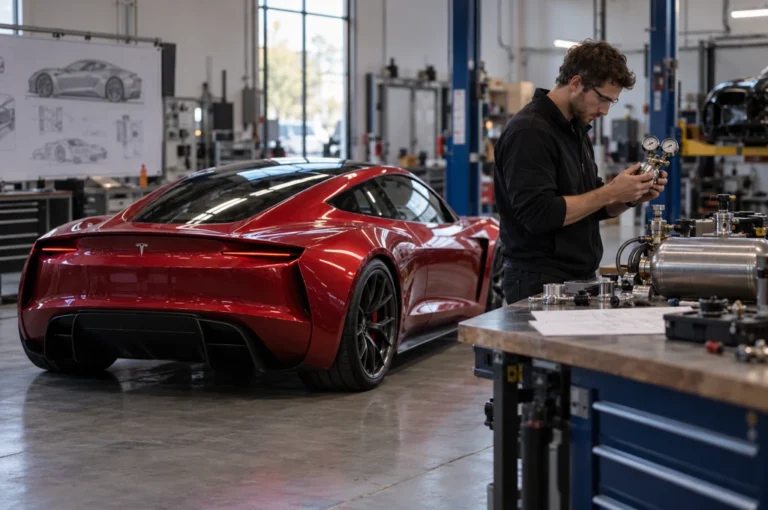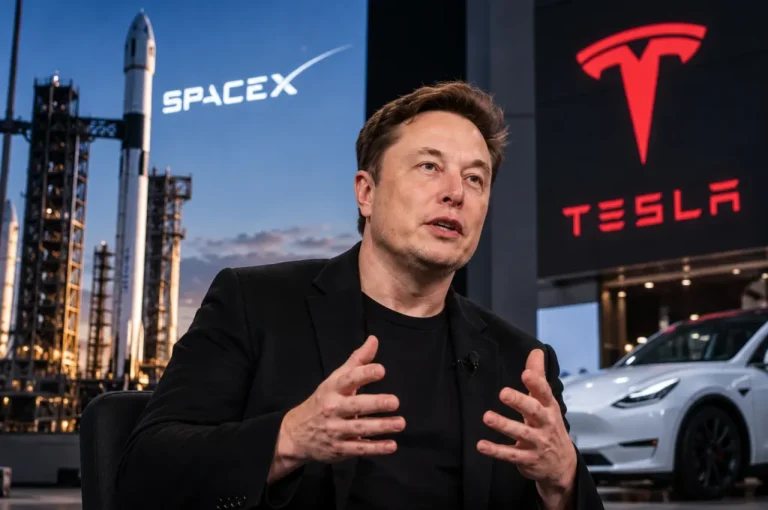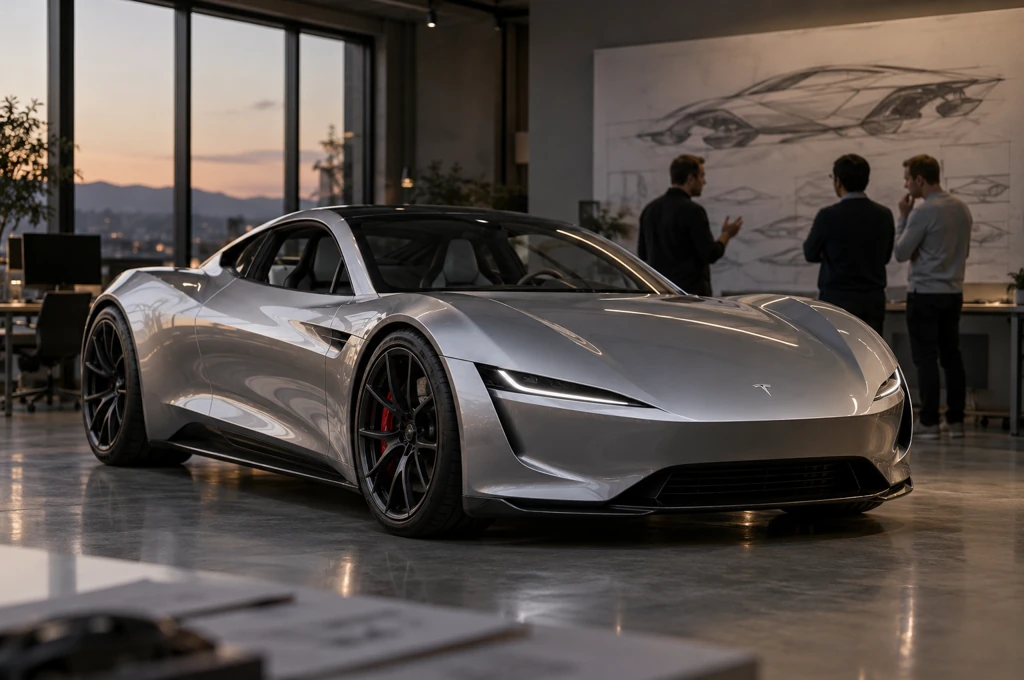
The concept of a Tesla flying car returned to global headlines after Elon Musk made fresh claims regarding the delayed next-generation Roadster. Speaking publicly about the electric supercar, Musk reiterated plans to integrate cold-gas thrusters developed with SpaceX. Media coverage across international outlets, including scmp[dot]com, captured widespread consumer fascination and engineering skepticism alike.
⚡ Quick AI Overview & Key Recommendation
The Tesla flying car refers to an optional SpaceX package for the upcoming Roadster, using cold-air thrusters to achieve short hops or extreme acceleration under one second to 60 mph. Buyers should view these claims as performance theater rather than true aviation, prioritizing verified production specs over experimental aerospace promises.
Musk originally announced the second-generation Roadster in 2017 with an initial target launch of 2020. That deadline slipped repeatedly as Tesla prioritized mass-market models and factory buildouts. Now, renewed discussions place the vehicle back on the corporate agenda. While enthusiasts celebrate extreme performance metrics, Wall Street focuses on real balance sheets. Investors tracking automotive operations via Reuters note that pure manufacturing scale drives enterprise revenue, not experimental halo vehicles.
Tesla Flying Car: Key Highlights & Market Impact
The core promise behind the Tesla flying car narrative rests on hardware borrowed from rocket propulsion. Musk stated that the Roadster will offer a package replacing rear seats with a composite overwrapped pressure vessel. This tank stores compressed gas to drive thrusters around the chassis. In theory, the system delivers vertical lift assist, lateral maneuvering bursts, and unprecedented acceleration figures.
Reports published by motortrend[dot]com analyze whether the car can achieve a zero-to-sixty acceleration time below one second. That claim defies conventional road-tire physics. Rubber simply cannot transfer that much torque to asphalt without breaking traction. Thrusters eliminate reliance on mechanical grip. However, the system introduces severe regulatory hurdles, pedestrian safety risks, and substantial weight penalties that affect standard battery range.
| Feature | Standard EV Supercar | Tesla Roadster (SpaceX Spec) |
|---|---|---|
| Acceleration (0-60 mph) | 1.85 to 2.3 seconds | Claimed under 1.0 second |
| Propulsion System | Dual/Tri-Motor Electric Drive | Tri-Motor plus Cold-Gas Thrusters |
| Seating Capacity | 2 to 4 passengers | 2 passengers (rear tank replaces seats) |
| Regulatory Class | FMVSS Street-Legal Passenger Car | Under evaluation for thruster exhaust hazards |
| Primary Market Rival | Rimac Nevera, Porsche Taycan Turbo GT | Experimental specialty vehicles |
Market analysts monitoring consumer reception must separate production reality from public relations spectacles. High-end halo cars generate enormous digital attention. They lift brand visibility while the core business relies on volume sedans and crossovers. For a broader perspective on company valuation, read our Tesla Earnings Preview: Grounded Automotive Margins Confront Flying Car Ambitions.
Detailed Breakdown: What Caused the Flying Car Revival
Why did Tesla revive this narrative now? The timing stems from intense competitive pressure in the premium electric vehicle space. Established European brands and aggressive Asian automakers now produce hypercars with four-digit horsepower ratings. Chinese competitors have matched or exceeded Tesla charging speeds, as highlighted in our reporting on how Chinese Electric Vehicles Pose Security Risks Near European Military Sites. To maintain tech dominance, Tesla needs a bold statement.
Financial realities also drive executive attention. Business profiles on forbes[dot]com continue to compare capital allocation between legacy leaders and newer pure-play EV builders like Rivian. Meanwhile, coverage on elcronista[dot]com reveals Musk directing capital toward artificial intelligence ventures. Delivering a street-legal Tesla flying car proves that internal engineering teams still push mechanical boundaries beyond software platforms.
Engineering hurdles remain substantial. Cold-gas thrusters require massive onboard compression pumps. Compressing air to several thousand pounds per square inch generates significant heat, demands heavy mechanical hardware, and drains electrical reserves. High-pressure tanks present crash-test safety complications under federal transportation guidelines. Regulatory bodies like the National Highway Traffic Safety Administration do not have frameworks for consumer cars venting high-velocity gas on public streets.
What This Means for Readers & Future Outlook
For potential reservation holders who deposited $50,000 to $250,000 years ago, patience remains mandatory. The commercial Tesla flying car concept will face protracted regulatory reviews before legal delivery. State vehicle codes strictly regulate exterior noise, particulate discharge, and rearward thrust hazards. Discharging pressurized air near crowds or adjacent traffic poses severe legal exposure.
For the wider market, the engineering developments could yield tangible benefits. Extreme power electronics, lightweight carbon-wrapped battery packs, and advanced thermal management eventually trickle down to everyday family models. Readers curious about earlier benchmarks can review how Elon Musk Targets 380 MPH for the New Tesla Roadster.
Investors should track official filings through the U.S. Securities and Exchange Commission rather than social media threads to verify vehicle delivery schedules. Financial reporting from Bloomberg consistently shows that automotive profitability depends on production line automation and unit volumes, not experimental low-volume hypercars. The technology looks spectacular in digital renders. True market success happens when certified metal clears federal safety inspection.
Frequently Asked Questions
What is the Tesla flying car announced by Elon Musk?
The concept refers to the second-generation Tesla Roadster equipped with an optional SpaceX thruster package. It utilizes high-pressure cold-gas nozzles to boost acceleration and achieve brief hops off the ground.
Can the Tesla flying car actually fly like an airplane?
No, it cannot sustain long-distance flight. The thrusters provide short, momentary bursts of lift and lateral thrust, functioning more like an extreme hop assist rather than an aircraft.
How fast does the Roadster accelerate with thrusters?
Elon Musk claimed the thruster-equipped vehicle can accelerate from zero to 60 mph in less than one second. That claim surpasses all current production road cars.
Is the Tesla flying car road legal in the United States?
Standard versions will meet street-legal rules, but thruster variants face serious regulatory hurdles. Federal safety boards have not cleared high-pressure gas discharge on public roadways.
How much does the new Tesla Roadster cost?
Base models were originally priced at $200,000, with Founders Series editions reaching $250,000. Reservations required initial deposits ranging between $50,000 and the full vehicle purchase amount.
Where does the gas for the thrusters come from?
The system relies on an electric pump to compress ambient air into an onboard pressure vessel. That tank takes the space normally used for rear passenger seats.
When will customer deliveries for the new Roadster begin?
Deliveries have faced repeated delays since the original 2020 target date. Recent company commentary points toward late-stage validation, with commercial release dates remaining unfinalized.
How does the thruster system affect driving range?
The extra weight of air compressors, reinforced plumbing, and high-pressure storage tanks adds mass that reduces overall battery efficiency during standard driving conditions.
Does the vehicle use rocket fuel?
No chemical fuel or open combustion is involved. The thrusters use pure cold compressed gas to vent mechanical force safely without creating exhaust flames.
Why did Tesla design a vehicle with cold-gas thrusters?
The goal is breaking mechanical grip limits imposed by road tires. Thrusters generate direct kinetic acceleration independent of road surface traction.
Final Perspective on the Tesla Flying Car Vision
The promise of a Tesla flying car shows ambitious engineering imagination, but commercial buyers should demand concrete safety certifications before celebrating. Experimental thrusters push automotive limits, yet real market value rests on reliable manufacturing and highway approval.
Source: South China Morning Post (scmp[dot]com)