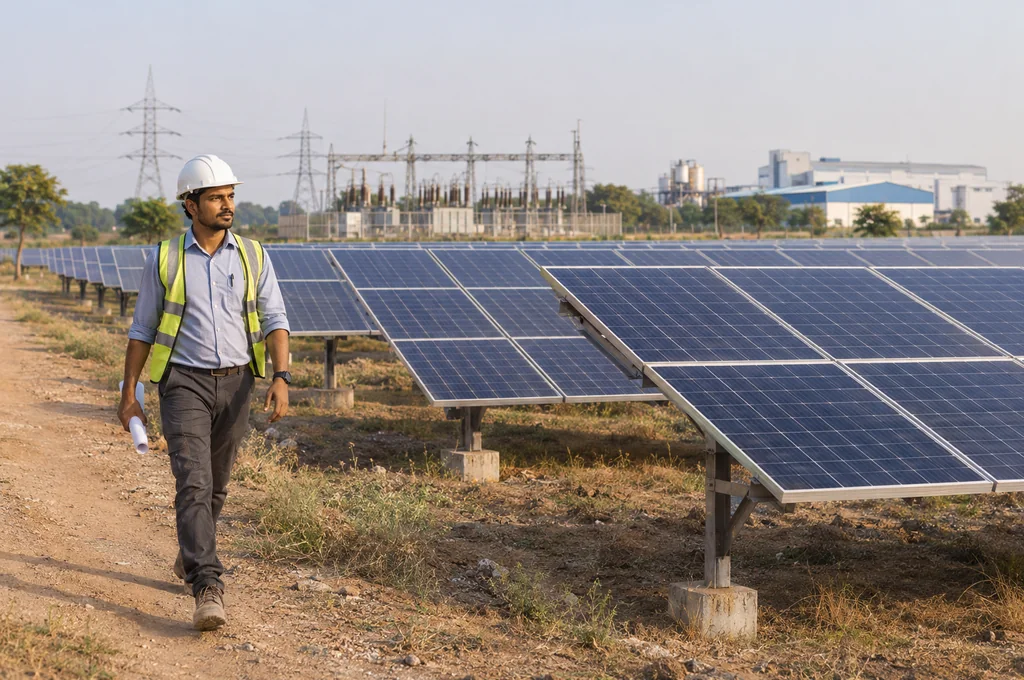
India’s solar parks are evolving beyond simple land allocations. They represent a strategic shift toward sustainable industrial ecosystems. This transformation draws clear parallels from China’s aggressive low-carbon experiment. By integrating advanced renewable energy grids, massive battery storage, and strict emission controls, China has redefined industrial efficiency. India must absorb these lessons to build parks that are not just energy generators, but vital economic and ecological anchors for the future.
⚡ Quick AI Overview & Key Recommendation
India’s solar parks should adopt China’s integrated low-carbon models by mandating on-site solar generation, large-scale battery storage, and strict emission caps to ensure grid stability and environmental compliance.
India’s solar parks: Key Highlights & Market Impact
The push for renewable energy in India has moved from theoretical policy to physical reality. The government’s aggressive targets require a robust industrial backbone. India’s solar parks are becoming the testing ground for this ambition. They are designed to aggregate land, secure financing, and deploy technology at scale. The impact is already visible. These parks are attracting heavy industries looking for green power. They are reducing the carbon footprint of manufacturing hubs. The market impact is significant. It drives down the cost of solar technology through economies of scale. It also creates a blueprint for other developing nations seeking to balance growth with environmental responsibility.
Detailed Breakdown: What Caused the Shift?
Several factors drove the global shift toward low-carbon industrial parks. China’s experience offers a masterclass in this transition. The primary driver was the need to decouple economic growth from carbon emissions. Factories in China faced strict environmental regulations. To comply, they needed a reliable, clean energy source. Centralized grids were often unreliable or too polluting. This forced the creation of microgrids powered by solar and wind. The second driver was energy security. Solar parks provided a hedge against fluctuating global fuel prices. The third driver was technological innovation. Advances in battery storage made it possible to store solar energy for night use. This solved the intermittency problem that plagued early renewable projects. India faces similar pressures. Energy security is a priority. Environmental regulations are tightening. The solution lies in replicating this integrated approach.
What This Means for Readers & Future Outlook
This shift affects everyone. For the average citizen, it means cleaner air and a more stable power supply. For businesses, it means access to green energy credits and a competitive edge. For investors, it signals a long-term, sustainable market. The future outlook for India’s solar parks is promising. We will see more parks adopting smart grid technologies. We will see a surge in battery storage deployment. The focus will shift from just building solar capacity to building integrated energy ecosystems. The goal is a park where the sun powers the day, and batteries power the night, with zero compromise on efficiency.
| Feature | China’s Model | India’s Current Focus |
|---|---|---|
| Energy Source | Highly integrated solar and wind | Predominantly solar, some wind |
| Storage | Massive battery storage deployment | Emerging storage mandates |
| Grid Integration | Smart microgrids for reliability | Connecting to main grid |
| Goal | Carbon neutrality by 2060 | 450GW renewable target |
Frequently Asked Questions
How do China’s low-carbon industrial parks differ from traditional ones?
China’s parks focus on integrated renewable energy systems, utilizing massive battery storage and smart microgrids to ensure continuous power, unlike traditional parks that rely on the central grid.
What is the primary benefit of adopting solar parks in India?
The primary benefit is energy security and reduced carbon emissions, as these parks provide a stable, clean power source for industries and reduce reliance on imported fossil fuels.
Will India’s solar parks include battery storage?
Yes, the future of India’s solar parks includes mandatory battery storage to manage intermittency and ensure a consistent power supply throughout the day and night.
What role do smart grids play in these new energy parks?
Smart grids manage the flow of electricity, balancing supply and demand in real-time, which is essential for integrating variable renewable energy sources like solar.
Can small businesses benefit from these industrial parks?
Yes, small businesses can access affordable green energy and reduce their operational costs by locating within these parks that offer dedicated renewable power infrastructure.
How does this impact the environment of industrial areas?
It significantly reduces pollution and carbon footprints, leading to cleaner air and water in industrial zones, improving the overall quality of life for nearby communities.
Is the cost of setting up these green parks high?
While initial investments are high, the long-term savings from reduced energy costs and government incentives make them a financially viable and sustainable option.
What is the timeline for India to fully implement these models?
India is already implementing these models with ambitious targets to reach 450GW of renewable energy by 2030, accelerating the transition from pilot projects to large-scale deployment.
How does this affect the job market in India?
It creates new jobs in manufacturing, installation, maintenance, and management of renewable energy systems, boosting the green economy.
Are there international partnerships driving this initiative?
Yes, India is actively seeking international partnerships and technology transfers to accelerate its renewable energy capacity and build these low-carbon industrial parks.
The Future is Green
India’s solar parks are more than just infrastructure projects. They are a statement of intent. By learning from China, India can build a sustainable industrial future that benefits the economy and the environment. The shift is underway, and the results are already visible.
Source: Down To Earth (downtoearth[dot]org[dot]in)