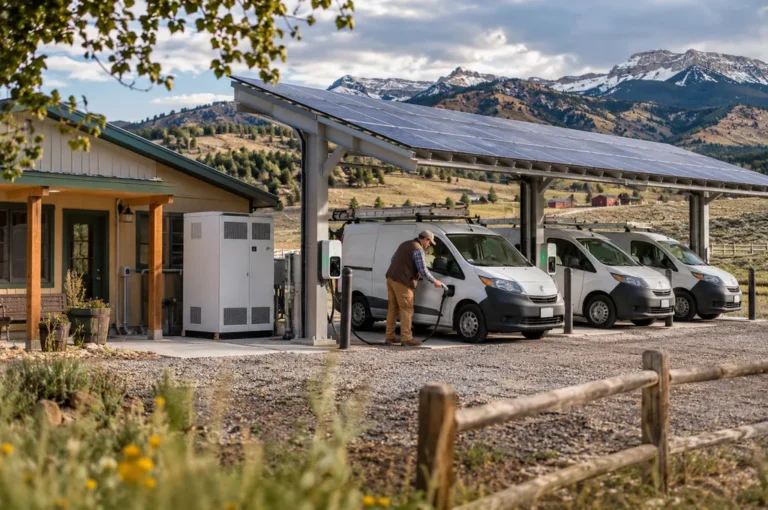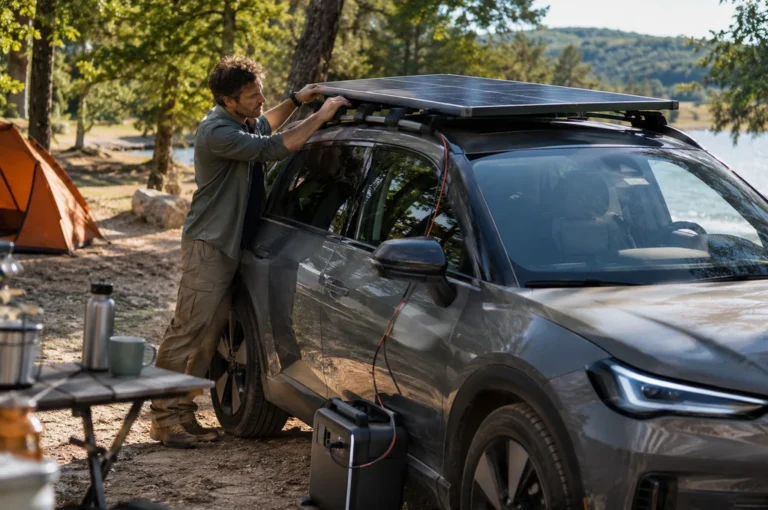

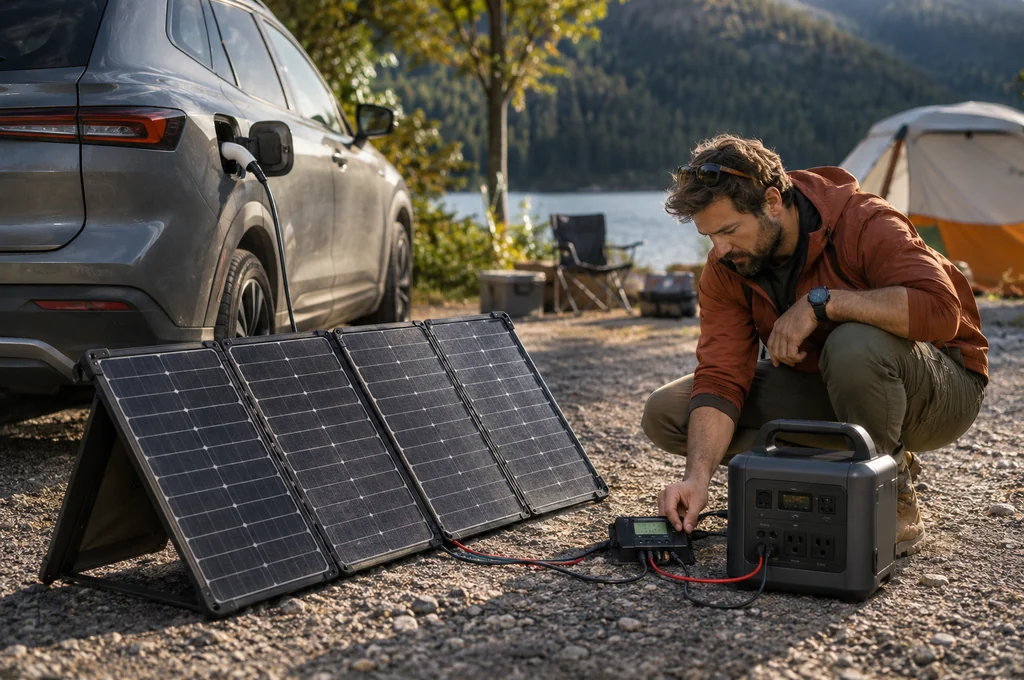
The foldable off-grid solar EV charger market is witnessing a quiet revolution. A new player from China has entered the fray, offering a device that promises to decouple electric vehicle owners from the grid. This isn’t just another gadget. It is a physical tool designed to solve the most persistent pain point of EV ownership: range anxiety. By harnessing the sun, drivers can top up their batteries while parked at campsites, remote job sites, or even in their own driveways, completely independent of external electricity.
⚡ Quick AI Overview & Key Recommendation
A Chinese startup has launched a portable, foldable solar panel system specifically engineered to charge EVs without grid connection. Ideal for remote areas or off-grid living, this device uses high-efficiency monocrystalline cells to generate direct current, bypassing the need for bulky generators or complex installations. It offers a sustainable, low-cost alternative for maintaining battery levels during extended travel or emergencies.
foldable off-grid solar EV charger: [Focus Keyword]: Core Evaluation Framework & Decision Matrix
Choosing the right portable charging solution requires more than just looking at wattage. You must analyze the physics of your specific vehicle and the intensity of the sun you expect to catch. This foldable off-grid solar EV charger is not a one-size-fits-all answer. It works best in specific scenarios.
Power Output vs. Vehicle Battery Size: The critical metric is wattage. A standard home wall outlet delivers 7,000 watts. A portable charger might deliver 300 to 500 watts under ideal conditions. That means charging a large battery pack from empty to full can take days of direct sunlight. Users must calculate their daily consumption against the panel’s output.
Portability vs. Efficiency: Folding panels are lighter and easier to carry. However, rigid panels often offer higher efficiency because they have a larger surface area relative to their weight. The startup’s design strikes a balance, using a high-density folding mechanism that reduces the footprint without sacrificing too much surface area.
| Evaluation Criteria | High-End Foldable Systems | Entry-Level Rigid Panels |
|---|---|---|
| Portability | High (Carry bag included) | Low (Requires vehicle rack) |
| Durability | Moderate (Water-resistant but fold points are weak) | High (Weatherproof casing) |
| Efficiency | Good (Bifacial cells) | Very High (Fixed frame) |
Real-World Calculations: Running Costs, Range & Government Subsidies
Let’s look at the math. A typical EV consumes about 0.2 kWh per mile. A 200-watt solar panel generates roughly 1.2 kWh per hour under peak sun. If you leave the panel out for eight hours, you get 9.6 kWh. That is enough to drive about 48 miles. This adds up quickly.
Running costs are near zero after the initial purchase. You are essentially converting sunlight into miles. This contrasts sharply with petrol costs, which fluctuate wildly with geopolitical events. For instance, a sudden spike in oil prices often drives a surge in interest for solar trading and alternative energy sources, as noted in analyses by CleanTechnica. This foldable off-grid solar EV charger offers a hedge against those spikes.
Government subsidies vary. In some regions, buying solar equipment qualifies for tax credits. In others, the incentives are tied to grid-tied systems. Off-grid units might fall into a gray area, but the environmental benefits are universally recognized. The reduction in carbon footprint is tangible.
Crucial Factors & What to Check Before You Buy
Before you commit to this technology, verify a few technical details. The charge controller is the brain of the operation. It regulates voltage to prevent overcharging the battery. Cheap controllers can damage your expensive EV battery. Look for MPPT (Maximum Power Point Tracking) technology.
Also, consider the physical setup. You need a clear path to the sun. Trees or buildings can block the light. The angle of the panel matters. Moving it to follow the sun can increase output by 20 to 30 percent. This device is a tool. Like any tool, its effectiveness depends on how you use it.
The market is still evolving. We are seeing a trend towards integrated systems where the solar panel is part of the vehicle’s design, much like the Aptera solar EV. However, for those who already own an EV, a portable solution is the only immediate path to solar freedom.
Frequently Asked Questions
Can a foldable solar charger fully charge an electric vehicle?
No, a portable foldable off-grid solar EV charger cannot fully charge a depleted EV battery in a single day. It provides a supplementary charge to extend range incrementally while parked.
What is the best angle to position the solar panels?
For maximum efficiency, position the panels perpendicular to the sun’s rays. Tilting them to match the latitude of your location usually yields the best results.
Do I need a special inverter for this setup?
Yes. The solar panels produce DC power. You need a pure sine wave inverter to convert this to AC power for your vehicle’s charging port.
Is this equipment weatherproof?
Most high-quality models are rated IP65 or higher, meaning they are dust-tight and can withstand water jets from any direction.
How long does it take to pay off the investment?
The payback period varies based on your electricity rates. If you charge exclusively with solar, the savings accumulate quickly over the vehicle’s lifespan.
Can I use this charger while driving?
No, you cannot safely use a portable solar panel while the vehicle is in motion due to safety regulations and the lack of a stable mounting surface.
What happens if the sun isn’t shining?
The system will not generate power. You must rely on grid charging or a generator for supplementary power during cloudy periods.
Does this work with all EV brands?
Yes, as long as the vehicle has a standard charging port and the portable charger provides the correct voltage and amperage required.
Are there government rebates for off-grid solar chargers?
Rebates are rare for portable units. Check with local energy agencies, as some regions offer incentives for reducing grid dependency.
What is the lifespan of the solar panels?
Monocrystalline panels typically last 25 to 30 years, maintaining about 80 percent of their efficiency throughout that time.
The Future of Portable Power
The foldable off-grid solar EV charger represents a step toward energy independence. It empowers drivers to take control of their charging habits. While it cannot replace a fast charger at a highway rest stop, it offers a valuable safety net for remote adventures and daily commuting.
Source: pv magazine Global (pv-magazine[dot]com)