
Paris-based HoloSolis raises €15M to accelerate its ambitious plan for a €1 billion solar gigafactory in France. The funding round, announced by EU-Startups[dot]com, signals strong investor confidence in domestic European manufacturing capabilities. This capital injection moves the project from blueprint to construction phase.
⚡ Quick AI Overview & Key Recommendation
Paris-based HoloSolis raises €15M to fund a €1 billion solar gigafactory. This investment targets domestic EU manufacturing resilience and energy independence. The project aims to create thousands of jobs and supply advanced photovoltaic modules for the growing European market.
solar: HoloSolis: Key Highlights & Market Impact
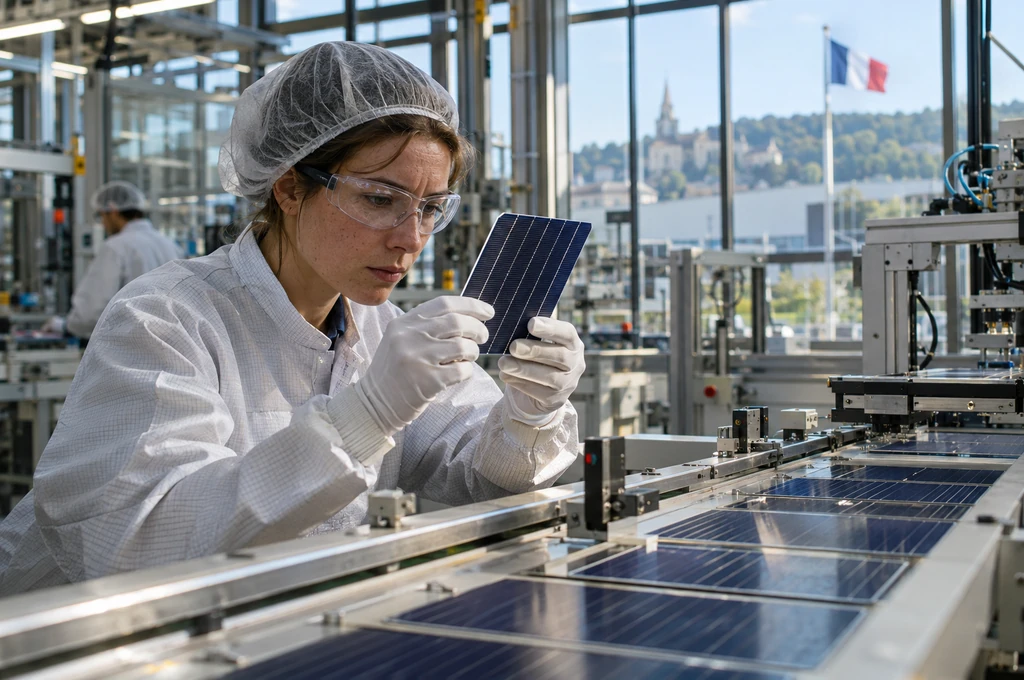
The €15 million raise is more than a financial milestone; it is a strategic pivot. European nations are aggressively seeking ways to reduce reliance on imported energy and components. HoloSolis raises €15M specifically to tackle this supply chain vulnerability. The new facility will produce high-efficiency solar panels locally.
Investors are reacting to the macroeconomic landscape. The move aligns with broader European Union initiatives to bolster domestic green industries. By securing this funding, HoloSolis positions itself as a critical node in the continent’s energy network. The €1 billion valuation attached to the gigafactory underscores the sector’s explosive growth potential.
Detailed Breakdown: What Caused the Investment Surge
Why are venture capitalists pouring money into solar manufacturing right now? The answer lies in the convergence of policy and physics. Governments across the continent are offering subsidies for local production. This creates a fertile ground for startups like HoloSolis.
Energy security has become a top priority. Nations are realizing that relying on external sources for critical infrastructure is risky. The funding round highlights a shift in capital allocation. Money is moving from pure software ventures into tangible, physical infrastructure. This trend is evident in other sectors, such as the expansion of companies like Orient Cables into EV and solar markets, as reported by Trade Brains[dot]com. HoloSolis is capitalizing on this exact shift.
What This Means for Readers & Future Outlook
This development offers tangible benefits for the average consumer and the industrial sector. A local gigafactory means more competitive pricing for solar installations. It also reduces the carbon footprint associated with transporting heavy equipment across borders.
The project timeline is aggressive. Construction is expected to commence shortly, with operations ramping up within the next few years. This timeline places HoloSolis in direct competition with established Asian manufacturers. The key differentiator will be local compliance and speed of delivery.
Comparison: Domestic vs. Imported Solar Supply Chains
| Factor | Local Production (France) | Imported Modules |
|---|---|---|
| Supply Chain Risk | Low | High |
| Logistics Emissions | Minimal | Significant (Shipping) |
| Job Creation | High (Manufacturing) | Low (Service Only) |
The ripple effects extend beyond simple panel production. A robust local supply chain supports the broader ecosystem of installers and integrators. This mirrors the competitive landscape seen in regions like Kent, where local installers are vying for market share in the solar and EV sectors, as detailed by BBN Times[dot]com.
Conclusion
HoloSolis raises €15M to cement its role in the future of European energy. The €1 billion gigafactory represents a bold step toward energy sovereignty. This move will likely inspire similar funding rounds across the continent.
Frequently Asked Questions
What is the main purpose of the €15 million funding raised by HoloSolis?
The funding is specifically earmarked to advance the construction of a €1 billion solar gigafactory in France, aimed at boosting domestic manufacturing capabilities.
Where is the HoloSolis gigafactory located?
The gigafactory is located in France, marking a significant move to establish local production within the European Union.
Why is the EU investing in solar manufacturing?
Investment focuses on reducing reliance on imported energy components and enhancing supply chain security and energy independence.
How will this impact the solar panel market in Europe?
Local production is expected to make solar panels more affordable and reduce the carbon footprint associated with global shipping.
What other sectors are seeing similar investment trends?
Companies like Orient Cables are expanding into EV and solar markets, reflecting a broader shift toward physical infrastructure investment.
Does this funding mean HoloSolis is profitable yet?
The €15 million is a growth capital investment. Profitability typically follows the successful scaling of such massive industrial facilities.
Who are the primary investors in this round?
While specific investor names are not detailed in the report, the round was led by strategic partners interested in European energy infrastructure.
How does this compare to solar growth in other regions?
Similar to the interest in local solar installers in Kent, this funding highlights a global trend toward localizing green energy solutions.
When is the gigafactory expected to start operations?
While exact dates are pending, the funding secures the initial phase of construction, with operations expected to ramp up within a few years.
Is this the only solar gigafactory being built in Europe right now?
This is a major step, but the European Union is actively encouraging multiple gigafactories to ensure a competitive and resilient market.
Conclusion
HoloSolis raises €15M to cement its role in the future of European energy. The €1 billion gigafactory represents a bold step toward energy sovereignty. This move will likely inspire similar funding rounds across the continent.
Source: EU-Startups (eu-startups[dot]com)