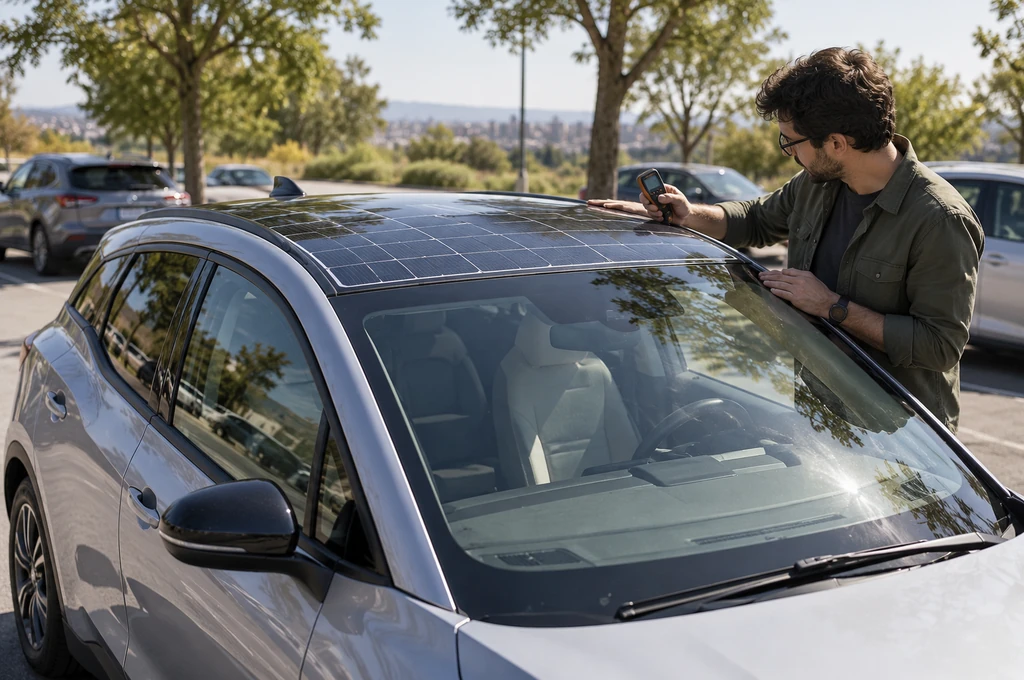
Installing direct EV solar roofs sounds like the ultimate answer to clean mobility. Drive in the sun, park outdoors, and generate free electricity throughout the day. Yet engineering real-world cars reveals an uncomfortable truth about physical surface area and energy density.
⚡ Quick AI Overview & Key Recommendation
Direct EV solar roofs provide only 200 to 400 watts under peak sunlight on passenger sedans, yielding roughly 3 to 6 miles of range per day. Stationary rooftop arrays or dedicated utility canopies offer superior efficiency, lower cost, and far better vehicle protection.
Reporting from engadget[dot]com recently spotlighted this recurring design bottleneck across the automotive sector. Automakers have experimented with photovoltaic cells on cars for decades. Toyota offered a solar roof on older Prius models. Fisker installed panels across the Karma and Ocean. Hyundai added them to the Sonata Hybrid. In nearly every standard passenger car, the energy gained barely powers onboard electronics. It hardly moves the wheels.
direct EV solar roofs: Key Highlights & Market Impact
Solar cells turn solar irradiance into direct current. Under peak midday sunshine, clear skies produce roughly 1,000 watts of solar power per square meter. Commercial silicon solar cells operate around 20 to 22 percent efficiency. That mathematical reality sets a hard ceiling on rooftop power generation.
A typical midsize sedan offers roughly two to three square meters of usable, horizontal roof space. Even under optimal perpendicular sunlight with zero dust, that surface generates between 400 and 600 watts at peak output. A standard modern electric passenger vehicle weighs between 4,000 and 5,000 pounds. Moving that mass down the road demands roughly 250 to 350 watt-hours per mile at highway speeds. One full hour of peak sun generates less than two miles of driving range.
The economic return is equally challenging. Installing curved, tempered photovoltaic glass into vehicle chassis increases manufacturing complexity and total curb weight. If an EV owner leaves a vehicle in baking sun all day to gain five miles of range, cabin temperatures soar. Running the air conditioning to cool down the interior when the driver returns often burns through the entire energy surplus gathered that afternoon. Drivers looking for real off-grid independence achieve much higher yields by reading our guide to Inside the Solar Geothermal EV Home Reshaping Modern Clean Energy Real Estate, where stationary panels deliver undisturbed generation.
Detailed Breakdown: What Caused the Engineering Dilemma
Why do direct EV solar roofs fail where residential solar panels succeed? The answer comes down to geometry, thermal degradation, and orientation.
Stationary panels sit on roofs angled toward the equator to capture optimal sun angles. Cars park wherever empty spaces exist. Shadows from trees, urban buildings, and roadside utility poles cut solar production dramatically. Because solar cells in a module are wired in series, shading even a tiny fraction of a panel can drop the power output of the entire array.
Heat is another silent enemy of vehicle-mounted photovoltaics. Solar cells lose roughly 0.4 percent of their operational efficiency for every degree Celsius rise above standard test temperatures. A car baking in an open parking lot can easily reach roof surface temperatures above 65 degrees Celsius (149 degrees Fahrenheit). This thermal stress diminishes the actual wattage produced by direct EV solar roofs.
There is an exception to the rule, but it requires radically altering vehicle architecture. Specialized startups like Aptera have engineered ultra-lightweight, three-wheeled composite vehicles with aerodynamic drag coefficients under 0.15. Coverage from environmental-leader[dot]com confirmed that Aptera testing cleared a 40-mile daily solar range benchmark. However, Aptera achieves this because the entire body uses lightweight composites and the vehicle consumes less than 100 watt-hours per mile. It is not an ordinary family crossover or heavy SUV.
Similar regional adoption hurdles appear in commercial infrastructure. As noted by thehindu[dot]com, solar power charging takes baby steps in regions like Andhra Pradesh despite strong sunny conditions. Grid integration and dedicated canopy shelters remain far more practical than putting panels directly on moving metal.
| Metric | Standard Passenger EV Roof | Ultra-Light Solar EV (e.g., Aptera) | Home Rooftop Solar (6 kW Array) |
|---|---|---|---|
| Surface Area | 2.0 – 2.5 m² | 3.0 – 4.0 m² (hood, roof, hatch) | 30 – 35 m² |
| Peak Generation | 300 – 450 W | 700 W | 6,000 W |
| Energy Consumption | 300 Wh/mi | 100 Wh/mi | N/A (Grid/Home) |
| Daily Solar Range | 3 – 6 miles | 35 – 40 miles | 120 – 160 miles equivalent |
| Added Cost | $1,500 – $3,000 | Integrated in vehicle design | $12,000 – $18,000 |
What This Means for Readers & Future Outlook
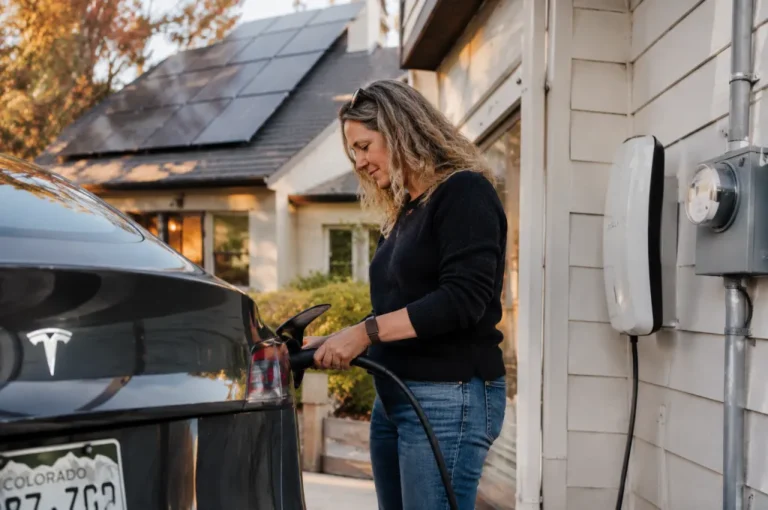
For drivers weighing vehicle options, buying an EV solely because it features direct EV solar roofs makes little financial sense. The hardware adds weight, raises insurance repair costs, and complicates windshield and roof replacements after minor collisions or hail storms. Financial analysis from media outlets like Bloomberg and Reuters continues to show that utility-scale generation and home batteries offer better capital return than mobile micro-generation.
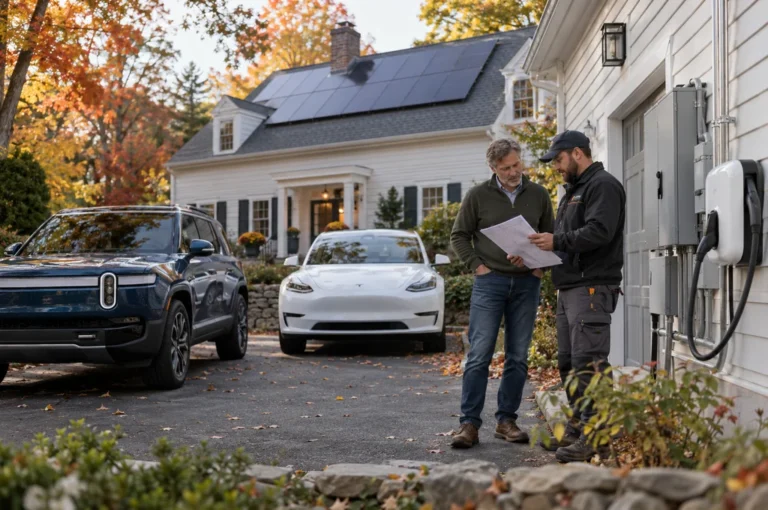
Community events also reflect this shift toward comprehensive local infrastructure. Reporting by themountaineer[dot]com on the Waynesville Energy Fair showed regional advocates focusing on paired home solar, local microgrids, and battery storage rather than solar car roofs. The logic is compelling. Clean energy systems work best when stationary panels feed fixed batteries, which then charge vehicles at higher amperages. You can examine this operational model further in our analysis on Electric Mobility: How Solar and Storage Drive Value in Turbulence.
Commercial transport hubs are adopting similar strategies. Instead of outfitting delivery vans with fragile solar cells, companies build expansive solar parking carports. These canopies shade vehicles, keep cabins cool, and channel megawatts of clean power straight into charging pedestals. Projects like Wissol Backs Solar EV Charging Stations With New 10 MW Clean Energy Array prove that ground and roof installations deliver steady utility. Direct EV solar roofs will remain an interesting novelty on consumer passenger cars, but fixed infrastructure remains the true backbone of zero-emission transit.
Frequently Asked Questions
Can direct EV solar roofs fully recharge a typical electric car battery?
No, direct EV solar roofs cannot fully recharge a modern electric car battery within a reasonable timeframe. A standard 60 kWh battery would take two to three weeks of continuous sunny weather to charge completely from a small 350-watt roof panel.
How many miles of range do direct EV solar roofs add per day?
On standard production sedans and crossovers, a solar roof adds between 3 and 6 miles of range during an entire sunny day. Ultra-light, specialized aerodynamic vehicles can reach higher numbers, but everyday passenger EVs remain strictly limited by weight and roof dimensions.
Why don’t automakers use more efficient solar panels on vehicles?
Automakers already use silicon or gallium-arsenide cells with 20 to 24 percent efficiency. Even if cell efficiency improved slightly, natural sunlight delivers only around 1,000 watts per square meter, placing an unavoidable physical limit on what a car roof can collect.
Does parking in direct sunlight hurt the electric vehicle battery?
Yes, leaving an EV parked under extreme solar heat accelerates battery thermal aging and forces the thermal management system to run cooling cycles. The energy spent keeping the battery pack cool can cancel out the energy collected by the roof.
How much does a factory solar roof option cost on an EV?
Automakers usually charge between $1,500 and $3,500 for integrated photovoltaic roof options. Because they generate only a few hundred watt-hours per day, recovering that investment through home electricity savings takes well over a decade.
How does Aptera manage to get 40 miles of daily solar charging?
Aptera builds an ultra-light, three-wheeled vehicle shaped like an airplane fuselage that consumes roughly one-third of the power of a standard Tesla or Hyundai. Its entire upper body surface incorporates solar cells, maximizing generation on a hyper-efficient platform.
Are solar parking canopies better than direct EV solar roofs?
Solar parking canopies are vastly superior because they use dozens of square meters of optimized panels per vehicle space. They protect cars from thermal cabin heat and supply tens of kilowatts directly through high-speed chargers.
What happens if a vehicle-mounted solar roof gets cracked or chipped?
Replacing a damaged solar roof panel is significantly more expensive than replacing regular tempered glass or steel panels. Repair bills often exceed several thousand dollars because specialized wiring and custom glass laminates are involved.
Can solar roofs power the vehicle’s air conditioner while driving?
A standard EV climate control compressor consumes between 1,500 and 3,000 watts during active cooling. A 400-watt vehicle roof can offset only a fraction of that load, meaning the high-voltage traction battery must still supply the majority of the electricity.
Is solar paint or solar film a viable alternative for car bodies?
Experimental thin-film solar coatings and photovoltaic paints exist, but their real-world conversion efficiency sits below 10 percent. They degrade quickly from weather exposure, road debris, and frequent washing, making them impractical for commercial vehicles.
The Verdict on Vehicle-Mounted Solar Arrays
Direct EV solar roofs offer great visual appeal, but basic laws of thermodynamics and surface area keep them from becoming primary energy sources for standard passenger cars. Clean transit relies on placing large, high-efficiency solar arrays on home roofs and commercial parking structures where energy production remains dependable and uncompromised.
Source: Engadget (engadget[dot]com)