
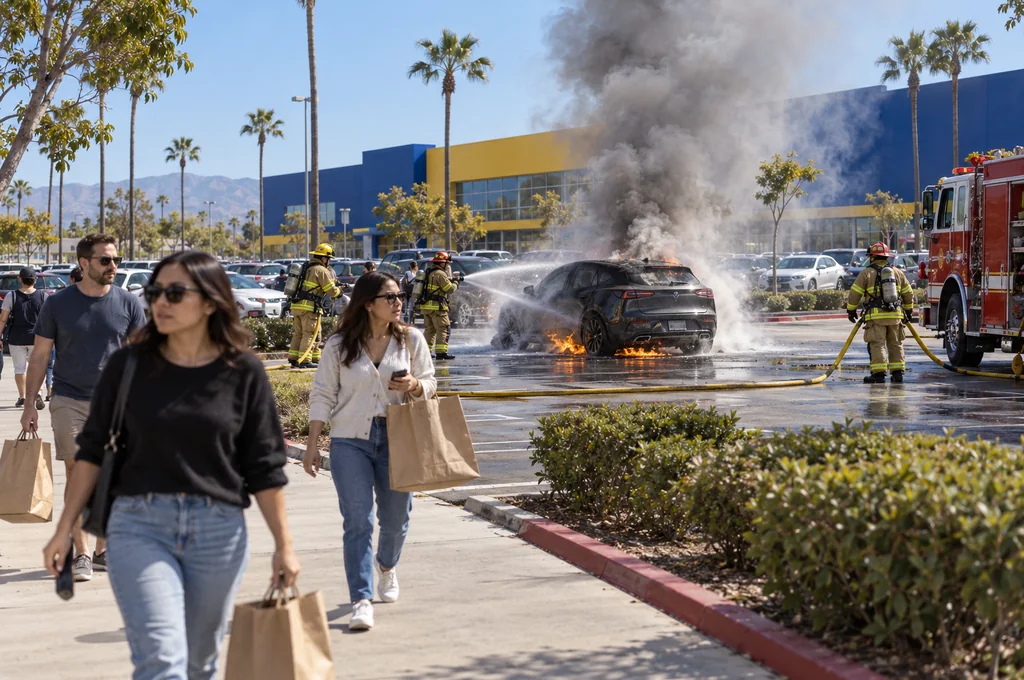
A sudden Covina electric vehicle fire triggered rapid commercial evacuations after an intense battery blaze erupted outside a busy retail complex. First responders ordered workers and shoppers out of nearby buildings as thick plumes drifted across the commercial zone near the local IKEA store.
Thermal runaway in lithium-ion batteries presents distinct challenges for local fire districts. Unlike standard gasoline combustion, battery cells fuel their own heat cycles through internal chemical reactions. Emergency crews in Covina acted quickly, isolating the perimeter to protect adjacent businesses from respiratory hazards and sudden flare-ups.
Covina Electric Vehicle Fire: Key Highlights & Market Impact
The incident disrupted commerce across the shopping district for multiple hours. Reporting from regional outlets such as sgvcitywatch[dot]com and dailybulletin[dot]com confirmed that emergency personnel established a defensive perimeter while cooling the chassis with continuous water application.
Retail centers now confront practical operational questions. Property managers actively install charging stalls to attract shoppers, yet risk mitigation protocols often lag behind infrastructure deployment. Data tracked by financial outlets like Bloomberg indicates commercial property insurers are reassessing liability terms for outdoor charging facilities.
| Incident Parameter | Standard Vehicle Fire | Lithium-ion Battery Incident |
|---|---|---|
| Suppression Duration | 30 to 45 minutes | 3 to 24+ hours |
| Water Volume Needed | 500 to 1,000 gallons | 3,000 to 8,000+ gallons |
| Thermal Re-ignition Risk | Minimal after overhaul | High for up to 48 hours |
| Evacuation Requirement | Immediate scene only | Extended perimeter for toxic off-gassing |
Municipal departments face severe resource constraints when handling these fires. A similar incident reported by wfaa[dot]com in Fort Worth burned for 17 hours, requiring tens of thousands of gallons of water before crews declared the battery stable. The Covina electric vehicle fire reinforces why commercial zones must prepare dedicated protocols for thermal runaway.
Detailed Breakdown: What Caused the Retail Evacuation
Toxic smoke drove the command decision to clear neighboring storefronts. Lithium cells emit hydrogen fluoride, carbon monoxide, and volatile organic compounds during active combustion. These gases spread quickly at ground level, creating immediate respiratory hazards for shoppers and store staff.
Fleet electrification strategies across global logistics hubs show how clean transport policies demand tailored safety infrastructure. Urban planners studying transit shifts, such as Electric vehicles: Why Lagos Banned Diesel Buses, identify safety readiness as a prerequisite for mass fleet adoption. When an electrified passenger car ignited in Covina, the surrounding density left zero margin for delayed evacuations.
First responders used sustained defensive streams rather than rapid foam smothering. Battery packs sit sealed inside reinforced underbody casings. Water cannot easily penetrate the pack shell, so firefighters must cool the exterior structure until internal chemical cells exhaust their stored energy. Analysts at Reuters note that firefighting agencies nationwide are lobbying automakers for standardized disconnect switches and uniform battery casing access points.
What This Means for Readers & Future Outlook
Consumer adoption continues to expand rapidly across passenger and commercial segments. Global product debuts detailed at events like Electric vehicle: What Is Dubai EV Exhibition 2026? display denser battery chemistries designed for longer range. Higher energy density stores more potential thermal energy, which demands stronger preventative monitoring.
Commercial landlords will likely adjust where they install charging stalls. Placing fast chargers directly against retail exterior walls creates unnecessary evacuation risks during battery failures. Relocating charging banks to open parking perimeters allows emergency teams to isolate burning vehicles without shutting down whole plazas.
Broader vehicle adoption trends follow similar economic calculations. In regions where market appetite climbs despite macroeconomic friction, as observed in Electric vehicles: Why EV Demand in Russia Surged, consumer confidence relies heavily on public safety standards. Insurance underwriters referenced by Investopedia warn that commercial property premiums will rise for plazas that lack clear emergency access corridors around charging infrastructure.
Frequently Asked Questions
What caused the Covina electric vehicle fire evacuation?
Toxic smoke and intense heat from the burning lithium-ion battery forced authorities to evacuate nearby retail stores. Off-gassing poses severe inhalation risks to workers and shoppers in enclosed spaces.
How long do electric car battery fires usually burn?
Battery fires can burn anywhere from several hours to over a full day due to thermal runaway. Damaged cells can continue to reignite even after initial surface flames disappear.
Why is water suppression difficult for electric car fires?
Battery cells sit sealed inside protective steel or aluminum casings underneath the vehicle. Standard hose streams cool the exterior shell but struggle to reach the burning cells inside.
Were there injuries reported during the Covina incident?
Emergency services isolated the area quickly, and no major public injuries were reported. Precautionary evacuation orders protected nearby retail workers from smoke inhalation.
Are electric car fires more frequent than gasoline vehicle fires?
Statistical data shows electric cars catch fire less frequently per mile driven than gasoline cars. However, when an EV does ignite, extinguishing the battery requires significantly more time and water.
What toxic gases emerge from lithium-ion fires?
Burning lithium batteries release hydrogen fluoride, carbon monoxide, and hydrogen cyanide into the air. These gases create acute hazards that require immediate perimeter evacuations.
How should retail centers design parking for charging stations?
Property managers should place high-output charging stations away from building walls and entrance doors. Open parking perimeters give fire trucks direct access to isolate burning vehicles quickly.
Can personal mobility devices cause similar thermal runaway risks?
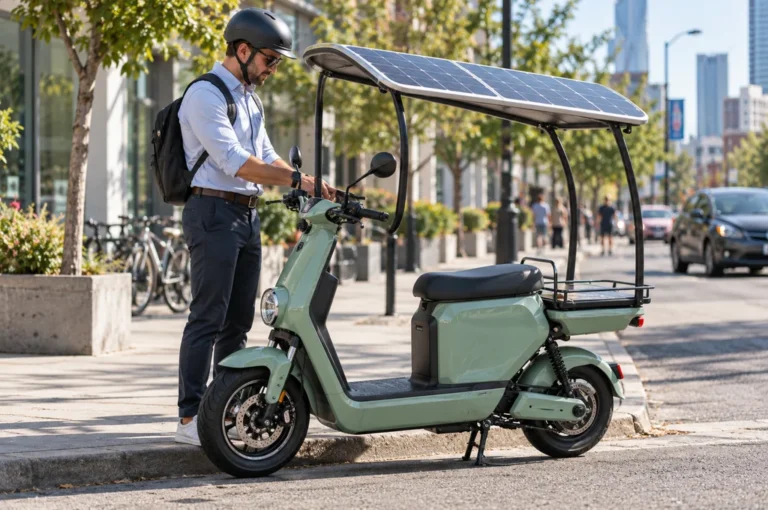
Yes, smaller personal electric vehicles like scooters and e-bikes share similar lithium-ion chemistry risks. Regulatory agencies covered by cbc[dot]ca continue updating fire codes for indoor personal device storage.
What is thermal runaway in an EV battery?
Thermal runaway occurs when an internal short or structural damage creates uncontrollable heat inside a cell. That heat spreads to neighboring cells, triggering a self-sustaining chain reaction.
Did the Covina electric vehicle fire damage nearby structures?
Prompt evacuation orders and aggressive cooling streams kept the fire isolated to the vehicle itself. The Covina electric vehicle fire caused operational disruptions but prevented structural losses to the retail center.
Resolving the Safety Gaps in Commercial Charging
The Covina electric vehicle fire demonstrates that commercial centers must rethink charging placement and emergency access. Clean mobility requires robust municipal suppression strategies to protect local businesses when battery failures occur.
Source: SGV CityWatch (sgvcitywatch[dot]com)