
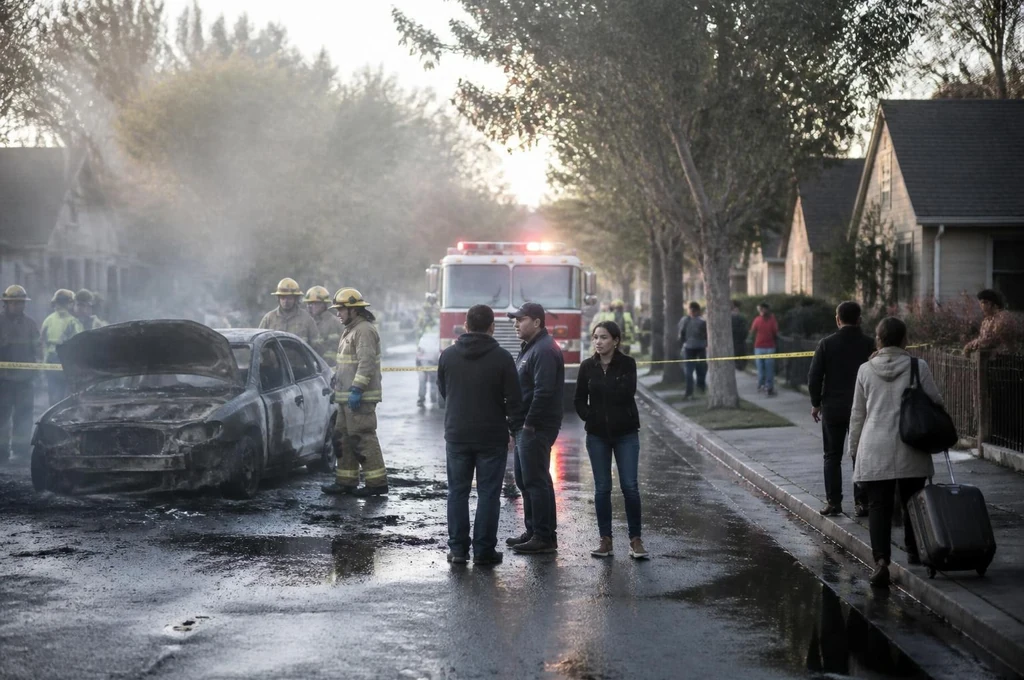
Emergency officials lifted evacuation orders after an intense electric vehicle fire in Covina prompted immediate neighborhood safety warnings. First responders cleared nearby residents from their homes as thick smoke filled suburban streets, before hazardous materials teams stabilized the smoldering pack. Thermal instability in large lithium-ion packs demands aggressive water application and prolonged monitoring to prevent sudden reignition.
The incident in Southern California follows a pattern of high-intensity battery emergencies across the country. According to reporting from dailybulletin[dot]com, local authorities cordoned off several city blocks until battery temperatures dropped below combustion thresholds. Fire crews faced stubborn chemical heat that resisted ordinary suppression methods. Similar events elsewhere demonstrate that battery containment remains a logistical hurdle for municipal agencies.
Electric Vehicle Fire: Key Highlights & Market Impact
Fire departments encounter extreme challenges when dealing with high-voltage battery enclosures. Handling an electric vehicle fire requires massive volumes of water, often exceeding several thousand gallons per incident. Municipalities must redirect heavy equipment, isolate drainage systems, and evacuate civilian perimeters to guard against toxic atmospheric discharge.
The incident mirrors a recent crisis documented by wfaa[dot]com, where another electric vehicle fire burned for seventeen hours in Fort Worth, Texas. That prolonged burn generated toxic hydrogen fluoride plumes and forced environmental teams to track air quality over surrounding neighborhoods. When batteries short-circuit, chemical reactions feed their own heat supply. That makes rapid containment nearly impossible with standard dry chemicals or short water bursts.
Market analysts monitored by Bloomberg note that repeated public battery fires influence municipal readiness budgets and consumer hesitation. Automakers face rising pressure to prove that pack enclosures resist puncture and internal shorting. As transit authorities examine regional vehicle transitions, such as seen in Electric vehicles: Why Lagos Banned Diesel Buses, emergency infrastructure must expand alongside consumer adoption rates.
| Location | Primary Hazard Reported | Suppression Duration | Evacuation Status |
|---|---|---|---|
| Covina, CA | Dense toxic smoke, thermal runaway | Several hours | Lifted after cooling |
| Fort Worth, TX | Toxic plume, repeated flare-ups | 17 hours | Precautionary perimeter |
Detailed Breakdown: What Caused Battery Thermal Runaway Risks
Modern battery architecture packs hundreds of individual pouch or cylindrical cells into compact structural trays. When a single cell breaches its mechanical barrier or suffers internal manufacturing flaws, internal heat cascades outward. This domino reaction drives temperatures beyond 1,000 degrees Fahrenheit within seconds. Preventing an electric vehicle fire from reigniting hours later demands continuous thermal imaging and complete pack submersion.
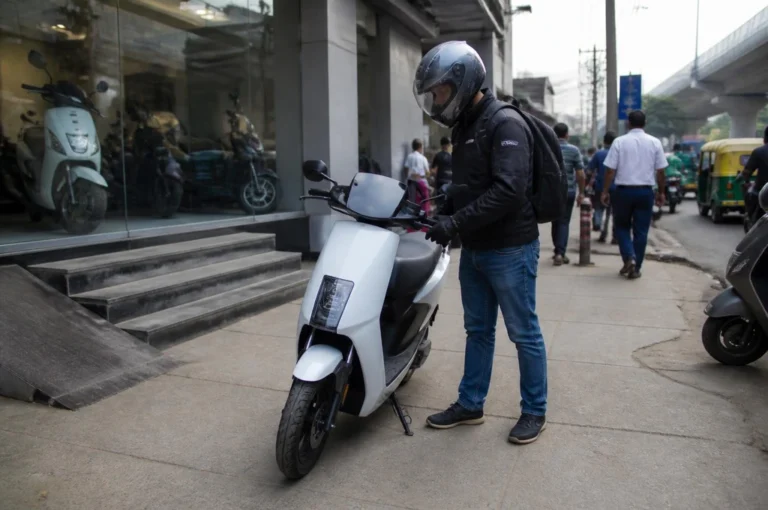
Consumer markets continue to absorb diverse electric transit options. From personal scooters reviewed by cbc[dot]com to six-figure luxury performance vehicles tracked by cnn[dot]com, energy density continues to rise across all platforms. Greater energy density provides superior driving range, yet it packs more combustible chemical potential into smaller spaces. Financial data tracked via Investopedia shows insurance underwriters reassessing residential garage risks and post-collision salvage valuations.
Auto manufacturers invest heavily in ceramic separators, fire-retardant cooling gels, and isolated modular compartments. Even so, physical road impacts can pierce lower armor plates. When ambient oxygen contacts damaged lithium metal or flammable liquid electrolytes, spontaneous combustion occurs without warning.
What This Means for Readers & Future Outlook
Drivers and homeowners must understand residential risk factors associated with high-voltage charging. Charging equipment requires dedicated electrical circuits, inspected breakers, and proper clearance from combustible garage storage. Industry data tracked by Reuters confirms that catastrophic pack failures remain statistically rare compared to combustion engine fuel leaks, yet their suppression complexity is vastly higher.
Public understanding of electric vehicle fire hazards must keep pace with rapid electrification trends. Emerging markets reflect this tension; rapid adoption curves outlined in Electric vehicles: Why EV Demand in Russia Surged emphasize that infrastructure growth often outpaces municipal firefighter training. Homeowners should install interconnected smoke alarms inside attached garages and maintain clear driveway access for emergency vehicles.
Frequently Asked Questions
What caused the Covina evacuation order?
Officials issued the evacuation order because an electric vehicle battery fire produced dangerous smoke and posed an immediate risk of spreading heat to adjacent properties.
Why is an electric vehicle fire harder to extinguish than a gas car fire?
Lithium-ion cells enter thermal runaway, generating their own oxygen and internal heat. This self-sustaining chemical reaction requires thousands of gallons of water to cool completely.
What toxic gases are released during battery fires?
Burning lithium-ion batteries emit hydrogen fluoride, carbon monoxide, and hydrogen cyanide. These gases pose acute respiratory hazards to nearby residents and responders.
Can an electric vehicle reignite after the flames are put out?
Yes, damaged cells retain stranded electrical energy and can ignite hours or days after the initial incident. Tow operators and fire teams isolate damaged cars in open outdoor yards.
Are electric cars more likely to catch fire than gasoline cars?
No, statistical data indicates that electric vehicles catch fire less frequently per mile driven than internal combustion vehicles. However, when an EV battery does burn, extinguishing it takes significantly longer.
How should homeowners protect their garages while charging?
Install dedicated professional charging stations, avoid extension cords, and mount heat detectors directly above the parking stall. Keep surrounding garage space free of dry storage and combustible liquids.
What should a driver do if their battery starts smoking?
Pull over immediately, turn off the ignition, exit the cabin, and move at least one hundred feet away upwind. Call emergency services and inform dispatchers that the vehicle contains a high-voltage battery.
How much water is needed to suppress a burning traction battery?
Fire agencies typically use between 3,000 and 8,000 gallons of water to cool a burning battery pack. Some extreme cases have required over 20,000 gallons.
Do municipal fire departments have specialized EV fire tools?
Many departments now deploy thermal imaging cameras, specialized piercing nozzles, and fire blankets designed to smother high-temperature vehicle fires. Ongoing training programs update tactical response plans.
Will new battery technologies eliminate thermal runaway?
Solid-state batteries and lithium iron phosphate chemistries offer significantly higher thermal thresholds than nickel-cobalt formulations. While they reduce fire risks, they do not eliminate mechanical failure hazards entirely.
Conclusion: Practical Lessons from the Covina Event
While clean transport expands across urban transit corridors, addressing the reality of an electric vehicle fire requires updated municipal protocols and vigilant consumer maintenance. Rigorous battery casing standards and rapid emergency response plans will safeguard residential communities as modern powertrains evolve.
Source: Daily Bulletin (dailybulletin[dot]com)