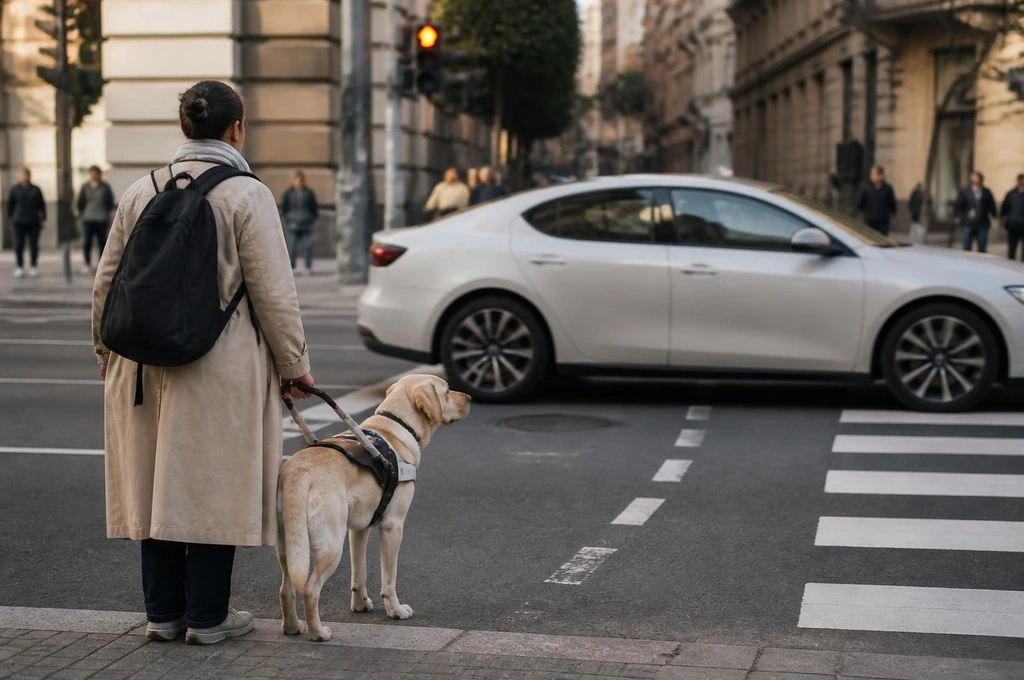
Electric vehicles putting guide dog owners at risk has become a serious public safety debate across urban centers. Near-silent electric powertrains remove the primary acoustic cues that visually impaired pedestrians and assistance dogs rely on to navigate road junctions safely. As cities accelerate the shift toward battery power, vulnerable pedestrians face unforeseen street-level hazards.
Reports published by bbc[dot]com reveal growing frustration among blind pedestrians whose trained guide dogs cannot detect approaching battery-powered cars. Internal combustion engines produce distinct exhaust rumblings and transmission sounds. Electric motors produce almost none at low speeds. When an automobile glides silently around a street corner, even the best-trained assistance animals cannot read the hazard. This technical blind spot disrupts decades of mobility training.
Electric Vehicles Putting Guide Dog Owners at Risk: Key Highlights & Market Impact
Urban streets are changing quickly. Clean transport initiatives aim to clear city smog, but pedestrian advocacy groups question whether electric vehicles putting guide dog owners at risk can be solved strictly through voluntary automaker standards. The issue has entered the policy mainstream.
Data compiled by international transport agencies suggests that electric and hybrid cars are up to twenty percent more likely to strike pedestrians than petrol cars during low-speed maneuvers. Market data tracked by financial analysts at Bloomberg and Reuters shows electric car adoption climbing steadily in Europe and North America. At the same time, pedestrian incident reports in residential sectors are trending upward.
| Vehicle Category | Primary Acoustic Footprint | Pedestrian Detection Range | Regulatory Requirement |
|---|---|---|---|
| Internal Combustion (Gas/Diesel) | Engine idle and exhaust note | 15 to 25 meters at low speeds | Standard noise emission caps |
| Battery Electric Vehicle (Pre-2019) | Minimal tire rolling noise only | Under 3 meters at low speeds | No mandatory sound generators |
| Modern Electric Vehicle (Post-2021) | Artificial acoustic sound (AVAS) | 5 to 8 meters at 20 km/h | Mandatory minimum decibel output |
| Electric Micromobility (E-scooters) | Nearly imperceptible motor hum | Under 2 meters | Varies widely by jurisdiction |
Fleet electrification extends beyond passenger sedans. Municipal transitions, such as initiatives explored in Electric vehicles: Why Lagos Banned Diesel Buses, introduce large commercial haulers into crowded commercial zones. Commercial transit also sees rapid development abroad, as analyzed in VinFast US Electric Buses: Beyond the Ride. When massive municipal transit vehicles operate without loud mechanical clatter, pedestrian margins of error shrink drastically.
Detailed Breakdown: What Caused Rising Acoustic Hazards
Three distinct technical and administrative factors drive this challenge.
- Tire friction limitations at slow speeds: Conventional cars emit sound through engine pistons and exhaust plumbing. Electric motors produce near-zero noise under twenty kilometers per hour. Tire friction against pavement only generates audible sound at higher velocities.
- Inconsistent sound generator compliance: Modern regulations require an Acoustic Vehicle Alerting System on new electric cars. However, real-world testing demonstrates that these speaker systems are often too quiet, directional, or easily masked by ambient wind.
- Proliferation of unregulated micromobility: Passenger cars are not the only silent threat. Provincial reporting from cbc[dot]ca notes that Manitoba is establishing strict age and speed limits for e-scooters and personal electric vehicles on public roads next year. Sidewalk riding by silent lightweight scooters creates severe collision hazards for assistance animals.
Hardware reliability and fleet safety are coming under broader scrutiny across the board. Local reporting from ktul[dot]com recently detailed a massive fire that destroyed fourteen battery-powered vehicles at a Broken Arrow dealership in Oklahoma. The incident underscores the distinct engineering hurdles facing the sector. Thermal runaway incidents demand intense emergency resources, while pedestrian sound systems require strict acoustic enforcement. Many blind pedestrians report that electric vehicles putting guide dog owners at risk stem directly from inconsistent sound alerts and erratic sidewalk traffic.
What This Means for Readers & Future Outlook
Automakers are under intense pressure to refine artificial sound profiles. Early warning systems must alert pedestrians without creating irritating auditory pollution in dense neighborhoods. That balance is difficult to strike. Modern sound generators often point forward, leaving pedestrians on street corners unaware of turning vehicles.
Institutional investors monitoring corporate compliance on Investopedia note that vehicle safety ratings increasingly track vulnerable road user protection. Transport ministries in the United Kingdom, the European Union, and the United States are reviewing whether current acoustic volume thresholds protect vulnerable travelers adequately. Regulators must determine if electric vehicles putting guide dog owners at risk require stricter decibel minimums and omnidirectional sound emitters in pedestrian zones.
For everyday commuters and dog owners, awareness remains the first line of defense. Drivers must remember that their cars are practically undetectable at crosswalks. Guide dog handlers must adapt to an environment where mechanical traffic noise can no longer be taken for granted.
Frequently Asked Questions
Why are electric vehicles putting guide dog owners at risk on city streets?
Electric cars operate with near-silent electric motors at low speeds. Guide dogs and visually impaired pedestrians rely on engine sounds to judge traffic distance, creating severe collision hazards when sounds are absent.
What is an Acoustic Vehicle Alerting System?
An Acoustic Vehicle Alerting System is an external speaker setup designed to emit artificial sound at low speeds. Regulators require these devices on newer electric models so nearby pedestrians can hear approaching vehicles.
Do guide dogs fail to recognize quiet electric cars?
Guide dogs are trained to assess physical motion and listen for oncoming engine noise before stepping into roads. Silent drivetrains deprive dogs of auditory warnings, making it harder for them to anticipate moving cars.
Are older electric vehicles louder than newer models?
Older electric vehicles are usually quieter than newer ones because they were built before mandatory sound laws took effect. Older models frequently lack artificial sound generators entirely.
At what speeds do electric cars produce natural road noise?
Electric vehicles generate audible tire and wind friction once they exceed approximately thirty kilometers per hour. At lower parking or intersection speeds, they remain almost silent without artificial speakers.
Are e-scooters included in these pedestrian safety concerns?
Yes, e-scooters and personal electric devices share the same silent operational profile. Cities like Manitoba are enacting speed limits and age rules to keep these silent devices away from vulnerable pedestrians.
Can drivers install custom sounds on electric cars?
Most safety regulations forbid drivers from muting or modifying required safety sounds with custom audio files. The alerting tones must meet strict frequency ranges to guarantee pedestrian detection.
What role do guide dog training schools play in adapting to EVs?
Training organizations are updating instructional methods to help dogs rely more heavily on visual cues and peripheral scanning. However, handlers emphasize that visual training alone cannot replace audible sound cues in busy traffic.
How are international transit agencies addressing silent electric buses?
Transit authorities are equipping municipal electric bus fleets with continuous external chimes and automated warning bells. These systems warn pedestrians whenever large transit vehicles pull away from curbs.
Will future pedestrian detection technology solve this hazard entirely?
Autonomous emergency braking and pedestrian detection cameras offer useful safeguards, but they cannot replace audible warnings. Direct sound remains necessary so visually impaired pedestrians can make proactive crossing decisions.
Protecting Pedestrians in an Electrified World
Urban transit must accommodate every citizen, especially those who rely on assistance animals for independent mobility. The documented reality of electric vehicles putting guide dog owners at risk demands technical adjustments from automakers and aggressive enforcement from city regulators. Adding robust, directional sound generators will ensure street safety does not disappear in the push toward clean energy.
Source: BBC (bbc[dot]co[dot]uk)