
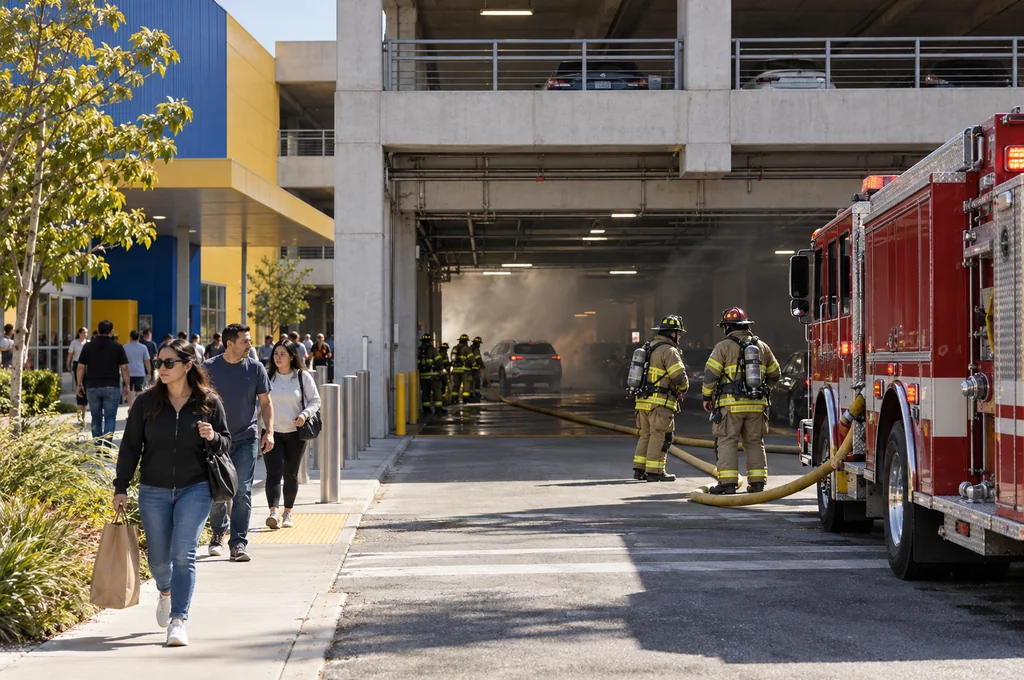
An electric vehicle fire inside IKEA parking garage premises in Covina, California forced emergency personnel to evacuate retail shoppers and neighboring office tenants on Friday afternoon. Thick chemical smoke filled the multi-level parking structure, creating immediate visibility hazards and triggering automatic commercial fire alarms across adjacent retail suites. First responders contained the flames to prevent the blaze from consuming dozens of surrounding vehicles, but the incident shut down store operations for hours.
Electric Vehicle Fire Inside IKEA Parking Garage: Key Highlights & Market Impact
Emergency dispatches reached local fire crews after smoke began rolling out from the parking structure attached to the Covina IKEA store. According to initial reporting from local broadcast station ktla[dot]com and regional coverage from sgvcitywatch[dot]com, firefighters arrived to find an electric passenger car engulfed in active battery combustion. The intense heat forced safety officials to issue immediate evacuation orders for the retail warehouse and adjacent strip mall stores.
Nobody sustained fatal injuries. However, the scene created severe logistical chaos. Enclosed parking decks trap toxic hydrofluoric acid vapors and dense carbon monoxide quickly. Fire teams deployed continuous water streams onto the vehicle undercarriage to prevent thermal runaway from jumping to nearby cars. The operational response mirrored challenges documented by auto industry analysts at Reuters, where emergency services face unique water volume requirements during lithium-ion emergencies.
This event comes as retail centers rapidly add high-voltage vehicle chargers beneath covered structures. Commercial property groups now face tougher scrutiny from municipal inspectors. Property operators must rethink risk models. Similar electrification transitions require strict infrastructure adaptations, an issue visible when municipal leaders revamp public transit, as explored in Electric vehicles: Why Lagos Banned Diesel Buses.
Detailed Breakdown: What Caused Thermal Runaway Risks
The core danger behind an electric vehicle fire inside IKEA parking garage facilities stems from lithium-ion cell chemistry. When a traction battery suffers an internal manufacturing defect, physical puncture, or electrical fault, individual cells can enter thermal runaway. The process is self-heating and self-sustaining. Heat travels rapidly between neighboring cells, producing oxygen within the battery casing and fueling combustion without needing external air.
Standard vehicle fires burn out quickly once gasoline or upholstery burns down. Battery fires behave differently. They can smolder for hours and reignite days later. Low garage ceilings prevent standard ladder trucks from entering, forcing firefighters to advance handlines into cramped, smoky bays. These tactical realities carry significant commercial weight for property insurers, a topic examined closely by corporate risk desks on Bloomberg and consumer finance platforms like Investopedia.
Consider the core operational differences between vehicle fire categories in enclosed parking decks:
| Incident Factor | Internal Combustion Engine (ICE) | Battery Electric Vehicle (BEV) |
|---|---|---|
| Average Extinguishment Water | 500 to 1,000 gallons | 3,000 to 8,000+ gallons |
| Reignition Risk Window | Minimal once cooled | High risk for 24 to 72 hours |
| Primary Vapor Hazard | Carbon monoxide, soot | Hydrofluoric acid, hydrogen cyanide |
| Structural Heat Concentration | Disperses upward quickly | Intense downward heat toward concrete deck |
Regulatory agencies, including filings reviewed by the U.S. Securities and Exchange Commission, reflect that automotive manufacturers carry growing warranty and recall provisions for battery safety. At the same time, next-generation battery architectures and specialized safety gear remain center stage at international fleet trade expos, like those covered in our report on Electric vehicle: What Is Dubai EV Exhibition 2026?.
What This Means for Readers & Future Outlook
Retail consumers and parking operators must draw direct lessons from this incident. If you park in a subterranean or covered multi-story deck, know your emergency exits. If you see white or blue-tinted vapor venting from underneath an EV, leave the structure immediately on foot. Do not try to retrieve personal belongings from your trunk.
Municipal building boards are already drafting revised building codes for parking decks. Modern proposals demand higher-volume deluge sprinkler systems, specialized undercarriage water injection plates, and dedicated outdoor quarantine zones for damaged vehicles. Fleet operators expanding into heavy machinery face identical challenges, matching broader industrial trends like those driving shifts in emerging markets, as analyzed in Electric vehicles: Why EV Demand in Russia Surged.
Expect commercial centers to re-evaluate where they locate charging stations. Placing chargers on the open-air rooftop level instead of enclosed basement floors minimizes evacuation disruptions and lets smoke dissipate naturally into open skies.
Frequently Asked Questions
What caused the electric vehicle fire inside IKEA parking garage in Covina?
Fire investigators suspect a battery failure inside the vehicle triggered thermal runaway. Official investigations by regional fire authorities remain underway to determine the exact mechanical or electrical origin.
Were any injuries reported during the Covina IKEA EV fire?
Emergency services reported no direct injuries among shoppers, retail workers, or responding firefighters. Prompt evacuation orders helped clear the parking garage and surrounding buildings before smoke became debilitating.
Why did the fire force the evacuation of nearby businesses?
Burning lithium-ion batteries produce toxic gases, including hydrofluoric acid and carbon monoxide. First responders ordered immediate evacuations to prevent civilians from inhaling hazardous chemical fumes trapped inside the structure.
How do firefighters extinguish an electric car fire in a covered parking garage?
Crews use continuous water streams directed at the undercarriage battery pack to cool individual cells. Low garage clearances prevent large trucks from entering, requiring manual hose deployments across interior decks.
Can an electric vehicle reignite after the fire is put out?
Yes, damaged cells can remain hot and experience secondary thermal runaway hours or even days after initial suppression. Fire crews often monitor submerged or quarantined packs for up to 72 hours.
How common is an electric vehicle fire inside IKEA parking garage facilities?
Incidents remain rare relative to total EV sales, but enclosed garage fires present severe suppression difficulties. The unique combination of confined smoke and high heat makes every garage incident high-profile.
Do electric cars catch fire more often than gasoline cars?
Statistical data shows gasoline vehicles catch fire at a higher rate per mile traveled than battery electric vehicles. However, battery fires burn hotter, require far more water, and take longer to extinguish.
What should shoppers do if an EV begins smoking in an enclosed garage?
Evacuate the area immediately using marked pedestrian exits and pull the manual building fire alarm. Never attempt to extinguish a lithium-ion battery fire using portable handheld extinguishers.
Will parking garages ban electric cars from charging indoors?
Total bans are unlikely, but commercial operators are moving charging stations toward outdoor decks or top-level roofs. Updated fire codes will also require enhanced deluge sprinkler systems over high-voltage bays.
Who pays for property damage caused by a garage vehicle fire?
Primary liability typically falls on the vehicle owner’s comprehensive insurance carrier, followed by subrogation claims against the automaker or battery supplier if a manufacturing flaw is confirmed.
Final Thoughts on Enclosed EV Safety
The recent electric vehicle fire inside IKEA parking garage structures underscores that rapid consumer vehicle electrification requires matching upgrades in municipal emergency planning. Property managers must prioritize rooftop charging installations, robust sprinkler systems, and clear evacuation pathways to keep public facilities secure.
Source: KTLA (ktla[dot]com)