electric vehicles: EV disposal presents escalating fire risks that emergency responders are struggling to contain. Recovery specialists are sounding the alarm because lithium-ion batteries can reignite for days after a crash.
electric vehicles: EV disposal: Key Highlights & Market Impact
Old batteries do not just stop working. They remain chemically active and volatile. This creates a new category of waste management nightmare. The market is moving fast, but the safety infrastructure is lagging behind. Recovery specialists see the immediate physical danger on the roadways. They are not the only ones.
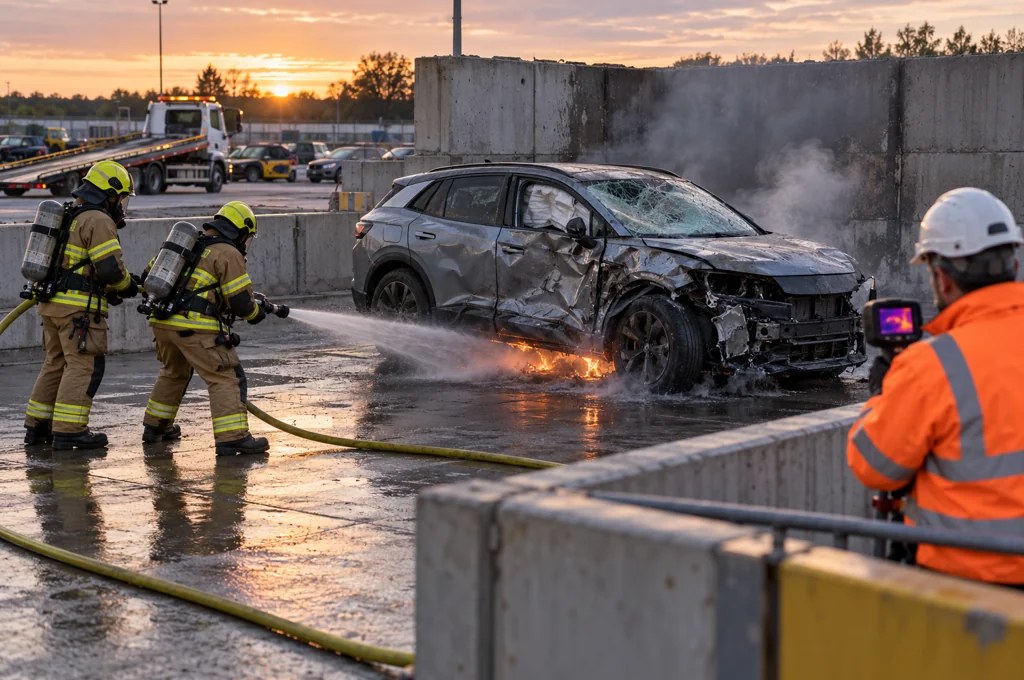
Recent reports from the United States highlight the scale of the problem. A dealership in Fort Worth experienced a massive fire involving multiple vehicles. Firefighters battled the blaze for hours. The event demonstrated the sheer intensity of battery fires. It showed that standard extinguishers often fail against these chemical reactions.
Separately, the emergency response protocols are changing. With Hurricane Isaias approaching, officials urged residents to move EVs and batteries away from homes. This specific warning suggests a fear of thermal runaway. Thermal runaway happens when a battery cell fails and heats up others around it. It is a chain reaction that is hard to stop.
Isaias was a storm, but the advice applies to any disaster scenario. If a car is near a house during a flood or fire, the risk increases. The battery becomes a bomb in a flood zone. This is the core of the recovery specialist’s concern. They see the aftermath of these events, and the damage is often worse than a standard car crash.
Experts are calling for better training. Standard fire hoses are not always enough. They need specific cooling techniques for batteries. The recovery industry is pushing for these changes. They handle the vehicles after the initial crash. They see the lingering heat and the potential for explosion.
The financial and environmental costs are also rising. Insurance premiums for these vehicles are climbing. The cost to clean up a site after a battery fire is much higher. It involves hazardous materials handling. This drives up the cost for everyone involved in the supply chain.
Detailed Breakdown: What Caused the Rising Risks
The primary driver of these risks is the chemistry of lithium-ion batteries. They store a massive amount of energy in a small space. When damaged, that energy releases all at once. The electrolyte is highly flammable. It burns at temperatures that can melt steel and vaporize water.
Recovery specialists point to the ‘memory effect’ of these batteries. Once damaged, they can hold a charge that is unstable. A vehicle might seem fine after a minor collision. But the battery pack might be compromised internally. The internal short circuit creates heat. That heat can melt the separator between the cells.
Once the separator melts, the cells short out. This triggers the thermal runaway. The reaction creates its own oxygen from the chemicals inside. This means it can burn even in a vacuum. It is a self-sustaining fire. This makes extinguishing it incredibly difficult. You have to cool the entire pack, not just the flames you see.
The geographic location of these fires also matters. In coastal areas like Florida, the threat of flooding adds a layer of danger. Water and electricity do not mix. If a flooded battery is charged, it can spark. This is why officials urged residents to move vehicles before Hurricane Isaias. They wanted to prevent electrical fires in already wet conditions.
The recovery process itself is dangerous. Towing a damaged EV requires specialized equipment. If the winch is connected to the chassis, it can complete a circuit. If the battery is punctured, the tow truck driver is at risk. This is why many recovery companies are now requiring specific safety certifications.
There is also the issue of the second life of these batteries. Many EV batteries are removed from cars and put into energy storage. But if they are not tested perfectly, they can fail. This failure can happen in a stationary home battery setup. The risks move from the highway to the residential garage.
What This Means for Readers & Future Outlook
For the average consumer, the main takeaway is caution. A damaged EV needs to be treated with respect. Do not drive it if you suspect a problem. Recovery specialists advise against driving a car that has been in a moderate collision. The cost of the repair might not be worth the risk of a fire.
Homeowners should be aware of the risks of charging. Overheating chargers can also trigger fires. Keeping an eye on the battery status is essential. If the car is stored for a long time, disconnect the power. This prevents phantom drains and potential chemical degradation.
The government and industry are working on standards. New protocols for handling damaged vehicles are being drafted. However, the sheer volume of EVs on the road is growing every day. This creates a backlog in the disposal and recycling process.
The future of EV disposal depends on better recycling technology. We need to be able to recover the raw materials safely. Currently, the process is often energy-intensive and risky. As the fleet ages, we will see more of these incidents. The industry must adapt quickly to stay ahead of the curve.
Investors and policymakers need to look at this data. The safety risks are real and they are expensive. They are not just a media talking point. They are operational realities for tow truck drivers and fire departments.
| Risk Factor | Impact on Safety | Current Mitigation |
|---|---|---|
| Lithium-ion Chemistry | High energy density leads to intense, hard-to-extinguish fires. | Specialized cooling techniques and PPE. |
| Thermal Runaway | Self-sustaining reactions that can reignite days later. | Isolating vehicles for 24-48 hours post-crash. |
| Water Exposure | Electrical shorts and potential explosions in flood zones. | Evacuation and physical relocation of batteries. |
Frequently Asked Questions
Why are EV disposal experts worried about lithium batteries?
Experts are worried because lithium-ion batteries can reignite for days after a crash. They release intense heat and toxic fumes that are hard to contain.
Can standard fire extinguishers put out an EV fire?
Standard extinguishers often fail against EV fires. The chemical reaction is too intense. Specialized cooling equipment is usually required to fully extinguish the battery pack.
What is thermal runaway in an electric vehicle?
Thermal runaway is a chain reaction where a failing battery cell heats up and causes adjacent cells to fail. It creates a self-sustaining fire that is difficult to stop.
Why did officials urge residents to move EVs before Hurricane Isaias?
Officials feared flooding could damage the batteries. Water and electricity mixing can cause electrical fires or explosions in flood zones.
Is it safe to tow a damaged electric vehicle?
It can be dangerous if not done correctly. Towing can complete electrical circuits or puncture the battery pack. Specialized towing equipment and training are required.
How long should a damaged EV be monitored after a crash?
Recovery specialists often recommend monitoring a vehicle for 24 to 48 hours. This ensures that a fire does not start later from internal damage.
What happens to EV batteries after they are disposed of?
They are often sent to recycling facilities. However, the recycling process itself can be hazardous and energy-intensive if not managed properly.
Does insurance cover damage from an EV fire?
Coverage varies by policy and cause. Some standard policies may not cover intentional acts or specific hazards related to battery chemistry.
Are all electric vehicle batteries at risk of catching fire?
While rare, all lithium-ion batteries carry a risk. The risk increases significantly if the battery is physically damaged or has a manufacturing defect.
What is the safest way to store an old EV battery?
The safest way is to store it in a cool, dry, well-ventilated area. Disconnecting the battery and keeping it away from flammable materials is also recommended.
Conclusion
The era of EV disposal requires a serious mindset shift. The risks are real and they are evolving. Recovery specialists are right to raise these concerns. They are the first line of defense against these new hazards.
Source: Jersey Evening Post (jerseyeveningpost[dot]com)