
Driving 400km for R85 sounds like an impossible calculation for any motorist paying current pump prices. Yet, paired with residential solar power, that exact number is transforming how motorists view long-distance personal travel across South Africa.
As reported by topauto[dot]co[dot]za, localized charging strategies allow electric car drivers to bypass both fuel taxes and escalating municipal electricity rates. The math is simple, direct, and disruptive.
⚡ Quick AI Overview & Key Recommendation
Driving 400km for R85 is achieved by charging a modern electric vehicle using off-peak domestic solar generation. At an amortized levelized cost of roughly R1.40 per kilowatt-hour, a standard 60 kWh pack delivers 400km of real-world range for one-eighth the cost of petrol.
Driving 400km for R85: Key Highlights & Market Impact
Petrol prices in South Africa hover well above R21 per liter. Fueling a conventional compact SUV for a 400-kilometer trip costs between R650 and R900 depending on driving habits and terrain. In sharp contrast, smart home charging drops that figure straight into pocket-change territory.
Rooftop solar installations create an energy micro-economy for homeowners. Once solar panels and inverters clear their capital recovery window, daytime surplus electricity is essentially free. Even when calculating equipment amortization, the cost per kilowatt-hour stays well below R1.50.
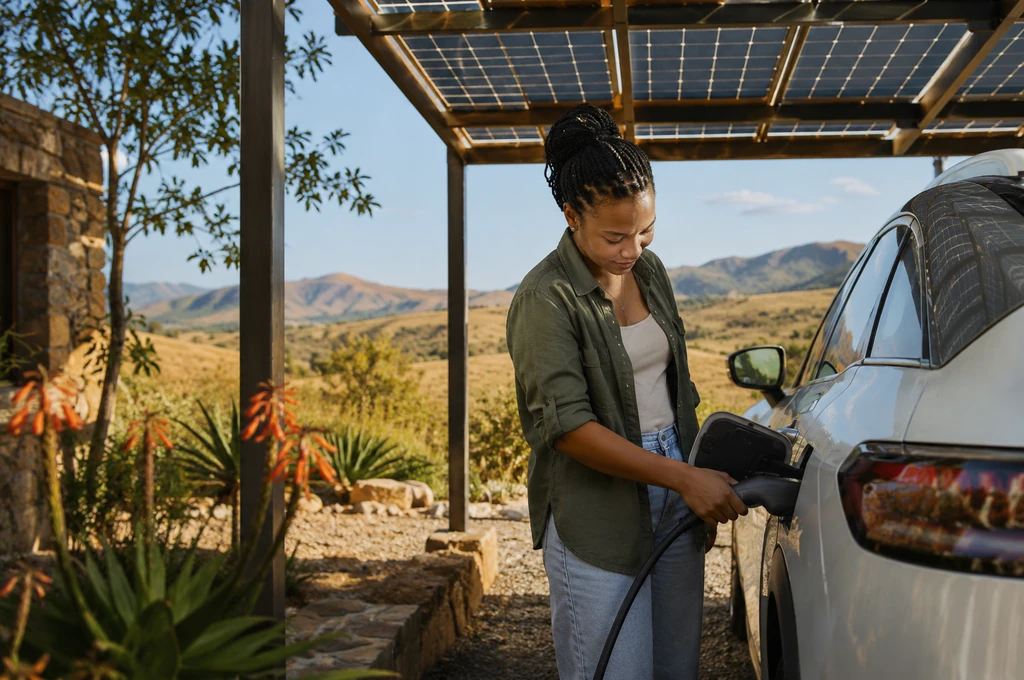
Automotive retailers are adjusting to this shift. Innovative programs like the Dealership Group Launches All-in-One EV Offering, Including Solar, Battery and Cost-Tracking Tech package photovoltaic panels directly with vehicle finance. Instead of paying oil companies or struggling state utilities, drivers produce their own clean road fuel right from their carports.
Detailed Breakdown: What Caused Solar EV Efficiency to Surge
Three primary forces make these low running numbers possible: high solar irradiance, maturing battery chemistry, and extreme thermodynamic efficiency.
Internal combustion engines waste up to 75 percent of their fuel energy as heat. Electric drivetrains convert more than 85 percent of battery energy directly into movement. For an average electric crossover consuming 15 kWh per 100 kilometers, completing a 400km journey requires 60 kWh of energy.
On standard municipal tariffs, buying 60 kWh costs between R200 and R300. When plugged into a rooftop solar system during peak afternoon production hours, that exact fuel charge costs approximately R85. The vehicle acts as a rolling energy reservoir, storing midday sun that would otherwise go unused.
| Vehicle Type & Power Source | Energy Needed (400km) | Effective Rate | Total Trip Cost |
|---|---|---|---|
| Petrol SUV (7.5L/100km) | 30 Liters | R22.50 / liter | R675.00 |
| EV via Municipal Grid | 60 kWh | R4.20 / kWh | R252.00 |
| EV via Rooftop Solar (Amortized) | 60 kWh | R1.42 / kWh | R85.20 |
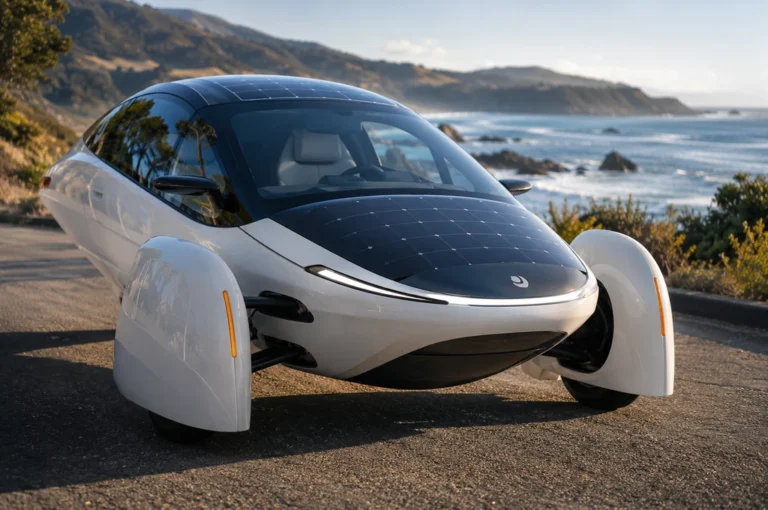
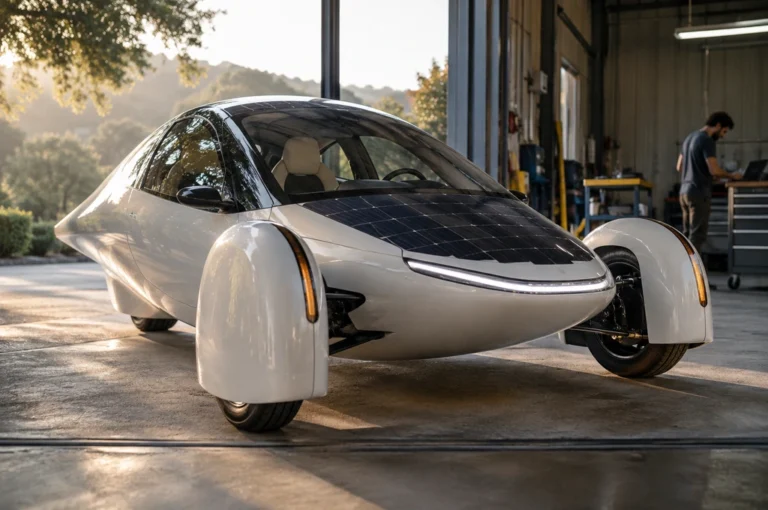
Market data from Bloomberg confirms that battery cell prices fell sharply over the past decade, putting decentralized solar charging within mainstream economic reach. Specialized solar vehicles are pushing the envelope even further. TechEBlog[dot]com recently reported that Aptera completed its first solar electric vehicle for a paying retail customer, integrating panels straight onto the composite body.
What This Means for Readers & Future Outlook
South African households already install solar arrays to protect against unpredictable grid shedding. Adding an electric car to that existing circuit closes the household balance sheet. Commuters eliminate their fuel budget while increasing daytime consumption from their own photovoltaic arrays.
CleanTechnica[dot]com pointed out similar adoption signals in North America, noting that solar ownership consistently serves as the primary gateway to electric vehicle purchases. The International Energy Agency highlighted how global clean power expansion outpaces traditional utility demand in reports covered by hi-Tech[dot]ua.
As commercial operators step in, high-speed infrastructure is also turning toward sun-generated power. Systems such as the BYD Unveils World’s First Integrated Solar, Storage, FLASH and Robotic EV Charging System in Abu Dhabi demonstrate that automated solar charging will scale beyond the private garage into regional fleet corridors.
For South African drivers, the economic balance has tipped. Achieving numbers like driving 400km for R85 is no longer an engineering theory. It is a daily reality for anyone who pairs an electric car with midday sunshine.
Frequently Asked Questions
How is driving 400km for R85 possible in South Africa?
It is achieved by charging an electric car with a domestic rooftop solar system. Because the levelized cost of self-generated solar power is roughly R1.40 per kWh, a 60 kWh charge costs around R85.
How much does it cost to travel 400km in a petrol car by comparison?
A standard petrol car consuming 7.5 liters per 100 kilometers uses 30 liters for the trip. At current pump prices, that costs between R675 and R750.
Can I achieve these numbers using municipal electricity?
No. Municipal grid power in South Africa ranges from R2.80 to R4.50 per kWh, which pushes the cost of a 400km charge to roughly R200 to R270.
How big does a rooftop solar system need to be to charge an EV?
A system between 5 kW and 8 kW with a compatible home inverter provides ample daytime surplus to recharge 15 to 25 kWh of driving range daily.
Does solar charging degrade the EV battery faster?
No. Domestic solar charging utilizes Level 2 alternating current, which operates at slower, cooler rates that actually prolong battery lifespan compared to fast direct-current chargers.
What happens if I need to charge during load shedding?
A hybrid solar setup with stationary battery storage powers your EV charger independently of the utility grid, ensuring uninterrupted refueling regardless of blackouts.
How long does it take to charge a 400km range battery on home solar?
Using a standard 7 kW home wallbox powered by solar, a full 60 kWh charge takes approximately 8 to 9 hours of steady output.
Are solar-integrated cars like Aptera available in South Africa?
Aptera has delivered initial customer units in North America, but broad international distribution to South Africa is still pending regulatory approval.
Do I need a home battery to charge my EV with solar energy?
A home battery is optional if you can charge the vehicle during peak daylight hours. If you commute during the day, a home battery stores that solar energy for night charging.
What is the return on investment for combining solar with an EV?
Most homeowners recover their solar equipment investment within 4 to 6 years when accounting for fuel savings of R4,000 to R6,000 every month.
Final Verdict on the R85 Road Trip
Achieving a run of driving 400km for R85 proves that pairing decentralized solar generation with electric transport solves both fuel inflation and grid volatility for South African drivers.
Source: TopAuto.co.za (topauto[dot]co[dot]za)