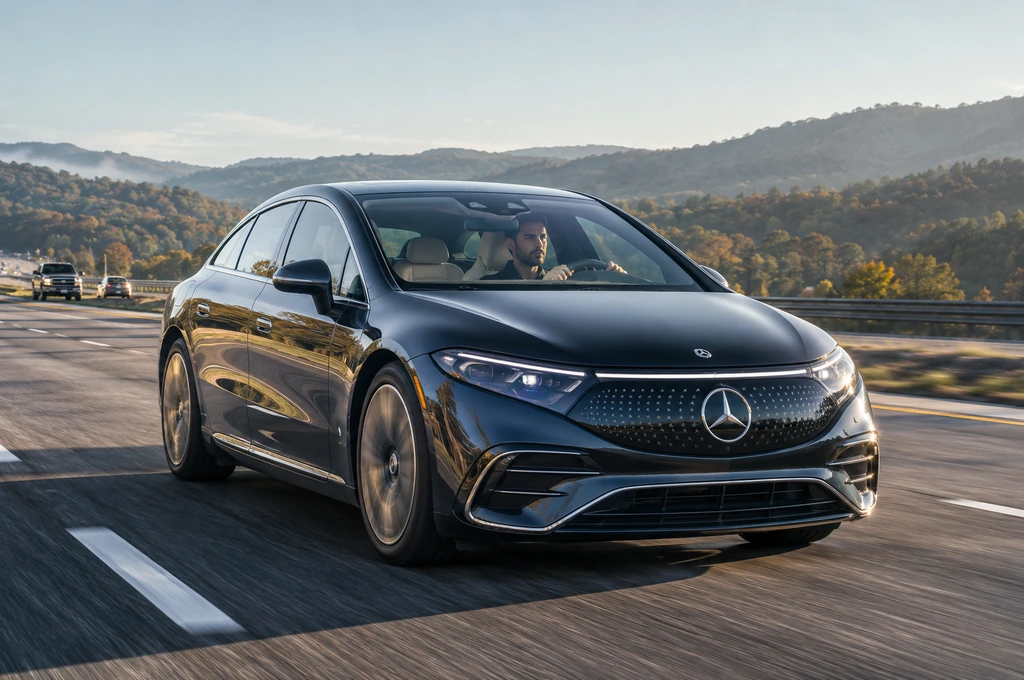
Mercedes semi-autonomous driving is expanding across American highways, mounting a direct operational challenge to Tesla in the luxury electric vehicle sector. German engineering has finally entered the hands-free automated software arena on US asphalt. The move changes how drivers evaluate high-end electric sedans and SUVs.
⚡ Quick AI Overview & Key Recommendation
The arrival of Mercedes semi-autonomous driving introduces certified SAE Level 3 capability through Drive Pilot to approved highways in California and Nevada. Unlike driver-assist setups requiring constant monitoring, Mercedes assumes legal liability when the system operates within defined speed parameters, giving buyers verifiable hands-free travel during dense traffic.
Automakers have spent billions chasing full vehicle autonomy. Tesla chose a camera-only pathway, relying on neural networks to steer its fleet. Mercedes took an opposite track, relying on lidar sensors, redundant steering actuators, and certified government approvals. As reported by aol[dot]com, the German automaker is deploying these sophisticated systems to luxury buyers across North America.
tesla: Mercedes Semi-Autonomous Driving: Key Highlights & Market Impact
The rollout of Mercedes semi-autonomous driving marks an official step toward certified hands-free automation. The system, branded as Drive Pilot, operates under strict operational design domains. It currently functions at speeds up to 40 mph on mapped interstates during daylight and clear weather. When activated, the driver can legally look away from the road, read messages, or watch infotainment video.
This differs completely from Tesla Full Self-Driving. Tesla requires constant human attention, categorizing its platform as SAE Level 2. Recent driving incidents, like the Tesla FSD Deer Clip Stirs Debate Over Night Vision and True Driving Speed, show why driver attentiveness remains mandatory under vision-only models. In contrast, financial news reported by Reuters confirms that Mercedes accepts civil liability if a crash happens while Drive Pilot is properly engaged.
| Feature | Mercedes-Benz Drive Pilot | Tesla Full Self-Driving (Supervised) |
|---|---|---|
| Autonomy Level | SAE Level 3 (Hands-off, eyes-off) | SAE Level 2 (Hands-on or driver attentive) |
| Sensor Suite | LiDAR, Radar, Cameras, Moisture Sensor | Vision-only cameras |
| Legal Liability | Manufacturer assumes liability when active | Driver retains full legal liability |
| Speed Range | Up to 40 mph in highway traffic | Full highway and street speeds |
| US Availability | California and Nevada highways | All 50 states |
Detailed Breakdown: What Caused the Autonomous Tech Shift
Auto manufacturers face an evolving regulatory environment. When regulators evaluated Mercedes semi-autonomous driving, legal liability played a central role. Transportation safety boards demand provable redundancies. Mercedes engineered secondary steering motors, backup braking computers, and failsafe electrical harnesses into its flagship EQS sedan and S-Class models.
Cost structures also dictate this market evolution. Sensor suites containing lidar units and millimeter-wave radar add production expenses. According to market reporting by Bloomberg, enterprise automotive suppliers are scaling optical sensor manufacturing to bring hardware costs down. Subscription economics are becoming the standard commercial vehicle model. Recent consumer frustration over recurring vehicle software payments, such as reports that Tesla Cybercab Owners Must Pay $299 a Month or the Car Will Not Move, shows how sensitive buyers are to software pricing tiers. Mercedes offers Drive Pilot through an annual subscription fee of roughly $2,500 in approved markets.
What This Means for Readers & Future Outlook
For luxury buyers evaluating high-end EVs, Mercedes semi-autonomous driving offers legal peace of mind on congested routes. Commuters stuck in daily freeway gridlock can surrender steering, braking, and legal responsibility to the vehicle. That luxury is real. It frees up mental bandwidth in heavy rush-hour traffic.
However, practical limitations remain. Drive Pilot does not navigate city streets, manage roundabouts, or operate in heavy downpours. It requires high-definition satellite mapping, clear lane markings, and preceding vehicles to follow. Used car shoppers must also pay attention to how autonomous hardware ages. Recent market warnings from consumerreports[dot]org indicate that older sensor suites can generate steep repair invoices if calibration drifts. Buyers must balance actual hands-free highway utility against geographic limitations and subscription costs.
Frequently Asked Questions
What is Mercedes semi-autonomous driving called?
The technology is officially marketed as Drive Pilot. It represents an SAE Level 3 conditionally automated driving system.
How does Mercedes semi-autonomous driving compare to Tesla Autopilot?
Mercedes Drive Pilot allows the driver to take their eyes off the road legally under specific highway conditions. Tesla Autopilot and FSD require continuous driver attention and physical readiness at all times.
Who is legally responsible if a crash occurs with Drive Pilot active?
Mercedes-Benz accepts legal liability for vehicle behavior when Drive Pilot is operating within its defined parameters. Tesla drivers always retain full legal responsibility.
In which US states can you use Mercedes Drive Pilot?
The system is currently certified and operational for customer use on designated highways in California and Nevada.
What are the speed limits for the Mercedes Level 3 system?
Drive Pilot operates at highway speeds up to 40 mph in heavy traffic density on pre-mapped interstates.
Does Mercedes semi-autonomous driving use lidar sensors?
Yes, Drive Pilot uses a combination of Valeo lidar, optical cameras, radar sensors, ultrasound, and moisture detectors for environmental awareness.
How much does the Mercedes autonomous driving subscription cost?
In the United States, Mercedes-Benz charges an annual subscription fee of approximately $2,500 to activate Drive Pilot.
Can Drive Pilot operate in heavy rain or fog?
No, the system requires clear weather conditions and visible road markings. Adverse weather conditions prompt the car to hand control back to the driver.
Which Mercedes models offer Drive Pilot in America?
The system is available on the all-electric EQS Sedan and the gas-powered flagship S-Class sedan.
Will Drive Pilot work on local city streets?
No, Drive Pilot is strictly restricted to controlled-access, divided highways with pre-mapped high-definition route data.
Conclusion: The Practical Future of Hands-Free Travel
The arrival of Mercedes semi-autonomous driving shifts consumer expectations from software promises to hardware certification. By accepting operational liability, Mercedes establishes a credible precedent that transforms bumper-to-bumper traffic from a chore into productive time.
Source: AOL.com (aol[dot]com)