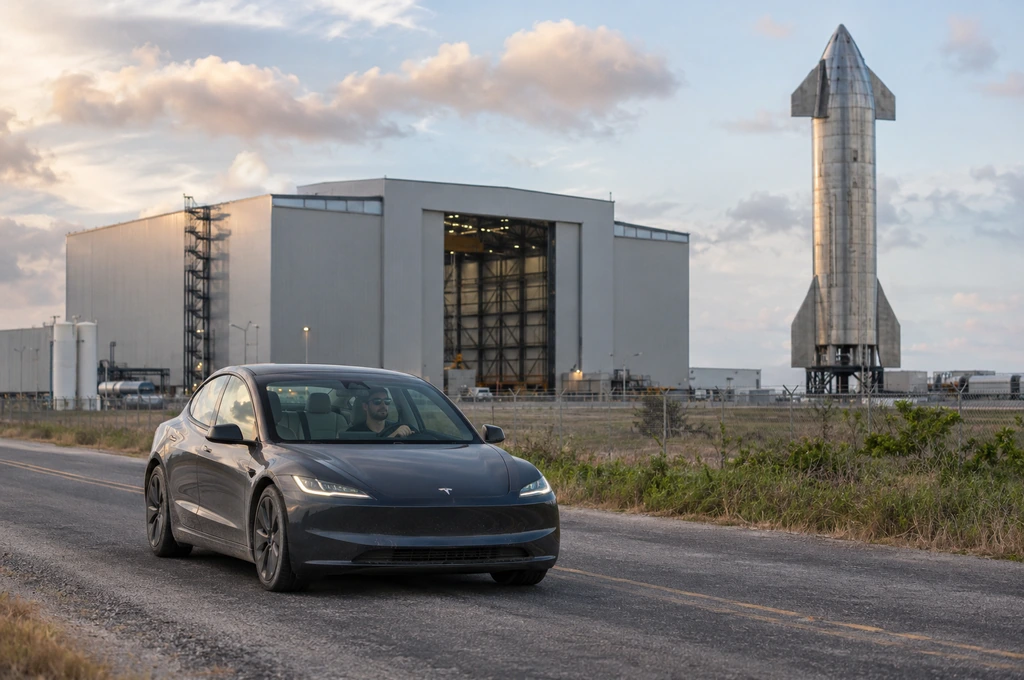
When examining capital exposure across Elon Musk’s industrial footprint, Tesla SpaceX risks differ substantially across operational, regulatory, and market lines. A regional political win by Adam Hinojosa with 52.8% of the vote in South Texas renewed focus on the physical corridor hosting both Starbase and regional manufacturing support. Local politics matter. Industrial footprints cannot exist in a vacuum, especially when heavy infrastructure clashes with local municipal planning.
⚡ Quick AI Overview & Key Recommendation
Tesla faces brutal retail auto competition, slowing Cybertruck output, and public market scrutiny, while SpaceX relies on federal launch contracts and Starlink cash flows. Investors must treat Tesla as a cyclical capital-intensive automaker and SpaceX as a semi-monopolistic defense contractor rather than pricing them as intertwined assets.
Public filings with the U.S. Securities and Exchange Commission tell an unambiguous story about retail vehicle manufacturing. Car manufacturing requires massive factory retooling, ruthless price discipline, and steady consumer demand. Space launch operations do not. While reports from tech-insider[dot]org and shattered[dot]io point out that Tesla SpaceX risks differ following Hinojosa’s 52.8% victory, the real divide sits in their business fundamentals. Consumer automotive demand is softening worldwide.
Tesla SpaceX Risks Differ: Key Highlights & Market Impact
Auto analysts often lump these two industrial giants together due to shared leadership. That is an analytical mistake. Tesla sells consumer discretionary vehicles subject to consumer credit scores, interest rate swings, and intense global competition. When interest rates rise, monthly car payments jump. Buyers walk away. SpaceX, conversely, executes government contracts and deploys satellite communication networks with recurring subscription revenue.
Recent reporting from techspot[dot]com indicates Tesla began adjusting production shifts for the Cybertruck. Management maintains that this line adjustment stems from manufacturing optimization rather than sluggish showroom sales. Yet automotive assembly lines do not idle without financial consequences. Production changes in Austin reveal how quickly inventory can stack up when pricing misses middle-market buyers. Political shifts in Congress can alter regulatory tailwinds quickly, as seen when Tesla, SpaceX Shares Fall Amid Democratic Control of Congress during previous federal budget cycles.
Meanwhile, institutional asset managers are trimming exposure. Reporting covered by cryptobriefing[dot]com revealed that select multi-asset funds reduced their positions across both entities during intense speculation about potential joint holding structures. The fundamental truth remains evident: Tesla SpaceX risks differ because one is tied to volatile consumer purchases while the other is backed by multi-year defense and commercial aerospace manifests tracked by Reuters.
Detailed Breakdown: What Caused the Divergence in Corporate Exposure
To understand why Tesla SpaceX risks differ today, one must separate consumer hardware from sovereign infrastructure. The electric truck market presents brutal manufacturing hurdles. Stamped stainless-steel panels demand specialized presses, and battery pack supply chains remain vulnerable to raw material price swings. Tesla cannot simply redirect unsold vehicles into federal defense accounts.
- Retail Market Exposure: Tesla relies entirely on consumer purchasing power, trade-in valuations, and automotive financing rates.
- Commercial Space Monopoly: SpaceX holds a dominant position in orbital payload deliveries, securing sovereign government commitments that ignore retail economic downturns.
- Capital Architecture: Tesla answers to quarterly public market earnings, while SpaceX controls its balance sheet privately away from short sellers.
- Local Texas Municipal Pushback: A 52.8% electoral win highlights the divided local sentiment surrounding land use, environmental permits, and beach closures near launch sites.
On paper, sharing engineering talent across corporate boundaries sounds efficient. In reality, it changes the balance of operational attention. When vehicle deliveries miss street estimates, institutional investors on Bloomberg terminals demand cost reductions. Tesla cannot subsidize vehicle assembly lines with orbital launch margins.
| Risk Factor | Tesla Motors | SpaceX |
|---|---|---|
| Primary Revenue Driver | Retail consumer auto sales | Government & Starlink subscriptions |
| Inventory Risk | High (unsold vehicle lots) | Low (build-to-order manifest) |
| Public Scrutiny | SEC quarterly disclosures | Private funding rounds |
| Local Political Sensitivity | Austin zoning & labor supply | Coastal access, Starbase zoning |
What This Means for Readers & Future Outlook
Prospective electric vehicle buyers and automotive retail investors must realize how distinct these two business paths are. If you plan to buy an electric vehicle or evaluate automotive equities, focus strictly on unit economics. Battery chemistry costs, charging compatibility, and manufacturing scale dictate automotive survival. Tesla continues expanding home energy storage tools, as seen when Tesla Solar Charging Taps Home Battery When Sunlight Drops to keep home microgrids resilient.
At the same time, regional expansion into international markets remains critical for vehicle sales volume, mirroring how Tesla’s Argentina Entry: Cencosud Store Confirmed for Late November represented strategic South American retail positioning. Sound valuation principles listed on Investopedia remind analysts that corporate cross-subsidies rarely protect falling vehicle margins. The reality that Tesla SpaceX risks differ means vehicle assembly challenges will not be rescued by rocket launches.
Frequently Asked Questions
Why do Tesla and SpaceX face different financial risks?
Tesla relies directly on consumer vehicle sales, financing rates, and global automotive supply chains. SpaceX generates revenue through long-term commercial satellite launches, military defense payloads, and Starlink internet subscriptions.
How did Adam Hinojosa's 52.8% win affect South Texas operations?
The election highlighted close political divisions in Cameron County and surrounding areas where Starbase operates. Local governance influences property zoning, infrastructure expansion, and environmental permits across the Rio Grande Valley.
Is Tesla winding down Cybertruck production due to weak sales?
Tesla management states that factory adjustments reflect line efficiency and supply chain optimization rather than sales weakness. Automotive analysts nonetheless track growing inventory levels and softening reservation backlogs.
Could a formal corporate merger between Tesla and SpaceX happen?
A merger faces substantial regulatory hurdles due to differences between a public consumer carmaker and a classified aerospace defense contractor. Institutional shareholders have actively trimmed positions during recent merger rumors.
How do interest rates impact Tesla compared to SpaceX?
High interest rates increase consumer monthly car loan payments, depressing demand for new electric vehicles. SpaceX depends on private venture rounds and government agency contracts largely insulated from retail borrowing costs.
What is the primary operational hurdle for the Cybertruck?
The Cybertruck requires complex manufacturing techniques, including forming thick stainless steel and ramping custom battery cell production. Scaling assembly without sacrificing operating margins remains the primary bottleneck.
Why do retail investors frequently link Tesla and SpaceX performance?
Both companies share Elon Musk as chief executive and draw engineering leadership from overlapping technical pools. However, their balance sheets and capital sources remain legally and financially separated.
How does Starlink revenue insulate SpaceX from aerospace downturns?
Starlink provides recurring consumer and commercial internet subscriptions across global markets. This predictable monthly cash flow reduces reliance on erratic government space exploration budgets.
What role does local environmental regulation play in Texas?
Rocket test closures and industrial runoff rules near South Padre Island generate recurring legal disputes with state and local bodies. Managing local community relationships is an ongoing administrative requirement for launch authorization.
What should automotive investors watch next for Tesla?
Investors should track gross vehicle profit margins, global delivery tallies, and inventory levels in North America and Asia. Vehicle pricing adjustments offer the clearest indication of true consumer demand.
Assessing the Divergent Road Ahead for Industrial Portfolios
Capital markets will continue to reward operational clarity over speculative corporate combinations. Automotive manufacturing requires ruthless cost discipline, and acknowledging that Tesla SpaceX risks differ is essential for any realistic appraisal of the electric vehicle market.
Source: https://tech-insider.org/ (tech-insider[dot]org)