Africa’s largest mobile operator is making a massive shift. MTN invests N825.7m in solar, EV infrastructure to power its network and fleet. This move signals a deep commitment to sustainability and operational efficiency in a continent where power reliability remains a constant challenge.
MTN Group, a giant in telecommunications spanning 20 African countries, announced a significant capital allocation. The funds will target the electrification of base stations and the adoption of electric vehicles (EVs) across its operations. This decision moves beyond corporate social responsibility. It tackles the core operational costs and carbon footprints that have long plagued the industry.
⚡ Quick AI Overview & Key Recommendation
MTN invests N825.7m in solar, EV infrastructure to cut diesel costs and carbon emissions. This strategy deploys solar hybrid systems for base stations and transitions the fleet to electric vehicles, ensuring reliable connectivity and long-term operational savings.
MTN invests N825.7m in solar, EV infrastructure: The Strategic Shift: Why This Matters
Telecom towers in remote areas often rely on diesel generators. Fuel supply chains are erratic. Prices fluctuate wildly. Carbon taxes loom on the horizon. For a company like MTN, the math is simple. Diesel is a drag on profitability and a liability for the environment.
By investing in solar, MTN addresses the root cause of these issues. Solar energy is abundant in most African regions. It is free at the point of use. It requires less maintenance than complex generator setups. This investment represents a strategic pivot. It is about securing energy independence.
Powering the Network: Solar Hybrid Solutions
The primary beneficiary of this investment is the telecommunications network itself. Base transceiver stations (BTS) are power-hungry. In many markets, they consume vast amounts of diesel. The N825.7m injection will fund solar hybrid systems. These systems combine solar panels with battery storage.
During the day, solar panels generate electricity. This energy charges the batteries. At night, or during cloudy periods, the batteries discharge. The diesel generator acts as a backup. This hybrid approach ensures 99.9% uptime. It eliminates the noise and pollution of constant generator running.
This mirrors global trends. In India, Prime Minister Modi has urged homes to use rooftop solar for cooking and EV charging to cut energy imports. The logic is identical. Reduce reliance on the grid. Reduce reliance on fossil fuels. MTN is applying this logic at the industrial scale of telecom infrastructure.
This shift is not just about green energy. It is about resilience. Solar storage ensures that a storm or fuel shortage does not knock out a cell tower. Connectivity remains a lifeline for businesses and emergency services. Reliable power is the foundation of that connectivity.
The Fleet Revolution: Electrifying the Workforce
MTN is not just changing its power source. It is changing its wheels. The investment also targets the company’s massive fleet of vehicles. Sales representatives, engineers, and logistics managers drive thousands of vehicles across the continent. These vehicles consume millions of liters of fuel annually.
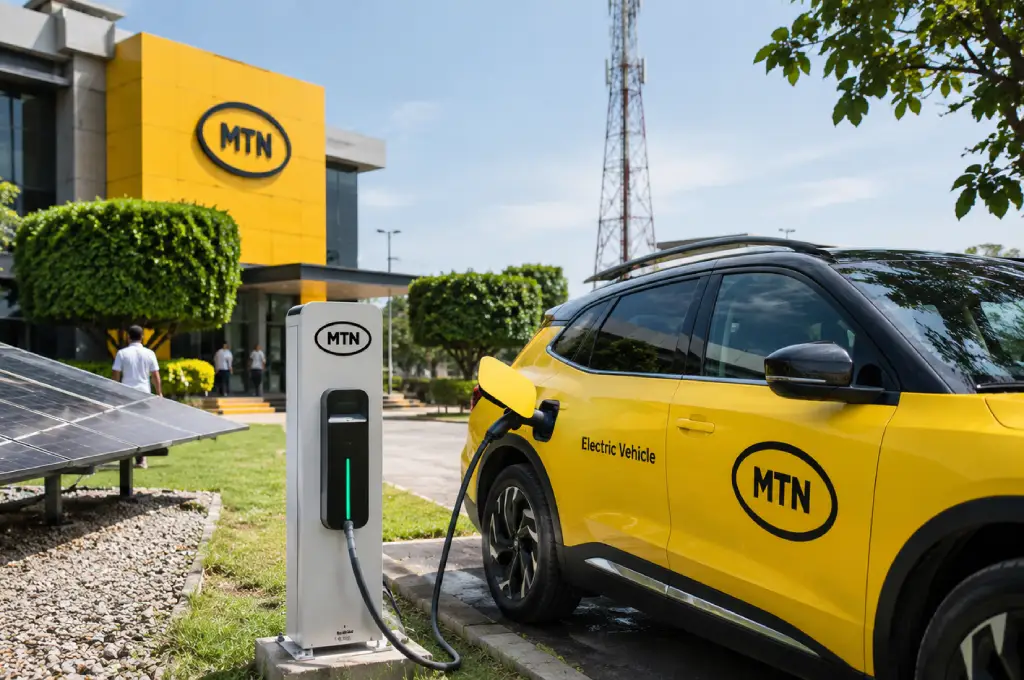
Transitioning to electric vehicles requires a complete overhaul of the supply chain. It requires charging infrastructure. It requires charging stations at depots and service centers. MTN is building this infrastructure now. They are placing solar-powered charging stations in strategic locations.
This initiative aligns with global regulatory pressures. In China, draft rules encourage bus operators to build solar-storage-charging stations. Regulators are recognizing that the future of transport is electric. MTN is positioning itself at the forefront of this transition. They are an early adopter in the commercial vehicle sector.
The Economic Case: Beyond the ESG Scorecard
While environmental goals are important, the economic case is compelling. Diesel is expensive. Fuel logistics in many African countries are inefficient. Solar is a one-time capital cost. Over the lifetime of a base station, solar pays for itself.
For a company of MTN’s size, efficiency is king. Every saved dollar goes to the bottom line. It can be reinvested into 5G rollout or network expansion. The reduction in maintenance costs is another factor. Solar panels have no moving parts. They do not require the regular servicing of diesel generators.
This pragmatic approach to sustainability is refreshing. It is not performative. It is not just about meeting ESG targets for investors. It is about running a better business. It is about ensuring that the network remains strong even when the national grid fails.
Challenges on the Road Ahead
The path is not without hurdles. The initial capital outlay for solar and EVs is high. While the long-term savings are clear, the upfront risk is real. MTN must manage the financing of this project carefully. They must ensure that the technology is robust enough for harsh African climates.
Furthermore, the availability of spare parts for EVs in some markets is a concern. MTN must establish local supply chains. They must train technicians on new battery technologies. These are the operational realities that will test the success of this investment.
Despite these challenges, the direction is clear. The world is moving toward a low-carbon economy. Companies that do not adapt will be left behind. MTN is choosing to lead. They are setting a standard for other telecom operators in emerging markets.
Implications for the Region
MTN’s actions have a ripple effect. They create a market for local solar manufacturers. They encourage the development of EV service networks. They demonstrate that green infrastructure is viable in the African context.
This investment sends a powerful message to policymakers. It shows that the private sector is ready to invest in the energy transition. It provides a blueprint for how other industries can decarbonize. It is a win for the environment. It is a win for the economy. It is a win for the consumer.
The move ensures that connectivity remains a constant in an unpredictable world. It protects the network from energy volatility. It secures the future of MTN as a reliable service provider.
The investment is a clear statement. MTN is not just a telecom company. It is a key player in the energy transition. They are building the digital and physical infrastructure of the future. And they are doing it with a green heart and a practical mind.
By focusing on solar and EVs, MTN is future-proofing its operations. They are reducing their carbon footprint. They are saving money. They are ensuring reliable service for millions of customers. This is how a global leader navigates the challenges of the 21st century.
Frequently Asked Questions
What is the primary purpose of the N825.7m investment?
The funds are primarily used to electrify base stations with solar hybrid systems and transition the company’s vehicle fleet to electric vehicles to cut costs and emissions.
How does solar power benefit telecom base stations?
Solar power reduces reliance on expensive and unreliable diesel generators, ensuring a stable power supply for connectivity while lowering maintenance costs.
Will MTN completely replace diesel generators?
No, the solar hybrid systems will keep diesel generators as a backup to ensure 99.9% uptime during cloudy periods or at night.
What is the benefit of using electric vehicles for MTN?
EVs reduce fuel consumption, lower operational costs, and decrease the carbon footprint of the company’s logistics and service operations.
Does this investment affect service quality for customers?
No, the investment aims to improve service quality by ensuring more reliable power to base stations, reducing the risk of network outages.
Is this investment part of a global trend?
Yes, similar initiatives are happening globally, such as government incentives for rooftop solar and regulations encouraging solar-storage-charging stations.
How does MTN plan to manage the costs of this transition?
MTN views the long-term savings on fuel and maintenance as a strong economic driver, making the initial investment financially viable over time.
What role do batteries play in this solar infrastructure?
Batteries store solar energy generated during the day for use at night, ensuring continuous power without relying on generators.
What impact does this have on the African energy landscape?
It demonstrates that private sector investment in renewable energy is viable and can drive local market growth for green technology.
Who benefits most from this infrastructure upgrade?
Customers benefit from reliable connectivity, while the environment benefits from reduced carbon emissions and lower fuel dependency.
The Verdict: A Blueprint for the Future
MTN invests N825.7m in solar, EV infrastructure to secure its future. This is a bold move that balances economic pragmatism with environmental responsibility. It sets a high bar for other companies in the region.
Source: Galaxy Television (galaxytvonline[dot]com)