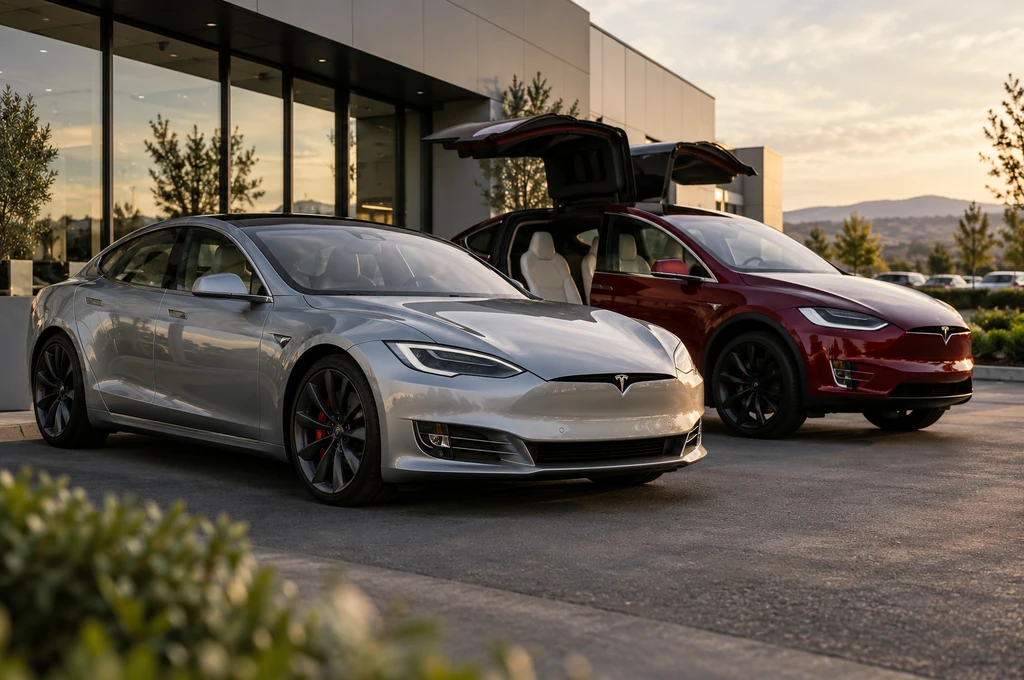
The Tesla Model S and X Signature Series marks the official curtain call for the automaker’s founding premium vehicle lineup. Reports from motor1[dot]com indicate that this limited release honors more than a decade of premium electric vehicle manufacturing before assembly lines adjust for new priorities.
⚡ Quick AI Overview & Key Recommendation
Tesla is retiring its flagship luxury sedans and SUVs with the limited Tesla Model S and X Signature Series. As the automaker shifts capital toward autonomous robotaxis and high-volume platforms, existing reservation holders and collectors should evaluate final delivery allocations immediately before order books close permanently.
Tesla Model S and X Signature Series: Key Highlights & Market Impact
Tesla established its brand identity on the back of full-size luxury vehicles. The Model S sedan proved that battery power could outrun combustion supercars, while the Model X introduced falcon-wing doors and utility to the premium segment. Buyers securing the Tesla Model S and X Signature Series obtain custom badging, bespoke paint finishes, and high-specification tri-motor powertrains. Market analysts at Bloomberg note that combined sales of both platforms now account for less than three percent of total company deliveries.
Volume dictates factory efficiency. Massive sales figures for the Model 3 sedan and Model Y crossover pushed the older luxury platforms to the fringes of the company balance sheet. Recent corporate filings analyzed on Tesla Revenue Flat as Elon Musk Eyes Possible SpaceX Deal show how quarterly numbers rely almost entirely on mass-market units. The final run gives early adopters and loyalists an exclusive exit option before factory tooling changes permanently.
| Metric | Model S Plaid Baseline | Signature Series Edition |
|---|---|---|
| Acceleration (0-60 mph) | 1.99 seconds | 1.99 seconds |
| Peak Horsepower | 1,020 hp | 1,020 hp |
| Interior Accents | Standard Carbon Decor | Numbered Plaque & Bespoke Trim |
| Market Allocation | Standard Production | Strictly Limited Production |
| Target Buyer | Performance Enthusiast | Automotive Collector |
Detailed Breakdown: What Caused the Transition Away from Flagship Models
Capital reallocation drives this change. Tesla is directing engineering hours and factory square footage toward artificial intelligence and autonomous transport. Local reports from Houston Public Media indicate that Fort Bend County approved a $10 billion Tesla development deal with a ten-year tax break tied to 8,700 jobs, signaling heavy industrial commitments in Texas. That footprint targets massive automated capacity rather than hand-assembled luxury interiors.
The push toward full autonomy brings distinct challenges. Outlets like autonocion[dot]com recently reported an accident in Austin involving a Tesla Cybercab prototype, likely tied to its vision-only system operating without lidar sensors. Perfecting that hardware suite demands billions in research capital. Strategic context from Tesla-SpaceX Merger: Musk’s Ambitious EV Play Explained outlines how executive attention has shifted toward broader technological frontiers. The phase-out leading to the Tesla Model S and X Signature Series reflects this operational reality. Corporate filings with the U.S. Securities and Exchange Commission reveal that capital expenditures now favor machine learning compute and automated factories over legacy chassis redesigns.
What This Means for Readers & Future Outlook
For automotive collectors, the Tesla Model S and X Signature Series represents an opportunity to own a piece of automotive history. These final editions will command high premiums on secondary markets because they represent the peak evolution of the company original platform architecture. Resale valuations for early Signature cars from 2012 suggest that low-mileage, preserved examples retain value far better than standard production trims.
Drivers who currently own standard Model S and Model X vehicles should not panic about service support. Federal regulations require automakers to maintain replacement components for at least ten years following the end of vehicle production. Supply chains for air suspension components, drive units, and infotainment screens remain active. Financial analysts quoted by CNBC note that technology shifts reshape corporate indices over time, advising prudent portfolio management. Conservative market observers featured in 3 Types of Investors Who Should Avoid SpaceX and Tesla Stocks Amid Merger Talk suggest that retail buyers should assess real-world utility before paying steep collector markups on outgoing platforms.
Frequently Asked Questions
What is the Tesla Model S and X Signature Series?
It is a final, limited-production release of Tesla’s flagship sedan and SUV. The package includes exclusive interior trim, special exterior colors, and numbered collector badging.
Why is Tesla discontinuing the Model S and Model X?
The automaker is retooling production lines for higher-volume mass-market vehicles and autonomous platforms. Sales of both flagship models now make up only a small fraction of total company output.
Will Tesla still provide service and parts for existing Model S and Model X owners?
Yes, service centers will support both models for years. Regulations require manufacturers to supply replacement parts for at least a decade after vehicle production ends.
How many units of the Signature Series will be built?
Tesla has not published an exact production cap, but internal memos indicate a strictly controlled run. Once order allocations finish, production of both platforms will conclude.
Does the Signature Series offer mechanical performance upgrades?
The vehicles share mechanical underpinnings with existing Plaid tri-motor models. Enhancements focus on bespoke styling, interior materials, software badging, and collector documentation.
What platform will replace the Model S and Model X?
Tesla does not plan direct replacements for either luxury vehicle. The business is directing factory capacity toward the mass-market Cybercab and high-volume platforms instead.
Are older Model S and Model X vehicles expected to appreciate in value?
Standard production models typically follow standard automotive depreciation curves. Limited editions like early 2012 Signature cars and this final batch tend to hold interest among private collectors.
Where are the Signature Series vehicles assembled?
Final assembly takes place at the Fremont, California facility. That location has housed the primary assembly lines for both vehicles since their respective debuts.
How does the removal of these models affect Tesla’s profit margins?
Retiring low-volume luxury models removes complex assembly overhead from the factory floor. The operational transition allows Tesla to focus capital on scalable manufacturing processes.
Can buyers transfer existing Full Self-Driving packages to the Signature Series?
Tesla occasionally offers software transfer promotions during end-of-quarter delivery drives. Buyers should confirm specific software transfer terms with their local delivery advisor before placing an order.
The Enduring Heritage of the Tesla Model S and X Signature Series
The release of the Tesla Model S and X Signature Series closes an iconic chapter in modern transportation. These two machines changed how the global auto industry views battery electric power. While the automaker turns its attention to artificial intelligence and autonomous transport, this final luxury release provides collectors with a tangible tribute to the vehicles that started the modern electric revolution.
Source: Motor1.com (motor1[dot]com)