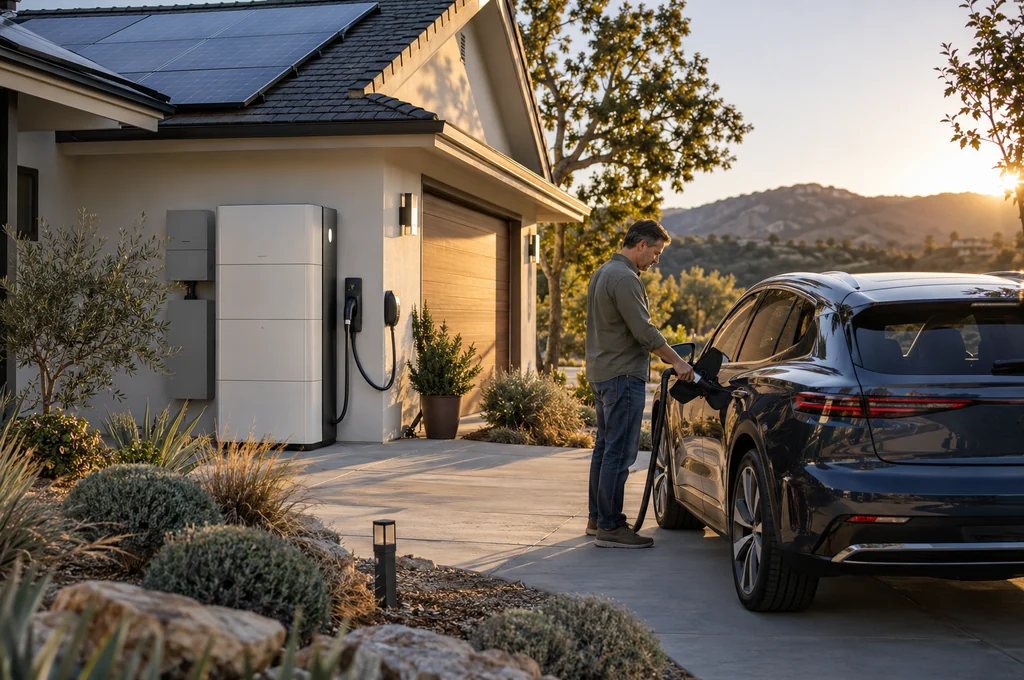
Solar EV Charging: California homeowners are increasingly demanding a backyard EV charger that cuts out both the gas pump and the grid. The appeal is clear: total energy independence. This approach means your car charges using only the sun. It removes reliance on utility rates and fossil fuels. The state’s aggressive climate goals make this transition essential. Many are looking for a setup that works autonomously. A solar-powered charger offers that freedom. It shifts the power source from the public utility to your own property. This creates a closed loop for energy. The sun hits the panels. The panels charge the battery. The battery charges the car. No utility bill, no gas station stop.
⚡ Quick AI Overview & Key Recommendation
To achieve true off-grid EV charging, you need a 7-10 kW solar array paired with a 10-20 kWh battery system. This setup ensures your electric vehicle charges fully even during evening peaks or cloudy days, effectively replacing gasoline costs with zero marginal energy expense.
Solar EV Charging: Core Evaluation Framework & Decision Matrix
Designing an off-grid system requires a specific mindset. You are not just installing a charger; you are building a micro-power plant. This section breaks down the essential components and decision points.
The first decision is scale. You must match your solar capacity to your driving habits. A small home system might not suffice for a daily commuter. The math is straightforward. Calculate your monthly mileage. Divide that by the vehicle’s energy efficiency. This gives you kilowatt-hours (kWh) needed per month. A typical EV uses about 30-40 kWh per 100 miles. Multiply your monthly mileage by this number. This is your target energy load.
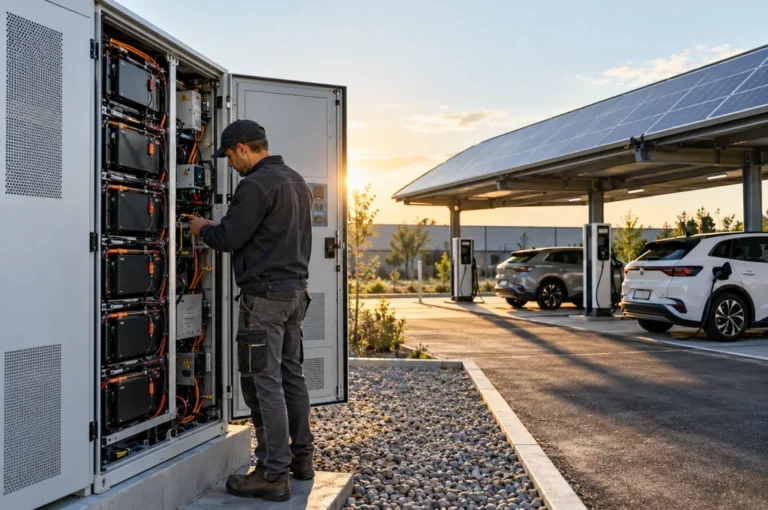
Next, consider the battery bank. The battery is the heart of the off-grid system. It stores excess solar energy for night use. It also provides backup power for the home. You need a battery with sufficient depth of discharge. Lithium-ion batteries are the industry standard. They offer high efficiency and a long lifespan. Lead-acid batteries are cheaper but degrade faster. They also require more frequent replacement. For a robust system, lithium is the only viable choice.
Finally, the inverter. This device converts the DC power from your solar panels and batteries into AC power for your home and car. A hybrid inverter is best. It manages both solar generation and battery storage. It optimizes the flow of electricity. It ensures the car charges first if there is limited solar production.
| System Component | Key Specification | Why It Matters |
|---|---|---|
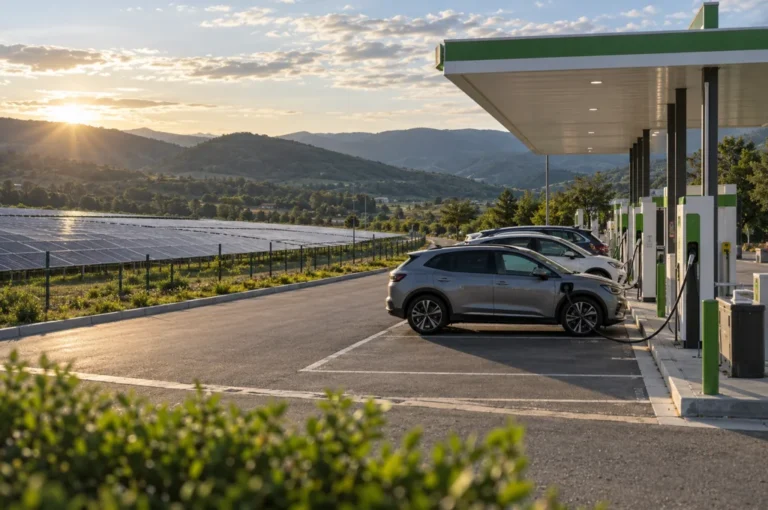
| Solar Array | 7-10 kW Capacity | Generates enough power for daily driving and home loads. |
| Battery Bank | 10-20 kWh Storage | Stores energy for night charging and grid outages. |
| Inverter | Hybrid / 10 kW Output | Manages power flow between solar, battery, and home. |
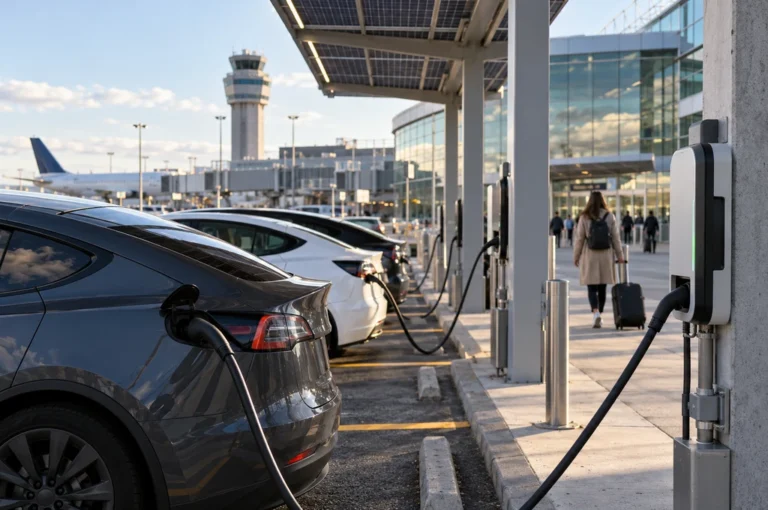
| EV Charger | Level 2 (7.4 kW) | Standard home charging speed, fully compatible with off-grid. |
Real-World Calculations: Running Costs, Range & Government Subsidies
The financial case for off-grid charging is compelling. The math favors the homeowner. Electricity from the grid is expensive. Gas prices fluctuate wildly. Off-grid charging removes both variables.
Let’s look at the cost per mile. A gas car costs about $0.15 to $0.20 per mile. An electric car on the grid costs about $0.04 to $0.06 per mile. If you charge off-grid, your cost drops to near zero. You only pay for the initial system installation. Over the life of the vehicle, this savings is massive. A $10,000 system pays for itself in about five to seven years.
Range anxiety is a common concern. But with a solar system, range is not a constraint. The sun is a constant. As long as there is daylight, you are generating power. This makes long road trips possible. You can stop at a fast charger to top up. You do not need to rely solely on home charging for your daily range.
Government incentives also play a role. The Inflation Reduction Act offers tax credits for solar and battery installations. These credits can cover a significant portion of the system cost. This lowers the barrier to entry. It makes off-grid charging more accessible to the average homeowner. You should always check for local rebates. Many states and municipalities offer additional incentives.
Crucial Factors & What to Check Before You Buy
Before you sign a contract, do your due diligence. The installation process is complex. It requires skilled professionals. A poor installation can lead to inefficiencies and safety hazards.
Start with the installer. Choose a company with experience in solar and EV integration. Ask for references. Look at their past projects. A reputable installer will conduct a thorough site survey. They will assess your roof structure and shading patterns. They will calculate the optimal panel orientation.
Check the warranty. Solar panels typically come with a 25-year performance warranty. The inverter usually has a 10-12 year warranty. The battery has its own warranty, often 10-15 years. Understand what is covered. Is the warranty pro-rated? Does it cover labor?
Finally, consider the future. Technology moves fast. Solar panels are becoming more efficient. Battery technology is improving. Choose a system that can be expanded. You can always add more panels later. You can upgrade the battery as well. This future-proofs your investment.
The transition to off-grid EV charging is a significant step. It requires planning and investment. But the rewards are worth it. You gain energy security. You reduce your carbon footprint. You save money over the long term. It is a win-win for you and the planet.
Frequently Asked Questions
Can I run my EV completely off solar power?
Yes, with a properly sized solar array and battery storage system, you can charge your electric vehicle entirely using sunlight, eliminating the need for grid electricity.
How much battery storage do I need for an EV?
For most daily commuters, a 10-20 kWh battery bank is sufficient to store enough solar energy for overnight charging and backup power.
Will off-grid charging work on cloudy days?
Solar panels still produce power on cloudy days, though output is reduced. A battery bank is essential to store excess energy for use during low-sunlight periods.
What is the payback period for a solar EV system?
The payback period is typically 5 to 7 years, depending on your local electricity rates, solar incentives, and driving habits.
Do I need a special charger for solar?
No, standard Level 2 home chargers work perfectly with solar systems. The inverter manages the power flow.
What happens during a blackout?
With a hybrid inverter and battery, your home and EV can continue to run on stored solar energy during a power outage.
Is off-grid EV charging legal in California?
Yes, California allows for off-grid solar installations. However, you must comply with local building codes and permitting requirements.
How much roof space is needed for a 7kW solar system?
A 7kW system typically requires about 400 to 500 square feet of unshaded roof space.
Can I add more panels to my existing system later?
Yes, most solar systems are designed to be expandable. You can add more panels to increase your total energy production.
What is the lifespan of a solar battery?
Most modern lithium-ion batteries have a lifespan of 10 to 15 years, depending on usage and maintenance.
Conclusion
Off-grid solar EV charging offers a powerful path to energy independence. It requires a smart setup and a commitment to long-term savings. The technology is proven and reliable.
Source: The Cool Down (thecooldown[dot]com)