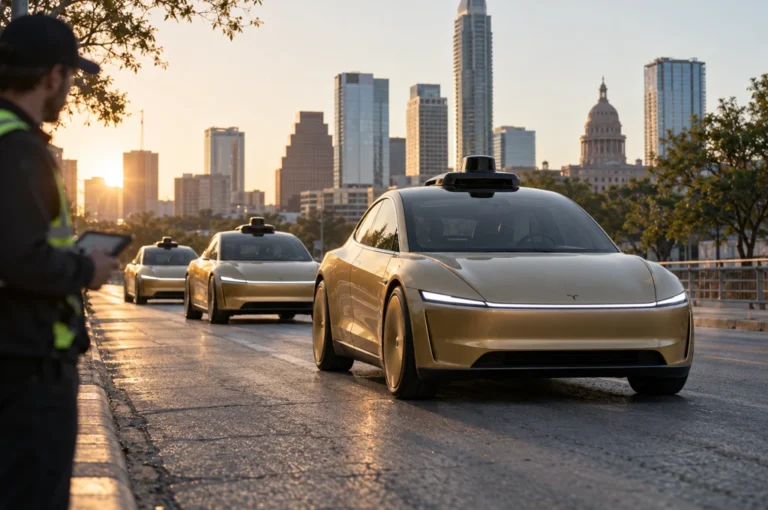
The electric vehicle market just shifted gears. Bank of America Tesla forecast targets are moving up, driven by a startling metric: robotaxi miles are doubling. This isn’t just a minor uptick. It signals a fundamental change in how Wall Street values Elon Musk’s company. The firm is pivoting away from simple vehicle sales and looking directly at the revenue potential of autonomous fleets.
On paper, this looks clean. In reality, it changes the balance. The investment bank is betting that Tesla’s hardware will soon serve as a service platform. If the miles driven by these autonomous vehicles increase, the earnings potential explodes. We are looking at a valuation model that relies less on the driver and more on the software.
⚡ Quick AI Overview & Key Recommendation
Bank of America raised Tesla’s price target due to a projected doubling of robotaxi miles, signaling a shift from vehicle sales to autonomous fleet revenue. Investors should monitor regulatory approvals and software validation closely.
Bank of America Tesla forecast: [Focus Keyword]: Head-to-Head Specification Comparison
To understand the magnitude of this shift, we must look at the hardware. The recent reports suggest the core vehicle specifications remain strong, but the application of those specs is changing. Here is a comparison of the key factors driving this new valuation model.
| Feature | Current Focus (Vehicle) | Future Focus (Robotaxi) |
|---|---|---|
| Primary Revenue Driver | Direct Sales to Consumers | Subscription Services & Fleet Utilization |
| Core Hardware | High-performance batteries (e.g., 4680) | Robust, cost-optimized chassis for heavy use |
| Software Priority | Autopilot driver assistance | Full FSD (Full Self-Driving) autonomy |
| Cost Structure | Manufacturing margins | OpEx efficiency over vehicle lifespan |
Key Differences: Real-World Performance, Comfort & Features
The human element remains a hurdle. While the cars are built to perform, the Bank of America Tesla forecast relies on removing the human element entirely. Current models offer comfort and speed. The robotaxi vision demands reliability and safety above all else.
Real-world testing shows promise but faces scrutiny. Recent news regarding regulatory approvals for autonomous lighting rules, such as turn signals, highlights the complexity of the rollout. If the cars cannot legally and safely operate without a driver, the robotaxi miles cannot double. The current focus is on the passenger experience. The future focus is on the algorithm.
Behind the headline, there is another story. The $3.5 trillion of hardware mentioned in industry reports suggests a massive consolidation of assets. This is not just about selling cars to individuals. It is about creating a network of vehicles that generate value 24/7. The comfort features matter less than the car’s ability to navigate complex urban environments without human intervention.
Final Buying Verdict: Which One Should You Buy?
For the average consumer, the advice remains the same: buy the vehicle you can drive yourself today. The Bank of America Tesla forecast is a bet on the future. It is not a guarantee of current profitability for every unit sold.
Buy a Tesla if you want cutting-edge technology and a direct connection to the vehicle. Do not buy it solely for an investment play on robotaxis. The market is volatile. The technology is evolving. The safest bet is to own the car and enjoy the ride, while the financial world debates the long-term viability of the autonomous fleet model.
Frequently Asked Questions
Why did Bank of America raise the Tesla forecast?
Bank of America raised the forecast based on a projected doubling of robotaxi miles, indicating a shift in revenue models from direct sales to autonomous fleet services.
What does ‘robotaxi miles doubling’ mean for investors?
It implies a significant increase in the potential revenue per vehicle, as autonomous vehicles can operate continuously without rest breaks, unlike human-driven cars.
Is Tesla still a car company according to this report?
The report suggests Tesla is becoming a pure-play autonomous company, with hardware serving as a platform for software and service revenue rather than just manufacturing.
What are the risks associated with the robotaxi strategy?
The main risks include regulatory hurdles, software validation delays, and the high capital required to deploy a massive autonomous fleet.
How does this compare to traditional auto stocks?
This strategy differentiates Tesla by creating a recurring revenue stream through subscriptions and fleet utilization, rather than relying solely on one-off vehicle sales.
What role does the hardware play in this new model?
The hardware is the foundation, but the software and data generated by the robotaxis are the primary value drivers in this new financial outlook.
Will the price target change again soon?
Investment targets are dynamic and depend on real-world execution, regulatory approvals, and the actual pace of robotaxi deployment.
Can regular consumers benefit from this robotaxi strategy?
Consumers benefit indirectly through lower long-term costs of transportation if the robotaxi network becomes efficient, but they currently own the vehicle.
What is the timeline for the robotaxi rollout?
The timeline is uncertain and subject to regulatory approval, but reports suggest a push towards wider deployment in the coming years.
How does the SolarCity merger history affect this?
The history of the SolarCity merger raises concerns about corporate governance and focus, which investors will scrutinize as Tesla pursues complex new ventures.
Conclusion: The Autonomous Shift
The Bank of America Tesla forecast is a clear signal of the industry’s direction. The days of the car as a static asset are ending. We are entering an era of dynamic, data-driven mobility. The future belongs to the fleet, not the garage.
Source: AOL.com (aol[dot]com)