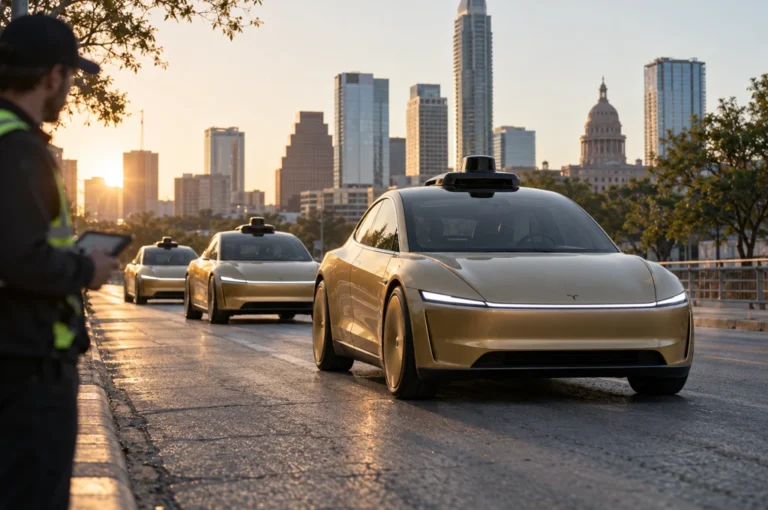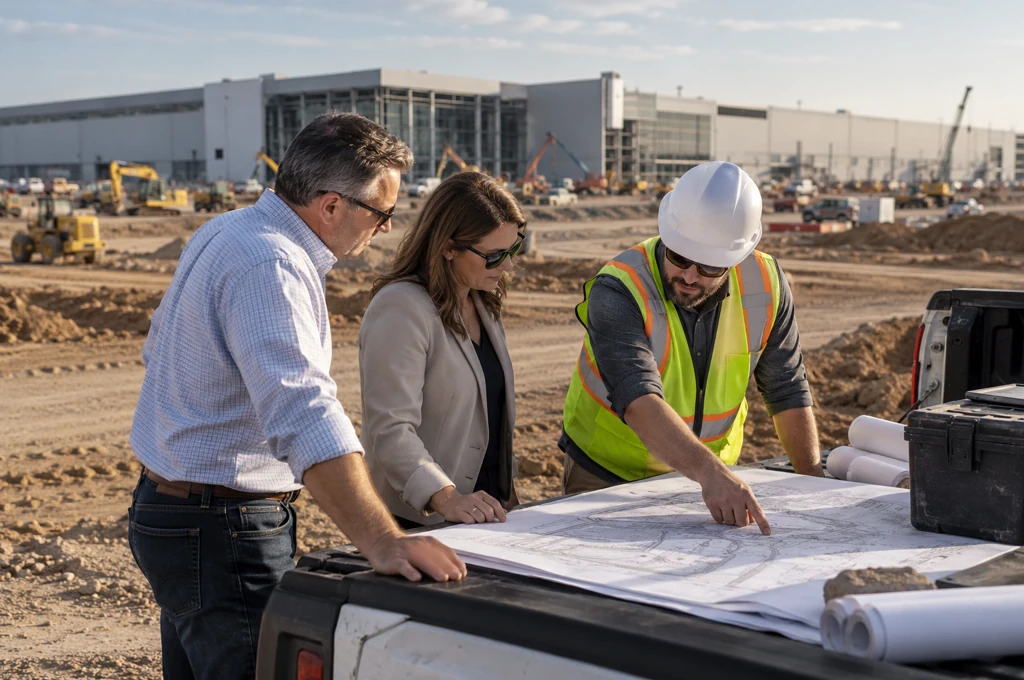
The Tesla $10B Texas deal marks an aggressive manufacturing push in the American South as local commissioners commit long-term property tax relief to secure massive industrial development. County leaders voted to advance the incentive package in Fort Bend County near Houston, attaching property tax discounts to strict capital expenditure benchmarks and permanent employment targets over the next decade.
According to regional reporting on houstonpublicmedia[dot]com, the multi-phase agreement ties local tax abatements to the creation of roughly 8,700 full-time jobs across advanced manufacturing, software operations, and clean power distribution.
⚡ Quick AI Overview & Key Recommendation
The Tesla $10B Texas deal grants a 10-year property tax abatement in exchange for $10 billion in capital investments and 8,700 high-tech jobs in Fort Bend County. This industrial commitment solidifies Texas as the central hub for next-generation vehicle manufacturing, robotics development, and high-volume battery cell production.
Public corporate filings reviewed through U.S. Securities and Exchange Commission documents reveal a company aggressively scaling physical infrastructure despite fluctuating retail EV sales. Corporate leaders continue expanding localized supply chains to reduce reliance on offshore components. The expansion follows ongoing governance scrutiny, especially as Musk Backing for SpaceX-Tesla Merger Rattles Insiders and EV Investors who recall historical disputes surrounding the SolarCity buyout covered by idnfinancials[dot]com.
Tesla $10B Texas Deal: Quick Comparison & Key Specifications
Industrial scale shapes end-user pricing and vehicle capability. The massive footprint supported by this industrial expansion directly supports manufacturing lines for current passenger flagships and commercial programs. Below is how the core vehicles supported by this Texas manufacturing hub stack up across real-world metrics.
| Model | Price Range | Real Range | Battery Capacity | Fast Charging Time | Best For |
|---|---|---|---|---|---|
| Model 3 Long Range | $47,490 – $54,000 | 341 miles | 82 kWh | 15 min (up to 175 miles) | Daily Commuters |
| Model Y Long Range | $48,990 – $53,490 | 310 miles | 81 kWh | 15 min (up to 160 miles) | Families & Utility |
| Cybertruck AWD | $79,990 – $99,990 | 318 miles | 123 kWh | 20 min (up to 136 miles) | Heavy Towing & Cargo |
| Cybercab Robotaxi | Est. under $30,000 | Est. 200 miles | Est. 45 kWh | Inductive Fast Pad | Autonomous Fleets |
| Next-Gen Roadster | $200,000+ | Est. 600 miles | 200 kWh | 10 min (up to 200 miles) | Track Performance |
Financial media analysis at Bloomberg notes that local tax breaks decrease production costs per unit over a vehicle lifecycle. These capital efficiencies provide room for sharp retail price cuts when macro demand drops.
Top Ranked Models: In-Depth Reviews & Real-World Performance
Tesla leverages centralized production hubs to rapidly iterate hardware. The localized output supported by the Tesla $10B Texas deal underpins production scaling across distinct vehicle lines designed for different road requirements.
Tesla Model Y: The Practical Benchmark
The Model Y represents the volume spine of current operations. It features an 81 kWh battery pack, standard dual-motor all-wheel drive, and generous cargo capacity. Acceleration remains crisp with a zero-to-sixty sprint of 4.8 seconds. On the downside, the suspension delivers a firm ride over broken pavement, and the absence of a traditional instrument cluster frustrates some traditional buyers. It remains the top choice for small families seeking dependable highway range and plug-and-play charging.
Tesla Cybertruck: Industrial Strength and Angular Reality
Constructed from thick stainless steel, the Cybertruck breaks conventional utility design. Its 123 kWh battery pack delivers 318 miles of range while pulling up to 11,000 pounds. Steer-by-wire mechanics make the massive truck remarkably nimble in crowded lots. However, real-world towing rapidly cuts range by roughly 40 percent, and the massive exterior requires careful washing to prevent surface staining. It suits buyers needing heavy structural utility and distinct styling.
Tesla Next-Gen Roadster: Track Engineering Extreme
Recent footage verified by teslanorth[dot]com showed a digital instrument panel with a 5,500 PSI cold-gas thruster gauge, previewing extreme track software for the upcoming supercar. The car targets a 200 kWh battery pack with hypercar acceleration below two seconds. Downsides include extreme retail pricing above $200,000 and extended delivery timelines. It targets sports car collectors who want extreme performance figures.
Tesla Cybercab: Urban Fleet Autonomy
Designed strictly for point-to-point urban transit without steering wheels or foot pedals, the Cybercab focuses on low manufacturing expenses. Recent federal regulatory shifts noted on Reuters show the NHTSA considering modern lighting rules that ease turn-signal constraints for vehicles built without conventional control stalks. Yet, real-world questions linger. The Tesla Cybercab Austin Crash Reignites Fierce EV Lidar Debate among commercial autonomy specialists who argue that camera-only networks face blind spots in severe weather.
Customer Buying Guide: How to Choose the Right Model for Your Needs
Evaluating the EV market requires looking beyond zero-to-sixty times. Long-term satisfaction depends on infrastructure compatibility, real energy consumption, and total cost of ownership.
Budget analysis published by Investopedia suggests assessing overall utility before picking battery options. Standard daily commutes rarely exceed 40 miles. Spending thousands extra for large battery capacities often returns poor utility value unless highway driving occurs weekly.
Home energy preparation deserves early attention. Installing a Level 2 240-volt home charging wall connector on a dedicated 50-amp circuit supplies roughly 44 miles of range per hour of charge. Relying solely on public high-speed superchargers increases charging expenses by roughly three times compared to off-peak home rates.
Warranty coverage provides peace of mind. Tesla provides an eight-year or 120,000-mile warranty on drive units and battery systems, guaranteeing at least 70 percent retention of usable capacity over that window. As market expansion continues under the Tesla $10B Texas deal, local assembly quality control remains the primary factor drivers must examine upon delivery.
Frequently Asked Questions
What is the Tesla $10B Texas deal approved in Fort Bend County?
The deal is an economic development agreement where Fort Bend County approved a 10-year property tax break for Tesla. In exchange, the automaker commits to investing up to $10 billion and generating roughly 8,700 local jobs.
How long does the property tax abatement last under the agreement?
The tax incentive agreement spans a 10-year duration. Tesla must meet explicit annual capital spending and job creation benchmarks to maintain the discounts.
How many jobs is Tesla required to create in Fort Bend County?
The tax deal requires Tesla to generate approximately 8,700 full-time jobs. These roles span factory operations, logistics, engineering, and support positions.
How does the Tesla $10B Texas deal affect everyday EV prices?
Lower local tax liabilities and centralized manufacturing lower per-unit assembly costs. These savings allow the company to protect margins during industry-wide price competition.
Which vehicle models benefit from Texas manufacturing investments?
Facility investments directly boost assembly lines for the Model Y, Cybertruck, next-generation mass-market platforms, and autonomous Cybercab test vehicles.
Are there governance concerns surrounding Tesla operations in Texas?
Yes, corporate governance watchdogs frequently assess asset management between Tesla and sister ventures. Potential conflicts often prompt regulatory reviews similar to prior utility asset acquisitions.
What battery warranty comes with Texas-built Tesla vehicles?
Most models carry an eight-year or 120,000-mile battery and drive unit warranty. The contract guarantees a minimum of 70 percent battery capacity retention over the coverage period.
What is the real-world range of the volume-selling Model Y?
The Long Range All-Wheel Drive Model Y achieves an EPA-rated 310 miles on a full charge. Real highway driving at standard speeds typically yields between 270 and 290 miles.
Can private consumers charge these electric vehicles at home easily?
Yes, installing a 240V Level 2 charger provides full overnight recharges in roughly 8 to 10 hours. This approach significantly reduces ownership costs compared to commercial DC fast-charging networks.
How does the Cybercab fit into Tesla vehicle development?
The Cybercab is a dedicated autonomous vehicle without manual steering controls designed for point-to-point ride-hailing fleets. It relies on camera-based neural network navigation rather than expensive lidar arrays.
The Future Impact of the Texas Manufacturing Push
The approved Tesla $10B Texas deal locks in a massive industrial presence that will shape high-tech employment and global electric vehicle production for the next decade.
Source: Houston Public Media (houstonpublicmedia[dot]org)