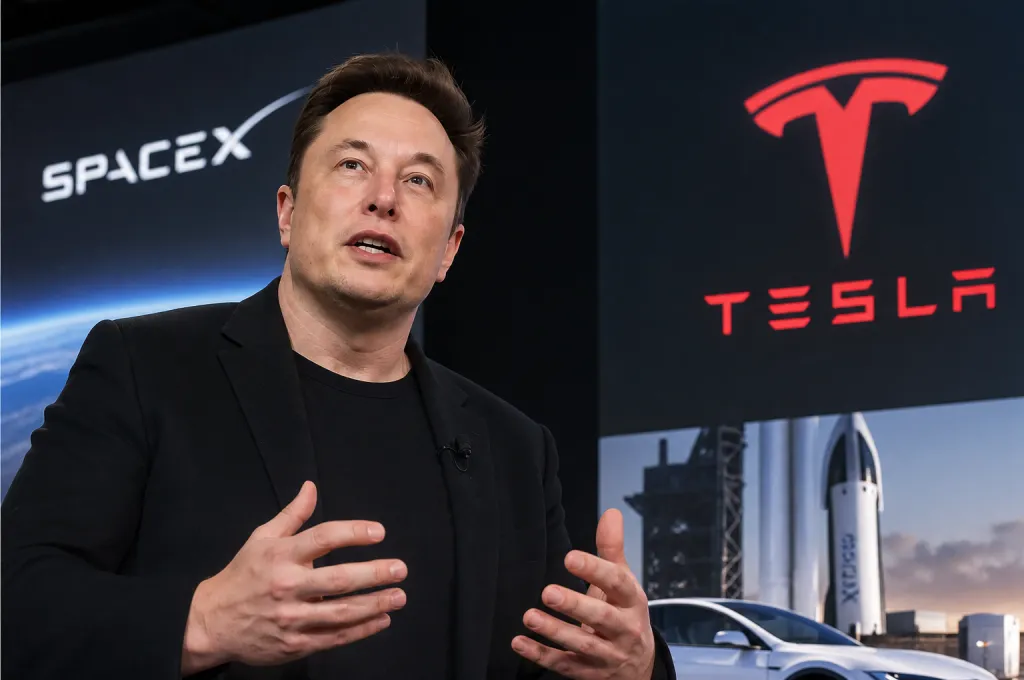
Discussion surrounding a potential SpaceX-Tesla merger sent ripples across Wall Street after reports revealed that Elon Musk floated the concept to close associates. The idea rattled senior executives and automotive analysts who track electric vehicle manufacturing closely. Behind the headlines, there is another story about capital allocation and company mission.
⚡ Quick AI Overview & Key Recommendation
A hypothetical SpaceX-Tesla merger faces immense corporate governance friction, antitrust scrutiny, and valuation disagreements between public automotive equity holders and private aerospace backers. Investors should expect heightened volatility in TSLA shares while monitoring upcoming autonomous vehicle timelines.
Institutional shareholders reacted with immediate skepticism. Public electric vehicle manufacturers face rigorous quarterly reporting standards that private rocket ventures do not. Combining an automaker competing against global automotive conglomerates with an orbital launch contractor introduces unusual balance sheet friction. Financial journalists at reuters[dot]com pointed out that internal teams questioned how such a deal serves retail car buyers or factory expansion goals. Trading desks tracked premarket drops in automotive equities as traders weighed the fallout. A corporate development officer from rival Rivian publicly urged automotive leadership to curb unstructured public remarks during executive presentations.
SpaceX-Tesla Merger: Quick Comparison & Key Specifications
To grasp why combining these corporate entities creates turbulence, examine the operational realities of Tesla alongside modern electric vehicle lineups and automotive assets. Comparing core production vehicles highlights how automotive operations demand capital discipline.
| Model | Price Range | Real Range | Battery Capacity | Fast Charging Time | Best For |
|---|---|---|---|---|---|
| Tesla Model 3 Long Range | $42,490 – $47,490 | 341 miles | 75 kWh | 15 min to 175 miles | Daily Commuters |
| Tesla Model Y Long Range | $44,990 – $49,990 | 310 miles | 81 kWh | 15 min to 160 miles | Suburban Families |
| Tesla Cybertruck Dual Motor | $79,990 – $99,990 | 318 miles | 123 kWh | 20 min to 136 miles | Commercial Hauling |
| Tesla Cybercab (Planned 2026) | Targeted under $30,000 | 200-250 miles | 50 kWh | Inductive Wireless | Autonomous Urban Fleets |
Automotive operations require steady capital reinvestment into battery assembly, stampings, and software stacks. Diverting attention toward space hardware disrupts this core cadence. Scrutiny from the U.S. Securities and Exchange Commission remains an ever-present factor for public corporate transactions of this scale.
Top Ranked Models: In-Depth Reviews & Real-World Performance
Tesla maintains its commercial footing through consumer electric cars rather than aerospace ventures. The prospective SpaceX-Tesla merger raises questions about whether vehicle pipelines will receive adequate managerial focus as competition stiffens.
Tesla Model 3 Long Range: The Efficiency Benchmark
The Model 3 remains the foundation of modern electric transport. Operating on a 75 kWh battery pack, the sedan delivers exceptional energy efficiency across highway speeds. Real-world consumption averages roughly 24 kWh per 100 miles, beating most compact premium rivals. Pros include class-leading charging speed and robust software integration. Cons center on minimalistic controls that remove physical indicator stalks. Commuters seeking lower operational costs find this model compelling.
Tesla Model Y Long Range: Mass Market Versatility
Accounting for the bulk of volume deliveries, the Model Y uses an 81 kWh pack to deliver reliable family transportation. Real-world testing consistently yields 280 to 300 miles of highway range. Pros involve spacious cabin cargo capacity and wide access to fast-charging infrastructure. Cons involve firm ride dynamics over uneven city pavement. Buyers who manage family road trips benefit most from this vehicle.
Tesla Cybercab: Future Mobility Prototype
Reports via dataconomy[dot]com confirm that production planning targets commercial availability before the end of 2026. The two-seat vehicle eliminates pedals and steering wheels, depending entirely on vision neural networks. Pros include targeted sub-$30,000 pricing and cheap inductive charging architecture. Cons involve ongoing regulatory delays for Level 4 driverless deployment. Ride-hail fleet operators remain the target demographic for this architecture.
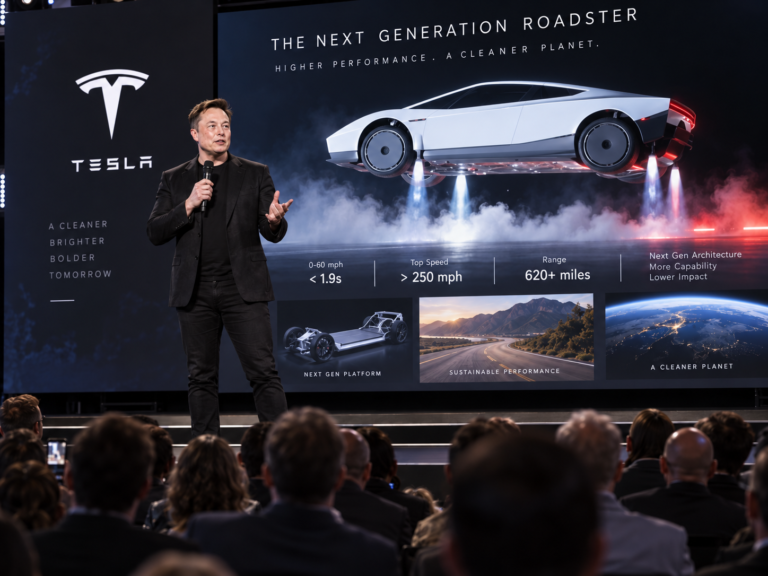
Technical overlap between transport sectors does occur occasionally. Readers tracking extreme engineering concepts often reference speculative projects like the Elon Musk Flying Tesla Roadster: Price, Features and Launch Date, yet commercial realities keep production grounded on asphalt. The debate over whether such hybrid machinery is practical mirrors conversations in Is Tesla’s New Flying Car Real? What the Roadster Demo Actually Shows, illustrating how aerospace rhetoric frequently intersects with automotive marketing.
Customer Buying Guide: How to Choose the Right Model for Your Needs
Car shoppers must distinguish corporate speculation from practical ownership. A theoretical SpaceX-Tesla merger does not alter the underlying battery chemistry or daily usability of showroom vehicles. Consider these practical metrics before purchasing an electric car:
- Daily Commute and Range: Match your purchase to average mileage rather than theoretical maximums. A daily round trip of 40 miles requires minimal battery reserve, making standard range variants practical for metropolitan driving.
- Home Charging Infrastructure: Installing a 240-volt Level 2 home charger is the most cost-effective method to operate an electric vehicle. Owners using residential solar setups should audit panel output carefully. Complex home electrical limits occasionally restrict charging speeds, a problem documented in studies examining How a 63-Amp Limit Knocked Out Tesla Solar Charging and Sparked a Homeowner Fix.
- Budget and Total Ownership Costs: Factor in insurance rates, tire replacement frequencies, and local electricity tariffs. Premium performance trims wear out tires much faster than single-motor configurations.
- Warranty and Long-Term Support: Verify battery retention guarantees. Standard consumer protection contracts cover degradation below 70 percent capacity for eight years or 100,000 miles.
Market analysts cited by Bloomberg and Reuters suggest that independent automotive balance sheets protect consumer warranties far better than complex conglomerate structures. Corporate stability ensures service centers receive steady replacement parts.
Frequently Asked Questions
What triggered reports about a SpaceX-Tesla merger?
Journalistic reports indicated that corporate executives discussed combining operations to consolidate resources. News outlets subsequently reported strong internal pushback from key company stakeholders.
How did Wall Street react to the SpaceX-Tesla merger rumors?
Automotive shares experienced premarket declines as institutional investors weighed governance issues. Financial desks expressed concern regarding valuation parity between public and private equities.
Would a SpaceX-Tesla merger require shareholder approval?
Yes, public corporate statutes require Tesla shareholders to vote on any acquisition or structural combination. Institutional fund managers holding large stakes wield substantial voting power over such proposals.
Could SpaceX assets legally combine with an electric vehicle company?
A combination is legally possible through a holding company structure or direct share exchange. However, regulatory agencies including antitrust authorities would review the arrangement intensively.
How does the SpaceX-Tesla merger debate affect vehicle prices?
Consumer car pricing remains tied to raw material costs, supply chains, and market demand. Speculative executive mergers do not directly alter standard showroom retail pricing.
What is the planned timeline for the Tesla Cybercab?
Current production roadmaps target initial sales and fleet deployments by the end of 2026. Commercial timing depends on regulatory approvals for autonomous driving software without human oversight.
Why do some auto executives oppose mixing aerospace and car manufacturing?
Automotive manufacturing relies on high unit volumes, modest profit margins, and predictable consumer financing. Aerospace contracts follow long research timelines and government project cycles that do not match car retail operations.
Does Tesla need capital from SpaceX to build electric vehicles?
Tesla generates substantial cash flow from its existing automotive sales and energy storage products. The automaker maintains an independent balance sheet capable of funding near-term factory expansions.
How do rating agencies view a potential SpaceX-Tesla merger?
Credit analysts generally treat cross-industry conglomerate mergers with caution due to mixed balance sheet obligations. Combining capital-intensive rocketry with mass manufacturing could introduce unexpected credit rating revisions.
Where can investors find formal regulatory disclosures about merger proposals?
Material corporate acquisitions must be filed formally with public stock exchanges and financial regulators. Filings appear promptly on official regulatory registries once definitive legal agreements are signed.
Assessing the Reality of an Automotive-Aerospace Combination
Corporate history shows that industrial conglomerates rarely deliver long-term manufacturing advantages for electric mobility. The current debate around the SpaceX-Tesla merger reveals deep tensions between long-term technological ambition and the rigorous discipline needed to build affordable consumer vehicles at scale.
Source: The Next Web (thenextweb[dot]com)