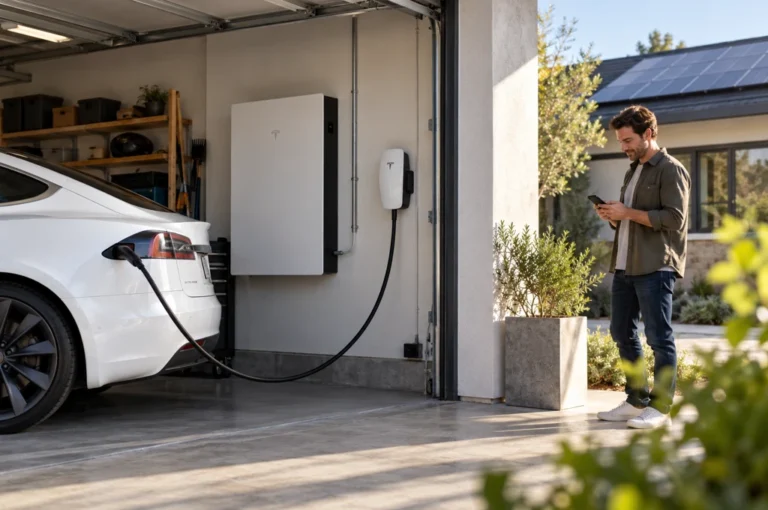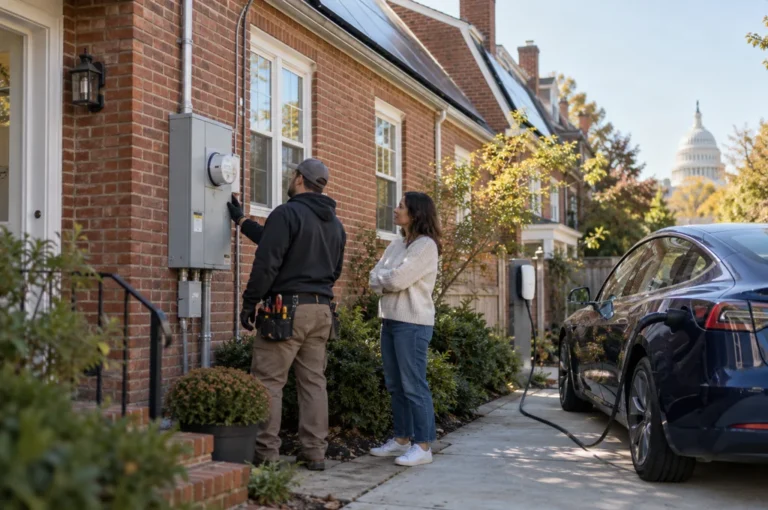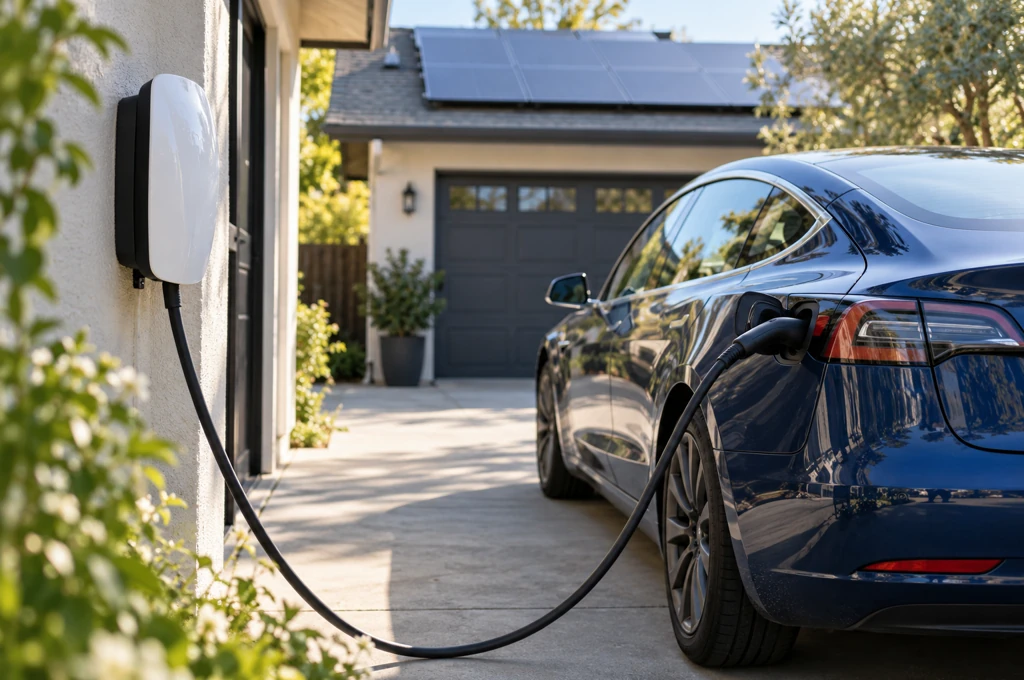
Tesla EV chargers now automatically adjust their power draw to capture cheap grid energy or surplus generation from rooftop solar panels. This software integration bridges residential clean energy generation and private transport. Drivers no longer need to manually set timers or constantly check utility rate schedules. The system monitors the energy balance of the home in real time and directs spare clean kilowatts directly into the vehicle battery pack.
⚡ Quick AI Overview & Key Recommendation
Tesla EV chargers connected to a Powerwall can automatically soak up surplus residential solar output before it exports to the grid at low feed-in tariffs. Pairing the Tesla Wall Connector with solar energy storage cuts vehicle fuel expenses by up to 70 percent compared to standard daytime grid charging.
Behind the headline reported by yahoo[dot]com, there is another story. Utility net metering rules are shrinking across major markets. Power companies now pay wholesale pennies for exported rooftop power while charging retail dollars during evening peak hours. Storing clean watts in a vehicle battery converts low-value solar spill into zero-emission transportation fuel.
solar: Tesla EV chargers: Head-to-Head Specification Comparison
Evaluating how Tesla EV chargers operate alongside unified home batteries reveals clear distinctions compared to standard aftermarket charging hardware. Here is how a fully integrated Tesla solar and charging ecosystem compares against a conventional smart Level 2 charger paired with an open-source solar inverter.
| Feature / Specification | Tesla Ecosystem (Wall Connector + Powerwall 3) | Standard Smart Level 2 + Third-Party Inverter |
|---|---|---|
| Hardware Retail Price | $450 (Charger) + $9,300 (Powerwall 3 unit) | $550 to $750 (Charger) + $8,000 to $10,500 (Battery) |
| Battery Storage Capacity | 13.5 kWh usable (scalable up to 40.5 kWh) | 10.0 kWh to 15.0 kWh (varies by brand) |
| Maximum Charging Output | 11.5 kW (48A at 240V) | 9.6 kW to 11.5 kW (40A to 48A) |
| Solar Optimization Control | Native single-app automation (Charge on Solar) | Requires third-party CT clamps or secondary apps |
| Dynamic Grid Rate Tracking | Built-in utility tariff database integration | Manual schedule entry or API subscription |
| Equipment Warranty | 4-year charger warranty, 10-year battery warranty | 3-year charger warranty, 10-year battery warranty |
Key Differences: Real-World Performance, Comfort & Features
When homeowners deploy Tesla EV chargers alongside rooftop solar arrays, the primary operational advantage is automated dispatch. In standard setups, vehicle owners manually program overnight charging windows. That approach works fine for fixed utility tariffs. It fails when cloud cover drops solar array production or when regional electricity prices swing wildly midday.
The updated Tesla architecture addresses this balance directly. The vehicle communicates with the home energy gateway every ten seconds. If cloud cover drops rooftop solar production from 8 kW to 3 kW, the car lowers its charging rate instantly. The home avoids drawing expensive supplemental energy from the utility grid. If solar production surges above household baselines, the vehicle ramp rate climbs. Financial reporting from Reuters and market analyses from Bloomberg indicate that distributed energy resources are transforming residential load profiles across national grids.
Public infrastructure demonstrates this exact pattern at scale. As reported by manxradio[dot]com and fuelcellsworks[dot]com, the Ronaldsway Airport solar EV hub uses canopy arrays and battery storage to balance local grid demand while refueling electric vehicles. Institutional investors are watching this decentralization trend closely. A broader financial examination by North Sky Capital Q3 2026 Commentary Shows How Solar Energy Powers Clean Transport demonstrates how private equity continues targeting solar charging infrastructure assets.
Final Buying Verdict: Which One Should You Buy?
Selecting the right hardware depends on your existing setup. Modern Tesla EV chargers offer seamless software synchronization, but they are not the only solution on the market.
Choose the Tesla Wall Connector and Powerwall if:
- You own a Tesla vehicle and want native, touch-free solar tracking without installing additional current transformer sensors.
- Your utility offers aggressive time-of-use rates where peak power costs three to four times more than off-peak power.
- You value a single mobile dashboard that manages the car, stationary battery storage, and solar array simultaneously.
Choose a universal smart charger with modular storage if:
- You drive electric cars from different manufacturers and require broad non-Tesla plug compatibility out of the box.
- You already run a solar inverter system from an established third party like Enphase or SolarEdge.
- You prefer open-source home automation software that does not rely on proprietary cloud servers.
Frequently Asked Questions
How do Tesla EV chargers detect excess solar energy?
The charger communicates directly with the Tesla gateway and Powerwall. When generation exceeds the baseline electrical load of the house, the software commands the car to match the surplus rate.
Do Tesla EV chargers require a Powerwall to charge from solar?
Yes, the native Charge on Solar feature in the Tesla app requires a Powerwall to monitor real-time home power flow. Without it, the charger cannot distinguish between grid power and rooftop generation.
Can non-Tesla electric vehicles use this solar charging capability?
The Universal Wall Connector can charge non-Tesla vehicles, but automated solar throttling functions primarily through Tesla vehicle software. Non-Tesla vehicles may draw at standard rates unless managed by separate energy management hardware.
What is the minimum solar power needed to start charging an EV?
Most electric vehicles require a minimum current of 5 to 6 amps at 240 volts to initiate charging. That equals approximately 1.2 kW to 1.4 kW of continuous solar surplus.
Does solar EV charging cause extra battery degradation in home batteries?
Direct solar charging actually reduces stationary battery cycles. Power routes straight from the solar inverter into the car rather than passing through the Powerwall cells first.
Can the system charge from the grid if electricity prices turn negative?
In regions with dynamic wholesale pricing, the software can instruct the charger and Powerwall to pull power when grid electricity drops below a pre-set low price threshold.
Will cloudy weather stop my car from charging completely?
No. You can set a baseline charge limit that pulls from the grid regardless of weather, reserving the solar-only mode for charging beyond that minimum buffer.
How much money does charging an EV with home solar save?
Homeowners who replace peak grid rates of 35 cents per kilowatt-hour with residential solar costing 6 to 9 cents levelized save several hundred dollars annually per vehicle.
Is an internet connection mandatory for automated solar EV charging?
Yes, both the vehicle and the home energy system must be connected to Wi-Fi or cellular networks to coordinate dynamic charging rates in real time.
Can I install a Tesla Wall Connector on an older 100-amp electrical panel?
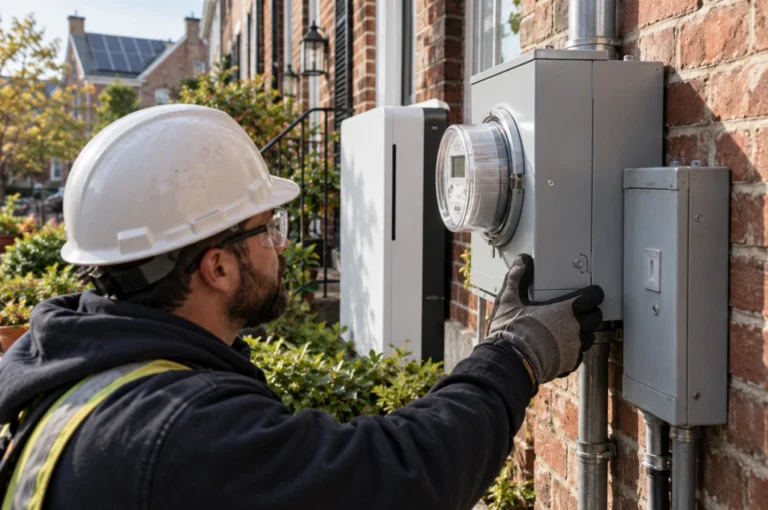
Yes, but an electrician may need to set the internal circuit breaker switch to a lower amperage or install dynamic load management to avoid overloading the service panel.
Tesla EV Chargers Redefine Residential Clean Energy
Residential clean power becomes significantly more practical when Tesla EV chargers manage daily energy flows without homeowner intervention. Diverting free midday sun into passenger vehicles protects households from rising utility rates and transforms local solar panels into an independent refueling network.
Source: Yahoo Autos (autos[dot]yahoo[dot]com)