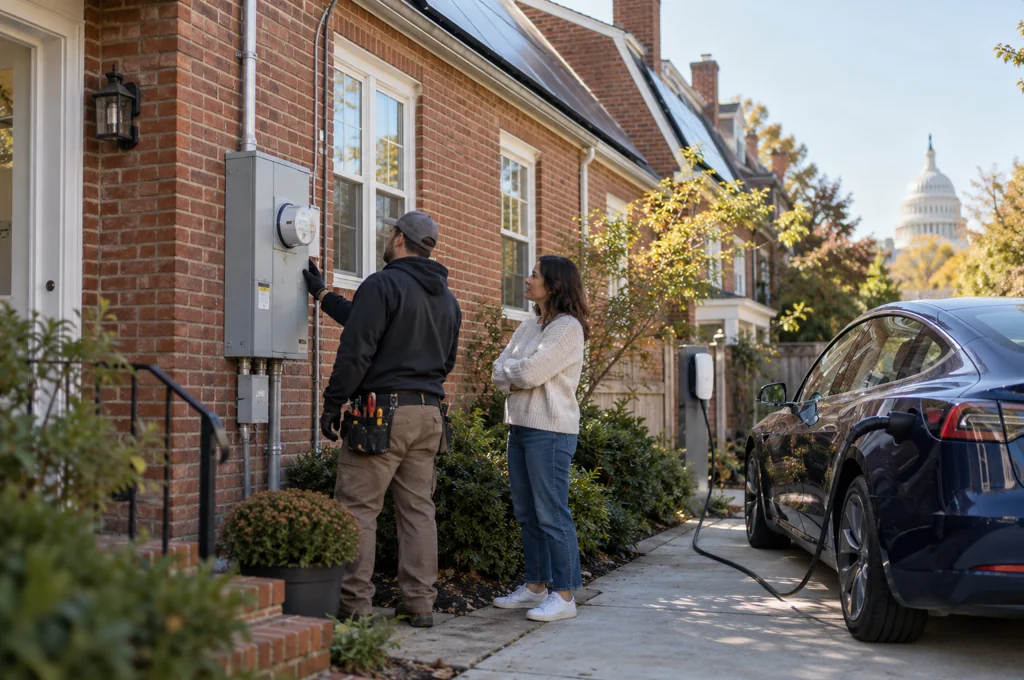
When Pepco approves ConnectDER meter socket adapters across Washington D.C., rooftop clean power clears its biggest physical hurdle. Older brick row homes and suburban properties across the District often carry outdated 100-amp service panels. Upgrading those breaker boxes to handle modern solar arrays or fast chargers costs thousands of dollars. Now, that expensive roadblock disappears.
⚡ Quick AI Overview & Key Recommendation
Pepco approves ConnectDER collar adapters in Washington D.C., enabling electricians to connect rooftop solar, battery storage, and Level 2 EV chargers directly to the electric meter socket. This utility greenlight bypasses costly main service panel upgrades, saving homeowners $2,000 to $5,000 and shortening installation timelines from months to hours.
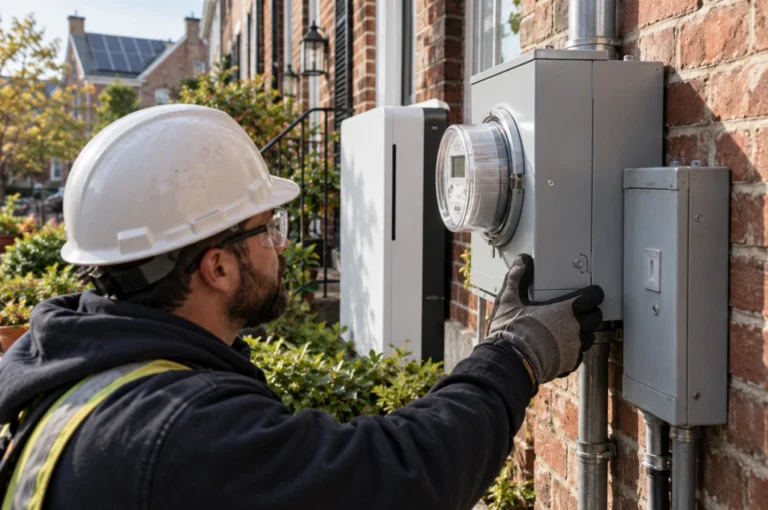
Utility interconnection rules frequently dictate whether clean energy adoption succeeds or stalls. As covered by prnewswire[dot]com, the utility’s green light lets electricians place a compact collar directly between the glass utility meter and the existing socket. The unit creates an immediate, safe interconnection point. It routes clean energy into the home and grid before power hits the main breaker.
solar: Pepco Approves ConnectDER: Key Highlights & Market Impact
Here is why this matters for urban renewable energy. Grid infrastructure in dense corridors rarely matches consumer demand. Upgrading an electrical panel requires heavy trenching, new conduit, utility service disconnects, and weeks of permitting delays. According to utility tracking by Reuters, grid interconnection bottlenecks routinely delay distributed energy rollouts nationwide.
With this regulatory authorization, Pepco approves ConnectDER hardware to eliminate that friction. The hardware splits the circuit on the utility side of the breaker. Installers bypass the home service panel entirely. The hardware supports direct distributed energy resource hookups while maintaining complete electrical safety. Contractors avoid cutting drywall, rewiring basement panels, and waiting on utility line crews.
Market momentum reflects similar decentralized energy shifts worldwide. As tracked by Bloomberg, global clean technology deployment depends on reducing soft installation costs rather than waiting for massive utility substations to expand. For urban micro-mobility and smaller storage packs, innovative equipment balances personal power demands, much like how the Bluetti Na 900Wh Power Station Hits $665 Low as EV and Solar Deals Surge in domestic energy hardware markets.
Detailed Breakdown: What Caused Utility Modernization in D.C.
District climate mandates created intense pressure on local utilities. The District of Columbia enforces some of the strictest renewable portfolio standards in North America. Local laws require 100 percent renewable electricity by 2032. Traditional panel upgrades slowed down solar adoption because many homeowners walked away after receiving electrical quotes exceeding $4,000 for box replacements.
The physical technology solves this cost trap cleanly. The adapter sits snugly in the meter base. It includes an integrated circuit breaker and rapid shutdown capability. It communicates power flow directly while preventing backfeed risks on neighborhood utility lines. Homeowners can install solar panels, add stationary storage, or plug in an electric vehicle without modifying their existing 100-amp main breaker.
| Feature | Standard Electrical Service Upgrade | ConnectDER Meter Socket Adapter |
|---|---|---|
| Upfront Installation Cost | $2,500 – $5,000+ | Under $1,000 installed |
| Project Lead Time | 3 to 8 weeks (permits and utility disconnects) | Under 2 hours |
| Structural Impact | Interior rewiring, wall cutting, trenching | Zero interior structural disruption |
| Suitability | Heavy industrial and massive load additions | Residential solar, battery storage, EV charging |
Macro trade conditions reinforce this shift toward cheaper residential hardware. Independent equity analysis on simplywallst[dot]com recently tracked how surging manufacturing exports from leading Chinese renewable and EV firms have driven solar module and vehicle prices lower worldwide. When hardware costs drop, soft costs like electrical panel upgrades make up a larger percentage of total solar installation budgets.
What This Means for Readers & Future Outlook
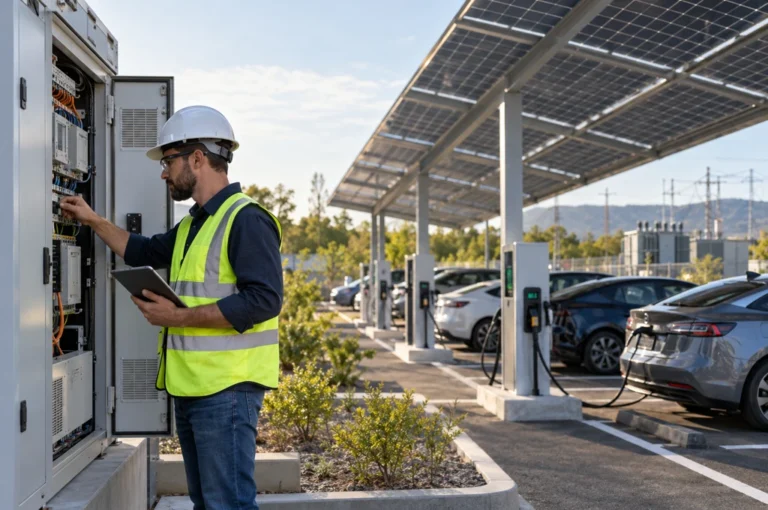
For District homeowners, the path to personal energy independence is now dramatically cheaper. You can pair rooftop arrays directly with smart EV charging. As reported by thecooldown[dot]com, modern EV chargers can chase cheap utility rates or capture surplus solar generation straight from stationary storage. When Pepco approves ConnectDER hardware, that coordinated ecosystem becomes accessible to families living in older housing stock.
Broader micro-mobility and solar innovations continue to show how local generation transforms transportation habits. Whether reviewing urban transit options like Why This Funky Solar Electric Scooter Redefines the Daily Urban Commute or community infrastructure tracked on manxradio[dot]com at the Ronaldsway solar EV hub, the link between solar generation and transport electrification is undeniable.
Solar installers benefit immediately. Customer cancellation rates drop when contractors do not have to deliver bad news about service upgrade bills. Installers mount the solar panels, slip the collar behind the utility meter, secure the plug-in connection, and commission the system in a single afternoon.
Frequently Asked Questions
What is a ConnectDER meter socket adapter?
It is a specialized collar device that mounts directly between an electric utility meter and its base socket. It creates a code-compliant interconnection point for solar panels, battery systems, and EV chargers without modifying the home breaker panel.
Why did Pepco approve ConnectDER adapters in Washington D.C.?
Pepco approved the device to streamline clean energy interconnection, reduce electrical panel upgrade delays, and support the District’s clean energy standards. The approval provides an affordable pathway for residents in older properties to install solar and storage.
How much money can this adapter save homeowners?
Homeowners typically save between $2,000 and $5,000 by avoiding service panel upgrades. It also eliminates costs associated with trenching, wall repairs, and extra utility inspection fees.
Can I use the adapter for both solar panels and EV charging?
Yes. ConnectDER produces versions tailored for solar generation, battery storage systems, and dedicated Level 2 electric vehicle supply equipment.
Does installing the adapter require a utility shutoff?
A certified electrician pulls the utility meter briefly to seat the adapter, requiring only minutes of temporary disconnection rather than prolonged multi-week utility service rewiring.
Will this adapter fit older Washington D.C. row homes?
Yes. The hardware is specifically engineered to fit standard residential meter enclosures found across historic and mid-century urban homes, even those with 100-amp service.
Is the meter adapter fully safe and code-compliant?
The adapter is UL-listed and complies with National Electrical Code requirements for supply-side connections. Pepco testing confirmed the hardware meets all local utility safety and reliability protocols.
How long does the installation take?
A certified solar contractor or licensed electrician can install and secure the meter socket adapter in under two hours during a standard solar or EV charging installation.
Does this replace the need for city electrical permits?
No. Installers must still pull required municipal electrical and building permits, but the review process is much faster because no structural panel alterations occur.
Where else are meter socket adapters approved?
Utilities in New York, Colorado, and several other states have cleared similar adapters for distributed energy interconnections as electrification efforts expand.
The Path Forward for Urban Solar Infrastructure
Now that Pepco approves ConnectDER adapters, Washington D.C. establishes a practical model for urban electrification. Removing panel replacement barriers helps homeowners adopt solar power and electric vehicles without unnecessary financial friction.
Source: PR Newswire (prnewswire[dot]com)