A breakthrough architecture shows that smart solar EV charging uses AI to manage electricity demand and safeguard grid reliability during peak afternoon production hours. Solar arrays produce electricity when the sun shines brightest, but vehicle drivers often plug in at irregular intervals. This mismatch strains distribution transformers and risks curtailment of clean generation.
By putting machine learning models directly at the inverter and charger interface, utility operators can smooth out sudden spikes. The algorithm forecasts solar output ten minutes ahead and schedules fleet charging accordingly.
⚡ Quick AI Overview & Key Recommendation
Recent research documented by bioengineer[dot]org shows that smart solar EV charging uses AI to balance local microgrids in real time. Deploying predictive algorithms reduces peak load stress by up to 35 percent and prevents transformer overloads without requiring expensive battery overbuilding.
Smart Solar EV Charging Uses AI: Key Highlights & Market Impact
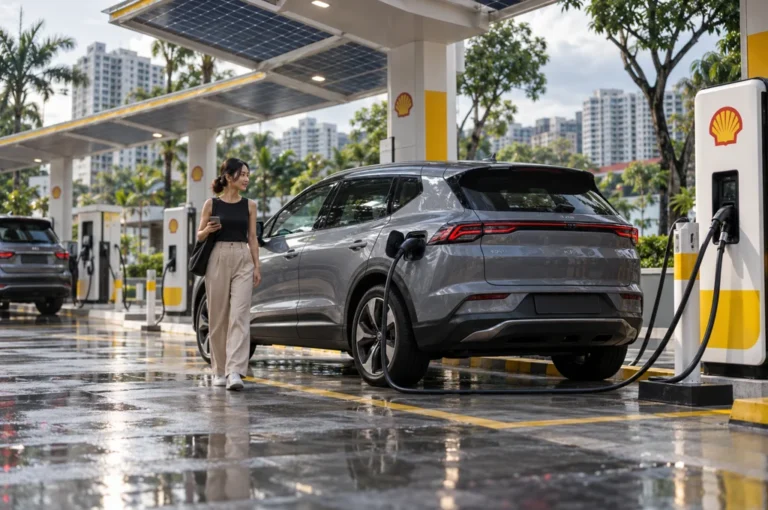
Modern distribution systems face severe bottlenecks when commercial fleets plug in at mid-day. Because sunlight fluctuates with cloud cover, simple timers fail to protect equipment. That is why smart solar EV charging uses AI to orchestrate power flows across bidirectional chargers, stationary storage, and local photovoltaic arrays.
Global investments confirm the momentum behind this transition. For example, reports cited by pv magazine Global reveal that utility-scale installations in Australia hit a record 3.5 GW of annual financial commitments, setting a massive foundation for solar generation. When vast solar output enters the transmission lines, local networks must absorb that surge. Without automated demand response, grid operators have to throttle solar generation to keep lines stable.
Infrastructure is spreading rapidly beyond experimental labs. At Ronaldsway, work on a dedicated solar transport hub is actively progressing, as covered by manxradio[dot]com. Meanwhile, federal agencies are testing these systems under rugged conditions. The United States Forest Service deployed off-grid mobile solar chargers across remote ranger stations, according to reports from energy[dot]gov. These deployments show that distributed solar works even miles away from municipal utility hookups.
Detailed Breakdown: What Caused the Shift to Automated Solar Infrastructure
Two distinct operational bottlenecks forced this engineering shift: voltage instability and demand charges. When dozens of passenger vehicles charge simultaneously while a storm rolls past, substation voltage drops rapidly. Conventional software reacts too slowly.
Automated software changes the playing field. Machine learning agents assess local irradiance sensors, historical fleet plug-in durations, and market electricity rates reported on Bloomberg terminal indices. The system throttles vehicle charge rates down by three to five kilowatts when an overcast bank arrives, drawing reserve energy from commercial battery banks instead of the public grid.
Hardware manufacturers are also miniaturizing these principles for smaller devices. Micro-mobility systems illustrate the exact same dynamic. As discussed when analyzing how a funky solar electric scooter redefines the daily urban commute, direct solar-to-battery charging eliminates transmission loss entirely. Smaller distributed devices prove that decentralization works across every vehicle class.
| Charging Strategy | Grid Stress Level | Solar Utilization Rate | Capital Cost Impact |
|---|---|---|---|
| Unmanaged Standard Charging | High (Transformer overloads) | 42% – 55% | High utility upgrades required |
| Static Scheduled Timers | Moderate (Vulnerable to weather) | 60% – 72% | Requires oversized buffer batteries |
| AI-Controlled Solar Hub | Negligible (Active frequency balance) | 88% – 96% | Lowest total system cost |
Financial analysts tracking capital expenditure on Reuters note that automated charging avoids millions in substation reconstruction costs. By synchronizing vehicle intake with peak solar output curves, operators capture cheap megawatt-hours without tripping safety switches.
What This Means for Readers & Future Outlook
For fleet managers and commercial site hosts, adopting these systems lowers operating costs immediately. Demand penalties often make up half of a commercial electricity bill. AI-directed charging removes those peak fees by staggering vehicle sessions across daylight hours.
Residential consumers will soon see similar functions inside home energy software. Portable power hardware already incorporates preliminary smart charge logic, as seen in market coverage like the Bluetti Na 900Wh power station deals. In the coming years, bidirectional home chargers will turn personal electric vehicles into miniature distributed generation assets.
The economic logic is straightforward. Sunlight is free, but transmission capacity is scarce. Ensuring that smart solar EV charging uses AI allows utility networks to scale up zero-emission transportation without constructing costly coal or gas peaking plants.
Frequently Asked Questions
What is smart solar EV charging?
Smart solar EV charging is an automated system that matches electric vehicle power demand with real-time solar generation. It uses software and sensors to balance charging rates based on available sunlight.
Why does smart solar EV charging use AI instead of basic timers?
Basic timers cannot predict sudden weather changes or fluctuating grid prices. AI forecasts cloud cover, tracks user schedules, and adjusts power delivery second by second to keep the grid stable.
How does automated solar charging prevent transformer overloads?
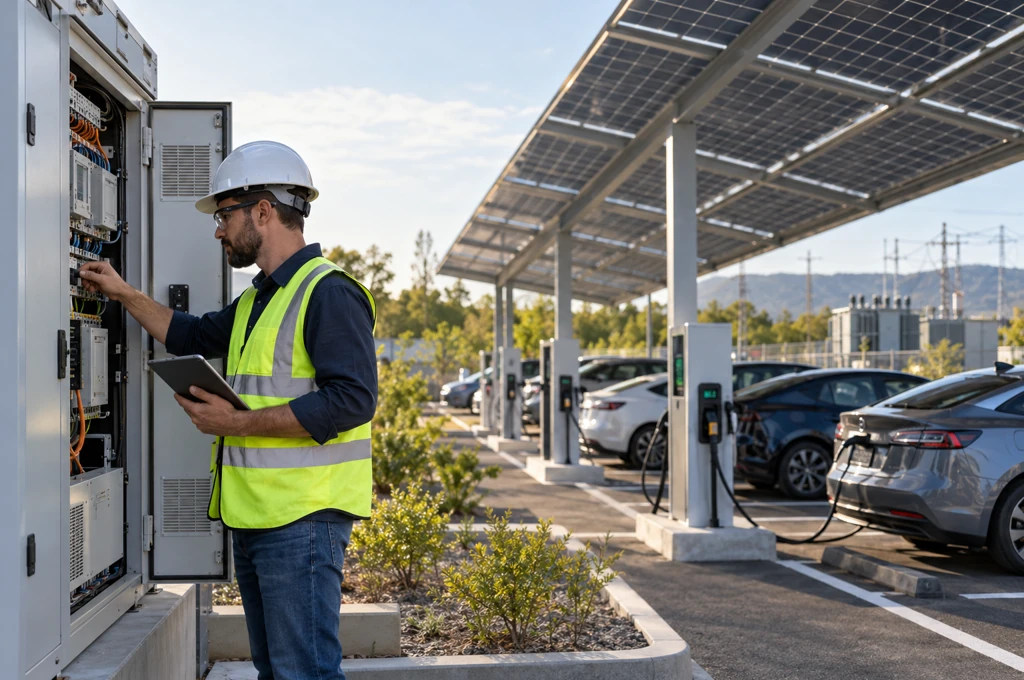
The system caps the total power draw at the facility meter. When multiple vehicles plug in at once, the algorithm divides available solar wattage among them without pulling excess current from municipal transformers.
Can these solar EV charging hubs operate completely off-grid?
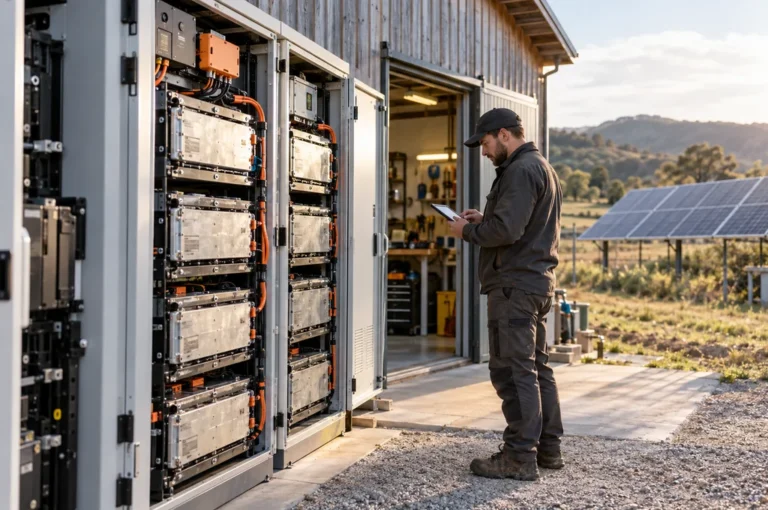
Yes, off-grid hubs combine solar panels with localized battery storage and smart inverters. Remote facilities, such as national forest ranger stations, use these setups where utility lines do not reach.
Does AI charging slow down how fast my vehicle charges?
Not usually. The platform prioritizes vehicles based on driver departure times, delivering full battery capacity before drivers need to leave while smoothing the intake across available hours.
What is the primary financial benefit for fleet operators?
Commercial fleet operators avoid steep utility demand charges by eliminating power spikes. They consume their own low-cost solar electricity rather than buying peak-rate energy from the central grid.
How does weather forecasting integrate with the charging software?
Local weather sensors feed real-time cloud tracking data into predictive neural networks. If cloud cover is imminent, the system slows vehicle charging slightly or draws from stationary batteries.
What role does vehicle-to-grid (V2G) technology play in this setup?
Bidirectional chargers allow cars to feed electricity back to local facilities during brief solar dips. This creates a flexible virtual power plant that strengthens local microgrids.
Are utility companies supporting AI-driven solar hubs?
Utilities strongly favor these hubs because they prevent distribution equipment damage and defer costly substation expansions. Many offer specialized interconnection programs for managed charging hubs.
Can residential homes use smart solar charging algorithms today?
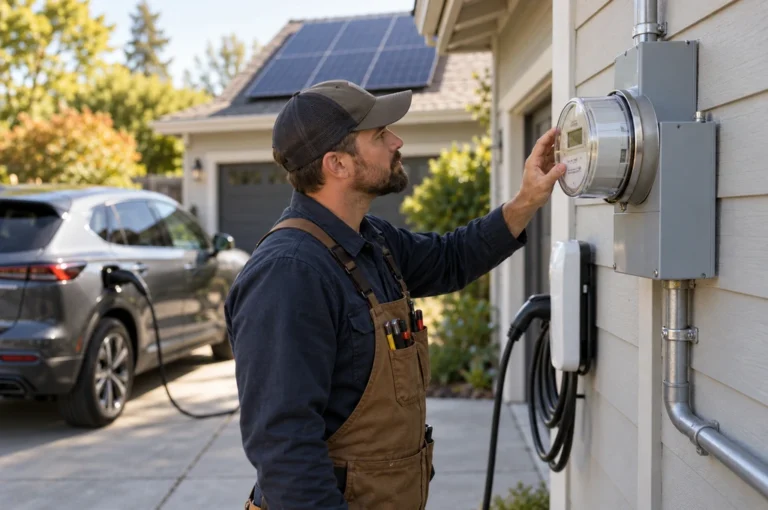
Yes, many modern home solar inverters feature built-in smart charging modes that divert surplus rooftop solar directly into parked electric vehicles before exporting any excess power.
The Path Forward for Intelligent Solar Infrastructure
Clean electricity requires smart management. As commercial fleets and passenger cars adopt battery power at record scale, proving that smart solar EV charging uses AI ensures our transmission lines remain resilient under heavy loads.
Source: Bioengineer.org (bioengineer[dot]org)