This Tesla earnings preview cuts through corporate theater to assess where automotive margins actually stand before Wall Street receives official quarterly data. Production numbers show stable vehicle handoffs, yet price concessions across major markets continue to compress core manufacturing profit. Investors want proof that high-volume car sales can sustain corporate profitability without leaning entirely on regulatory credits or future software dreams.
⚡ Quick AI Overview & Key Recommendation
Wall Street faces a divided reality. Automotive gross margins excluding credits face intense downward pressure from global price discounting, while executive leadership pivots public attention toward ten-nozzle Roadster thrusters and custom silicon. Astute analysts tracking this Tesla earnings preview must focus on real energy storage cash flow rather than distant product timelines.
Behind the corporate presentations, there is a fundamental split between present factory unit economics and future speculative technology. Financial coverage from analysts at seekingalpha[dot]com emphasizes that physical car deliveries pay today’s bills, regardless of how many speculative prototypes take the stage. Markets now demand disciplined cost control rather than unverified engineering rhetoric.
Tesla Earnings Preview: Key Highlights & Market Impact
Every credible Tesla earnings preview begins with automotive gross margins stripped of regulatory subsidies. In recent quarters, that core metric slipped beneath historical twentieth-percentile marks. Price reductions across China, Europe, and North America spurred volume, but they eroded the pricing authority the manufacturer once commanded. Mainstream competitors followed suit with aggressive retail incentives, a dynamic detailed in reports examining Why VW and Audi EV Discounts Peak in Fall: Cheap Leases.
Energy storage provides one bright spot on the operational balance sheet. Industrial installations of the Megapack expanded rapidly, offering stronger margin support than passenger cars. Reporting from slashgear[dot]com illustrates that virtual power plants do far more than supply backup electricity. By aggregating residential Powerwall batteries into synchronized regional resources, the company delivers load-balancing grid services to utility operators. This network capability mirrors broader industry developments in distributed power, similar to concepts examined in Outage-Ready Electric Cars: How Vehicle-to-Home Power Is Redefining Grid Backup.
Automated software and energy capture higher gross margins than steel bending. Yet automotive volume still drives over four-fifths of top-line company intake, making vehicle gross profit the primary anchor for quarterly valuation.
Detailed Breakdown: What Caused Margin Pressure and Hardware Shifts
Three operational fronts explain the recent compression in manufacturing profit. First, price reductions in response to fierce Chinese domestic competition eroded unit net revenue. Factory utilization rates in Shanghai and Berlin stayed high, but unit revenue failed to match 2022 highs. Production costs did decline on battery pack chemistry improvements, but retail cuts outpaced assembly savings.
Second, semiconductor procurement strategies show signs of friction. Industry reporting via tech-insider[dot]org reveals aggressive pricing negotiations where Tesla squeezed chip partner Samsung over next-generation AI5 and AI6 silicon wafers. Advanced driver-assistance systems require massive processing throughput, yet automotive-grade chip fabrication carries steep capital costs. Squeezing foundry margins reflects an urgent push to protect internal compute economics before full autonomy yields recurring revenue.
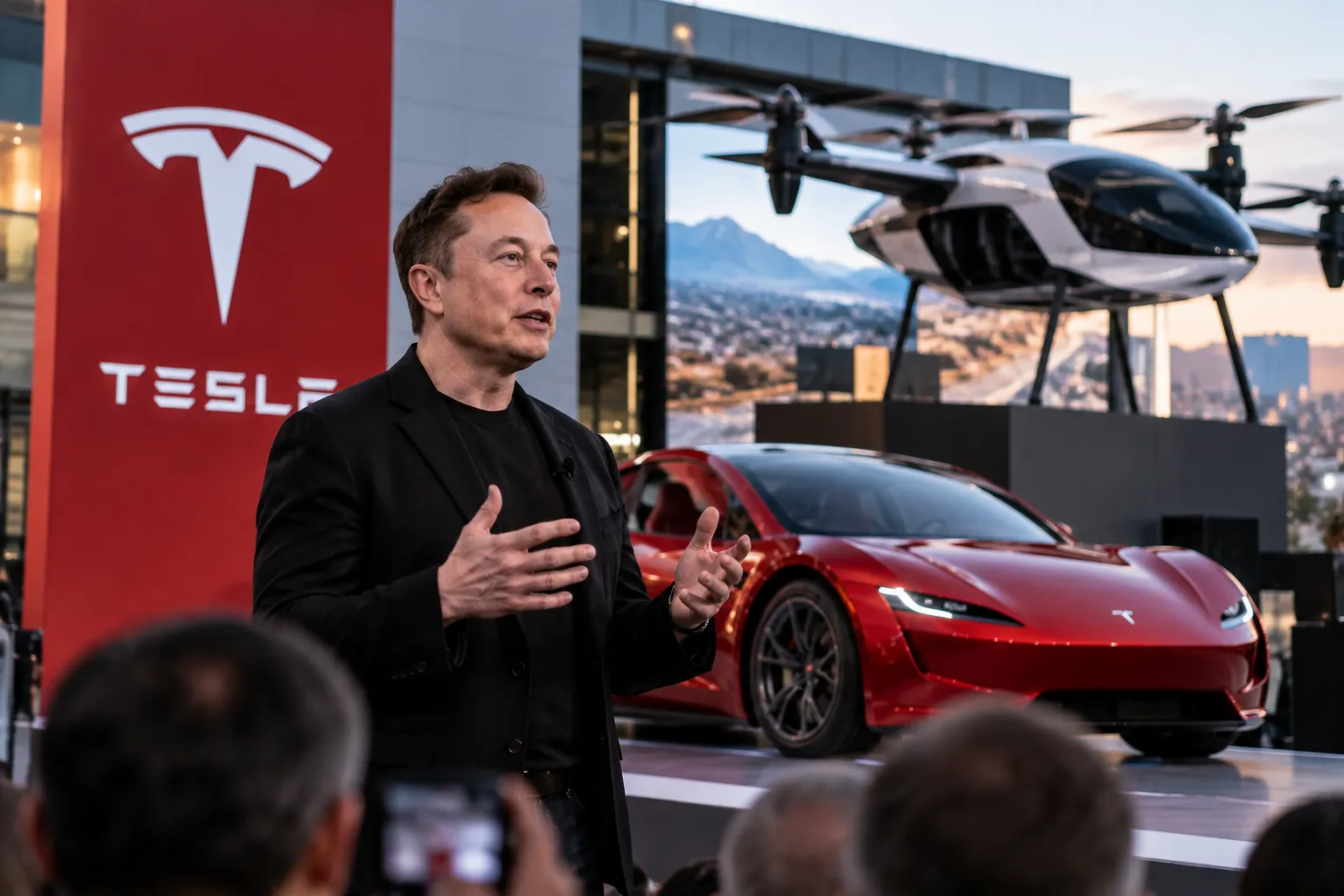
Third, executive promises have detached from current manufacturing realities. Discussion surrounding the long-delayed Roadster recently featured claims of ten cold-gas thruster nozzles and flying maneuvers, yet supply chain outlets catalog zero confirmed technical specifications. Prototype spectacles generate social media circulation, but institutional desks look straight at regulatory filings logged at the U.S. Securities and Exchange Commission.
| Segment / Metric | Current Operational Reality | Strategic Risk Factor |
|---|---|---|
| Auto Gross Margin (Ex-Credits) | Pressured under 17% due to global discounts | Erosion of automotive manufacturing superiority |
| Energy Storage & VPPs | Rapid Megapack deployment and grid aggregation | Grid interconnect queues and transformer shortages |
| Next-Gen Custom Silicon | Aggressive cost pressure on Samsung AI5/AI6 wafers | Yield bottlenecks in advanced sub-node packaging |
| Roadster & Concept Projects | Unverified ten-nozzle thruster flight claims | Distraction from mass-market platform execution |
What This Means for Readers & Future Outlook
Retail buyers and financial market participants must separate industrial scale from social media speculation. Buyers benefit from lower sticker prices across popular models, but long-term brand equity depends on vehicle quality and reliable servicing. Investors must read beyond headline delivery figures to confirm whether operating margins have bottomed out. Tracking reports from financial desks at Bloomberg and Reuters confirms that institutional funds judge the firm on cash flow consistency rather than future concept rollouts.
Broader industry mandates compound these commercial realities. Stricter emissions rules and volatile market uptake have prompted legacy competitors to seek regulatory breathing room, as detailed when an EV Pioneer Calls for Relaxation of Transition Target. While established brands adjust compliance timelines, Tesla must prove that its manufacturing margins can remain healthy without relying on competitors buying its regulatory credits.
If automotive margins show stabilization alongside growing energy storage billings, market confidence will steady. If margins drop further while capital expenditures on unproven autonomy balloon, shares face valuation reassessment. Financial clarity requires verifiable numbers, not thruster nozzles.
Frequently Asked Questions
What is the primary focus of this Tesla earnings preview?
This analysis focuses on core automotive gross margins excluding regulatory credits, compared against speculative product announcements like the thruster-equipped Roadster. It evaluates whether manufacturing cash flows can support heavy artificial intelligence and compute spending.
Why are Tesla automotive margins under intense market pressure?
Sequential price cuts throughout 2023 and 2024 lowered average vehicle selling prices faster than assembly lines could reduce battery and manufacturing costs. Rising competition in China and Europe forced aggressive retail incentives that squeezed unit profitability.
How do virtual power plants impact the corporate balance sheet?
Virtual power plants network residential Powerwall batteries to deliver ancillary electrical services to municipal grids. This software-driven distributed model generates recurring grid revenue, providing high-margin support that offsets automotive volatility.
What is the issue regarding Samsung and the AI5 or AI6 chips?
Reports indicate Tesla applied heavy pricing pressure on Samsung during negotiations for upcoming AI5 and AI6 compute wafers. The automaker seeks lower silicon packaging costs to preserve margins on self-driving server clusters and vehicle hardware.
Are the cold-gas thruster claims for the Roadster realistic?
While promotional statements suggest the sports car will integrate ten cold-gas thruster nozzles for brief flight hops, engineering specifications remain unpublished. Vehicle safety regulators and physics constraints make road-legal rocket thrusters an extreme production hurdle.
How much do regulatory credits influence quarterly profitability?
Regulatory credits provide pure-margin revenue sold to legacy manufacturers needing emissions offsets. When automotive gross margins dip below fifteen percent, regulatory credit income often represents the difference between operational profit and negative cash flow.
Where does Tesla energy storage growth rank in business importance?
Megapack utility installations represent the fastest-growing revenue segment by percentage. Because utility contracts command steady enterprise margins, energy storage stabilizes quarterly financial performance when car sales face seasonal or pricing slowdowns.
What metric should investors inspect first on the earnings release?
Investors should locate the automotive gross margin figure excluding regulatory zero-emission credits on the first page of the shareholder deck. That single calculation reveals the raw health of the core car-building business.
How does market competition affect vehicle margins?
Rapid product rollouts from Chinese manufacturers such as BYD combined with discount campaigns from legacy Western automakers force defensive pricing. Sustained vehicle discounts directly limit the profitability previously commanded by legacy models.
Will autonomous software revenue offset lower vehicle sticker prices?
Software monetization remains limited by regulatory approvals and actual consumer adoption rates. Until driverless operations generate standalone commercial fleets, physical hardware sales must shoulder the corporation’s heavy operating expenditures.
Disciplined Realities Outweigh Science Fiction
This Tesla earnings preview demonstrates that real financial durability rests on factory efficiency, wafer yields, and stationary storage deployment. Promotional stories about flying Roadsters may capture internet attention, but the earnings call will ultimately reward verifiable cash generation and resilient operating margins.
Source: Seeking Alpha (seekingalpha[dot]com)