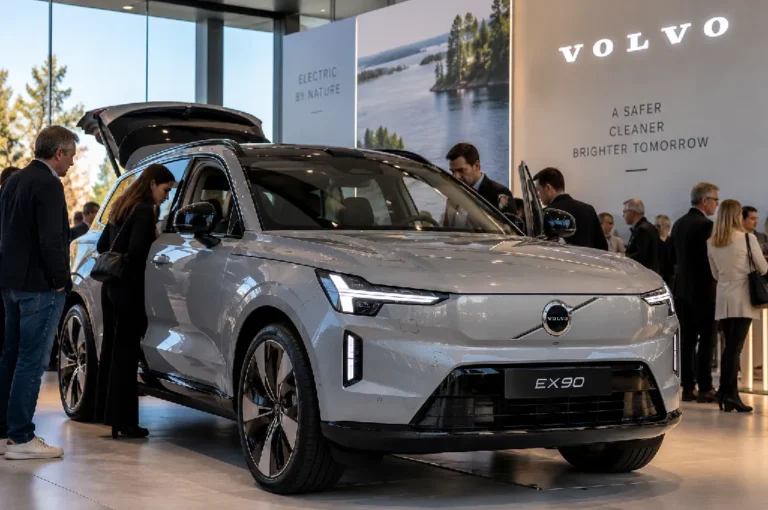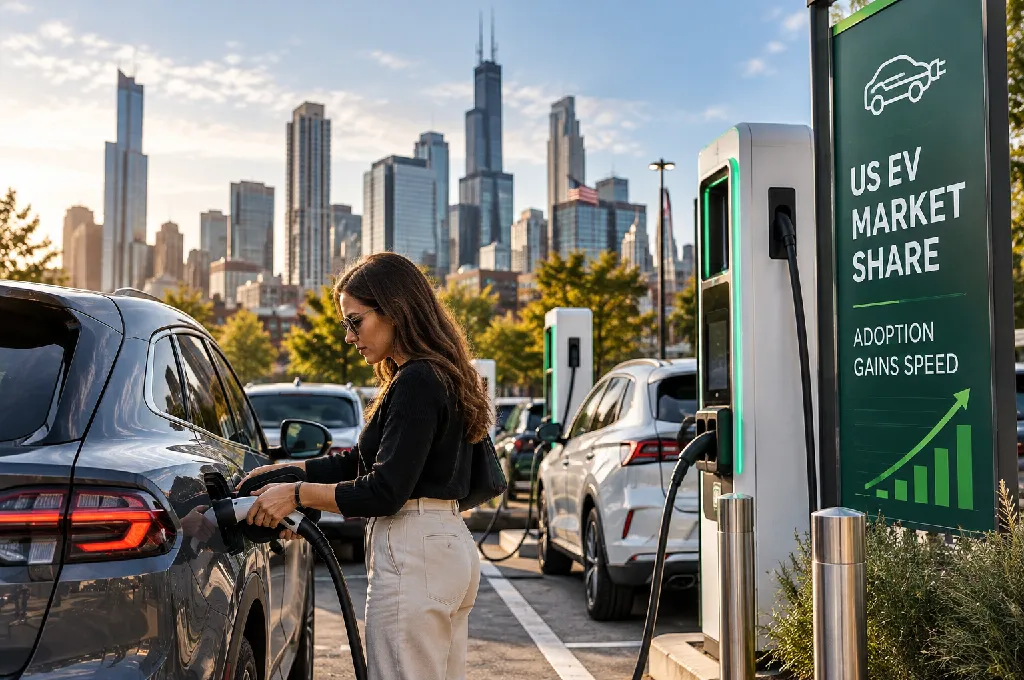
Recent sales figures reveal that US electric vehicle market share climbed to 6.1% following a renewed push from buyers and automakers. The shift shows that consumer interest in battery power is shaking off earlier stagnation. Many analysts had warned of a plateau, but buyer appetite proved resilient in third-quarter showroom tallies.
⚡ Quick AI Overview & Key Recommendation
The US electric vehicle market share hit 6.1%, driven by aggressive dealer incentives, federal tax credits, and increased inventory across mainstream dealerships. Fleet operators and private commuters are accelerating transition schedules, while software improvements and charging buildouts continue to ease driver range concerns nationwide.
Auto manufacturers struggled with excess dealer inventory throughout earlier quarters. Price cuts corrected the mismatch. Reports covered by platforms like ua[dot]news and techcrunch[dot]com note that American shoppers responded promptly once window stickers dropped toward parity with combustion models.
US Electric Vehicle Market Share: Key Highlights & Market Impact
Crossing the 6% threshold gives clean mobility advocates tangible evidence of expansion. Reaching a 6.1% share is not a minor milestone. It represents hundreds of thousands of individual purchasing choices across passenger sedans, crossover utility vehicles, and commercial delivery vans.
Several dynamics shaped this upward trajectory:
- Pricing adjustments: Manufacturers slashed manufacturer suggested retail prices across volume trims.
- Lease loophole access: Federal tax subsidies flowed through commercial vehicle leasing programs, bypassing income caps.
- Broadened regional interest: Sales broadened beyond traditional coastal strongholds like California and Washington into the Midwest and Sun Belt. Community outreach efforts, including events like the Madison Electric Vehicle Expo Prompts Downtown Street Closures for Clean Transit, brought hands-on demonstration drives directly to heartland consumers.
- Fleet management tools: Commercial operators integrated advanced telematics. Software rollouts, such as TomTom Electric Vehicle Management, made commercial battery-electric onboarding faster and more predictable for corporate logistics managers.
Wall Street equity analysts closely tracked this momentum. According to market trackers like marketbeat[dot]com, institutional investors revisited legacy and pure-play automotive equities as delivery numbers outperformed conservative autumn projections. Regulatory filings registered with the U.S. Securities and Exchange Commission indicate expanding capital expenditure commitments toward domestic battery assembly plants.
Detailed Breakdown: What Caused the Growth in US Electric Vehicle Market Share
Why did sales accelerate now? Incentives tell most of the story. Buyers found generous discounts that made monthly lease payments competitive with conventional gas cars. Financial institutions and captive lenders promoted promotional interest rates to clear dealer lots.
The secondary driver was fleet procurement. Logistics fleets are replacing aging internal combustion vans with purpose-built electric haulers. Route predictability makes commercial delivery ideal for early electrification. When municipal transit systems and private delivery firms order hundreds of electric vans at once, registration figures move quickly.
Here is how current adoption metrics compare against prior seasonal milestones:
| Metric Category | Previous Baseline | Current Quarter Reading | Primary Market Catalyst |
|---|---|---|---|
| Total US EV Market Share | 5.3% | 6.1% | Aggressive price cuts and subsidized lease options |
| Average Dealer Days to Turn | 72 Days | 54 Days | Clearance incentives and federal credit awareness |
| Commercial Fleet Penetration | 3.8% | 4.9% | Route-optimized dispatch software and fuel savings |
| Average Transaction Price | $54,200 | $50,800 | Mid-tier trim releases and lower battery cell costs |
Market data compiled across financial analysis portals like Investopedia suggests that declining battery pack costs are finally filtering down to consumer pricing. With cell costs dropping under $110 per kilowatt-hour, vehicle manufacturers can preserve gross margins without setting prohibitive list prices.
What This Means for Readers & Future Outlook
Higher electric adoption brings tangible consequences for consumers, municipalities, and infrastructure planners. Public charging access remains the biggest operational hurdle. As more vehicles hit highways, charging reliability becomes an urgent public concern rather than a secondary consideration.
First responders also require specialized training and updated equipment to handle high-voltage incidents safely. Municipalities are adapting quickly. In Florida, the Coral Springs-Parkland Fire Department Deploys Advanced Gear for Electric Vehicle Fires, setting a standard for emergency readiness that other regions are now replicating.
Disposal practices must evolve as well. As older generation units reach end-of-life status, secondary recycling pipelines are essential to handle retired packs. Industry monitors warn that improper handling poses severe risks, a topic detailed when a Recovery Specialist Warns: Electric Vehicle Disposal Risks Are Rising across junkyards and salvage yards.
Looking ahead, global manufacturing benchmarks reported by Reuters and Bloomberg indicate that regional competition will intensify. Foreign automakers are adapting assembly lines within North America to comply with domestic sourcing rules. As choice expands across sub-$35,000 segments, the US electric vehicle market share will likely face its truest test among middle-income suburban drivers.
Frequently Asked Questions
What is the current US electric vehicle market share?
The US electric vehicle market share has reached 6.1% of total passenger vehicle sales. This increase represents a steady recovery driven by dealer discounts, improved inventory, and expanded federal leasing credits.
Why did EV sales rise recently in the United States?
Automakers lowered retail prices and introduced competitive financing terms to draw value-conscious shoppers. Fleet operators also increased orders for commercial electric cargo vans to lower fuel expenditures.
How are fleet operators managing the transition to electric vans?
Logistics managers are adopting specialized telematics platforms like TomTom Electric Vehicle Management to oversee charging routines. These programs calculate battery status and plan route stops to avoid transit downtime.
Are electric cars becoming more affordable for mainstream buyers?
Yes, average transaction prices for battery-electric models dropped toward $50,800 recently. Subsidized commercial lease programs have further reduced upfront acquisition costs for ordinary drivers.
Does the 6.1% market share include hybrid vehicles?
No, this figure specifically tracks pure battery-electric vehicle registrations across the United States. Hybrid vehicles and plug-in hybrids fall under distinct statistical reporting categories.
Which regions lead in electric vehicle registrations?
California and Pacific Northwest states continue to record the highest per-capita adoption numbers. However, registrations expanded sharply across midwestern states and southern transit hubs during the latest quarter.
How does public charging infrastructure impact EV adoption rates?
Charging availability remains a critical consideration for highway commuters and apartment dwellers. Reliable fast-charging networks reduce range anxiety and encourage first-time buyers to choose an electric car.
What safety procedures are municipalities adopting for electric vehicles?
Fire protection districts are buying specialized containment blankets, thermal imaging monitors, and high-volume deluge nozzles. These investments ensure crews can cool damaged high-voltage battery packs without causing secondary damage.
What happens to electric vehicle batteries at end-of-life?
Retired batteries either go through second-life grid storage applications or head directly to specialized recycling centers. Modern hydrometallurgical recycling facilities extract critical raw metals such as lithium, nickel, and cobalt for reuse.
Where can investors find verified corporate EV production numbers?
Investors examine official quarterly reports filed with regulatory bodies like the Securities and Exchange Commission alongside industry delivery trackers. Major automakers publish verified sales and inventory statistics at the end of each business quarter.
Conclusion: The Road Ahead for US Electric Vehicle Market Share
Reaching a 6.1% level proves that the transition toward battery-powered transportation remains active across America. Lower purchase costs, expanding charging options, and robust software solutions have helped the US electric vehicle market share regain its forward momentum. As long as automakers deliver dependable vehicles at sensible price points, this trajectory will continue to reshape American roadways.
Source: UA.NEWS (ua[dot]news)