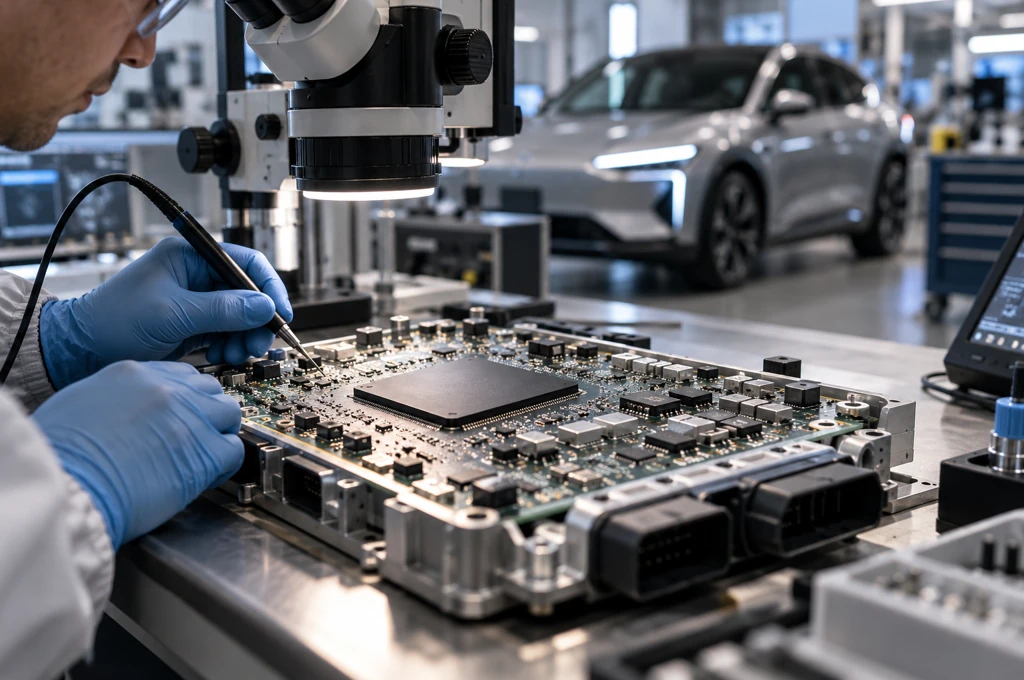
Tesla squeezes Samsung on AI5 chip production contracts as the automaker pushes for aggressive price cuts across its advanced autonomous vehicle hardware. Recent supply chain reports via tech-insider[dot]org indicate that procurement teams in Austin are leaning hard on South Korean semiconductor suppliers to absorb escalating fabrication expenses.
⚡ Quick AI Overview & Key Recommendation
Tesla is exerting direct cost pressure on Samsung Foundry for its upcoming AI5 and AI6 vehicle inference processors. The move aims to protect automotive gross margins as full self-driving computing requirements scale up. Buyers and investors should monitor foundry production yields and hardware delivery timelines closely.
Behind the corporate posturing lies an intense commercial reality. Compute clusters inside next-generation electric vehicles are becoming the single most expensive sub-assembly after the battery pack. Autonomous driving promises require raw silicon power, yet automotive profit margins remain under severe strain. As noted in financial reporting from Reuters and disclosures filed with the U.S. Securities and Exchange Commission, cost discipline on production floors dictates quarterly survival. Tesla knows this math better than anyone.
Tesla Squeezes Samsung on AI5: Quick Comparison & Key Specifications
The transition from current Hardware 4 computers to next-generation AI processors defines Tesla’s fleet strategy. To evaluate where silicon expenses fit into vehicle manufacturing, here is how compute requirements map across relevant platforms:
| Model | Price Range | Real Range | Battery Capacity | Fast Charging Time | Best For |
|---|---|---|---|---|---|
| Model 3 Performance | $54,990 – $57,000 | 480 km | 79 kWh | 15 min (10-80%) | Track-Capable Daily Driving |
| Model Y Long Range | $47,990 – $52,000 | 495 km | 75 kWh | 15 min (10-80%) | Family Road Trips & Utility |
| Cybertruck Cyberbeast | $99,990 – $115,000 | 485 km | 123 kWh | 20 min (10-80%) | Heavy Hauling & Utility |
| Next-Gen Robotaxi | $25,000 – $30,000 (Target) | 400 km | 50 kWh | 12 min (10-80%) | Autonomous Urban Transit |
Fabrication contracts for automotive silicon dictate future retail pricing. When Tesla Earnings Preview: Grounded Automotive Margins Confront Flying Car Ambitions captured investor attention, procurement costs stood front and center. If a factory pays too much for wafer runs, the consumer price spikes immediately.
Top Ranked Models: In-Depth Reviews & Real-World Performance
Tesla relies on bespoke silicon to manage real-time vision processing. Here is how vehicles reliant on these cutting-edge platforms perform on the road today.
Tesla Model Y Long Range: The Fleet Workhorse
The Model Y Long Range remains the baseline benchmark for integrated onboard hardware. It delivers a real-world driving range of 495 kilometers from a 75 kWh nickel-manganese-cobalt battery pack, recharging in roughly 15 minutes at a 250 kW Supercharger station. On the road, the current HW4 computer processes inputs from eight external cameras without thermal throttling. Pros include unmatched charging network access, roomy cabin cargo volume, and frequent software upgrades. Cons include firm suspension damping and lack of physical interior switches. This model suits family commuters who need predictable range and seamless highway autonomy.
Tesla Cybertruck Dual Motor: High-Voltage Architecture
The Cybertruck introduces an 800-volt electrical backbone to power its steer-by-wire mechanics and computer stacks. Equipped with a 123 kWh pack, it achieves 485 kilometers of real-world highway range and fast-charges from 10 to 80 percent in approximately 20 minutes on high-output terminals. Its dual-node computer operates with instant responsiveness. Pros include exceptional structural rigidity, rapid bidirectional power export, and sharp steer-by-wire maneuverability. Cons include polarization among urban parkers and substantial curb weight. It fits commercial operators and tech enthusiasts needing heavy towing capability alongside high-compute driver assistance.
Next-Generation Robotaxi: The AI-Centric Urban Shuttle
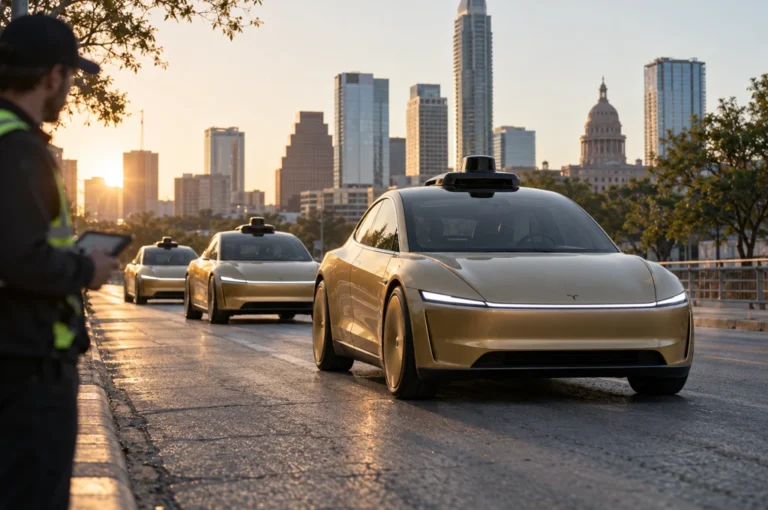
Engineered exclusively around autonomous compute platforms like AI5 and future AI6 chips, this upcoming vehicle strips away steering wheels entirely. Target specifications point toward a compact 50 kWh structural pack offering 400 kilometers of urban route efficiency, with 12-minute rapid charging turnaround. Pros focus on radically lower manufacturing costs, minimal moving parts, and maximum passenger cabin room. Cons center on absolute reliance on regulatory robotaxi approvals and unproven zero-driver software safety across mixed weather conditions. This platform serves urban fleet managers and ride-hailing operators.
Hardware design ambitions do not stop at street level. Market observers recall how the South China Morning Post covered wilder concepts when Elon Musk unveiled Tesla’s ‘flying’ car proposals. Simultaneously, tech-insider[dot]org analyzed the vehicle’s ten cold-gas thruster ports and complete lack of standard road specifications. Performance targets remain extreme, matching reports where Elon Musk Targets 380 MPH for the New Tesla Roadster. Yet building exotic thrusters or 300-mph supercars means nothing if the underlying silicon supplies grind to a halt.
Customer Buying Guide: How to Choose the Right Model for Your Needs
Before purchasing an advanced electric vehicle, buyers must consider four practical dimensions:
- Operating Budget and Depreciation: Calculate initial sticker price against long-term operating costs. Advanced compute features add residual value only if software updates continue for five to seven years.
- Daily Commute and Real Range: Highway driving at winter temperatures reduces stated range by 15 to 25 percent. Choose a battery capacity that covers your round-trip commute with a 30 percent reserve margin.
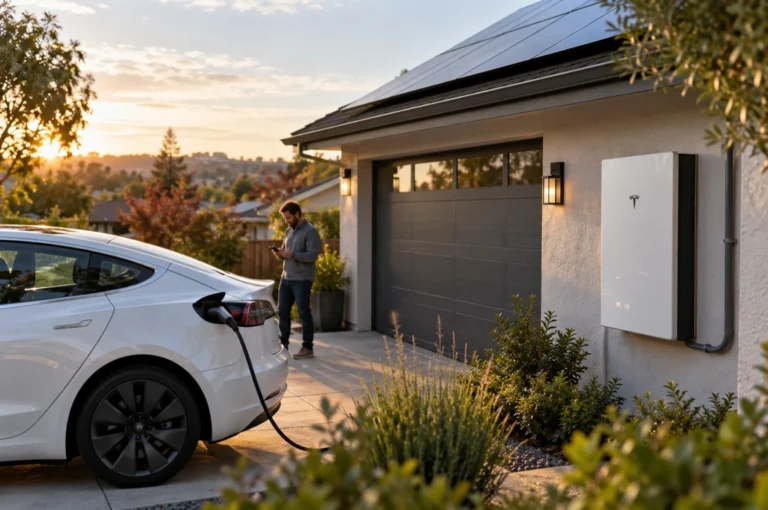
- Home Charging Infrastructure: Installing a 240-volt Level 2 charger at home is mandatory for low-cost ownership. Utilizing smart off-peak charging saves substantial money compared to DC fast-charging plazas. Those exploring backup solutions should review Outage-Ready Electric Cars: How Vehicle-to-Home Power Is Redefining Grid Backup.
- Silicon Longevity and Warranty Terms: Confirm the vehicle warranty covers the central processing unit alongside the powertrain. Autonomous driving systems depend directly on sustained hardware reliability in extreme heat and cold.
Financial analysts at Bloomberg and Investopedia highlight that automaker operating margins hinge on wafer supply security. Furthermore, battery mineral discussions continue at major tech conferences. For example, StreetInsider reported that Battery X Metals highlighted its participation at X Takeover 2026 at Gigafactory Texas to address battery mineral constraints. Hardware and battery materials move together. When Tesla squeezes Samsung on AI5 contracts, it fights a calculated war to preserve capital across the entire assembly floor.
Frequently Asked Questions
Why is Tesla putting commercial pressure on Samsung Foundry?
Tesla wants to lower the unit manufacturing cost for its AI5 and AI6 vehicle chips. Reducing fabrication costs protects overall profit margins on future electric cars and robotaxis.
What is the difference between Tesla AI5 and AI6 chips?
The AI5 chip is Tesla’s next-generation autonomous driving silicon designed on a refined sub-5nm node. The AI6 chip represents the subsequent generation intended for advanced neural networks and humanoid robotics.
Does Samsung manufacture all of Tesla’s autonomous driving processors?
No, Samsung shares fabrication responsibilities with competitors like TSMC. Tesla regularly balances orders between both foundries to gain price leverage and diversify supply risks.
Will chip price negotiations delay upcoming vehicle releases?
Contract negotiations rarely halt planned vehicle launches directly. However, protracted yield disagreements can constrain vehicle delivery volume during initial commercial production runs.
How do AI chips affect electric vehicle battery consumption?
High-performance autonomous inference computers consume 200 to 500 watts of continuous electrical power. Efficient node fabrication reduces parasitic electrical drain on the main traction battery.
Can older Tesla vehicles upgrade to the AI5 chip?
No, existing vehicles running HW3 or HW4 cannot retrofit to AI5. The thermal dissipation, board architecture, and power harness designs are fundamentally incompatible.
Why does Tesla design its own vehicle chips instead of buying off-the-shelf parts?
Custom silicon eliminates general-purpose overhead and accelerates specific neural network operations. It also cuts out supplier markup costs from merchant vendors like Nvidia.
What manufacturing process node will Samsung use for AI5?
Industry supply chain trackers report that Samsung plans to utilize its advanced 4nm or 3nm gate-all-around fabrication nodes for the contract. Exact details depend on final wafer pricing agreements.
How does autonomous chip cost affect base retail pricing?
Vehicle compute suites can represent thousands of dollars per unit in total system expense. Lowering chip fab costs allows Tesla to price entry-level mass-market vehicles closer to target budgets.
Are other automakers facing similar foundry price pressures?
Yes, traditional automakers transitioning to software-defined architectures face escalating silicon expenses. Competing for limited advanced foundry capacity keeps procurement negotiations tense across the entire automotive sector.
Automotive Silicon Economics Under Permanent Scrutiny
Tesla squeezes Samsung on AI5 chip production because silicon economics now dictate automotive manufacturing margins. Electric car buyers should expect constant hardware revisions as automakers aggressively fight suppliers for every dollar on the assembly line.
Source: https://tech-insider.org/ (tech-insider[dot]org)