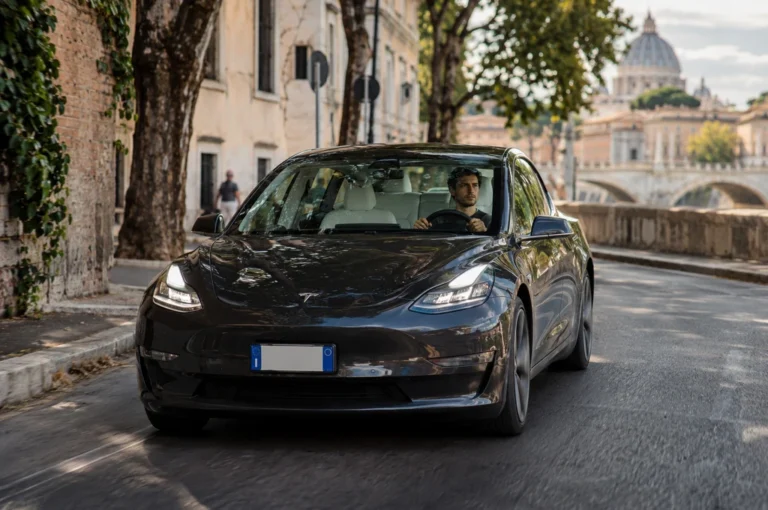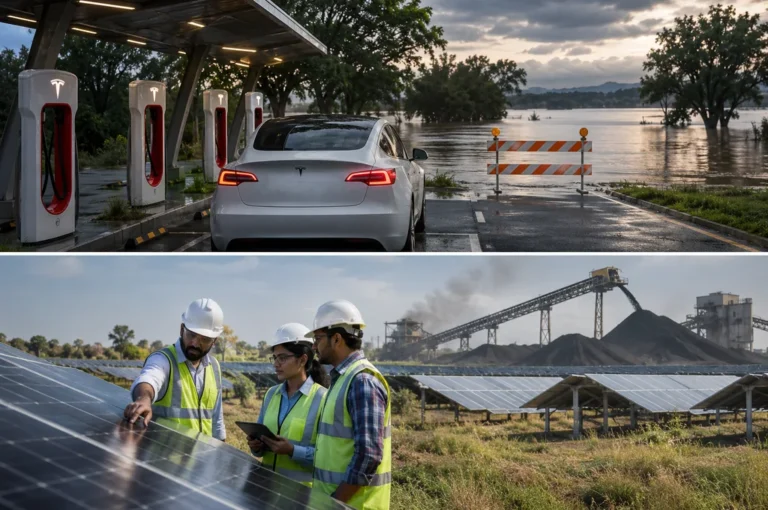


Tesla stock drops 6% as the broader technology sector faces renewed selling pressure. The decline reflects a broader rotation out of growth assets, impacting high-profile names in the electric vehicle and clean energy space. Investors are re-evaluating valuations amid rising interest rates and economic uncertainty.
⚡ Quick AI Overview & Key Recommendation
Tesla stock drops 6% in a broader tech sell-off. Despite recent volatility, long-term investors should monitor Viking Global’s stake increase and Tesla’s solar expansion plans. Diversification remains key.
Tesla Stock Drops 6%: The Market Context
Tesla stock drops 6% on the day, a sharp move that places the company at the center of a technology sector retreat. The sell-off is not isolated to electric vehicles. Software and cloud computing firms are also seeing significant value erosion. This disconnect suggests investors are prioritizing cash flow stability over future growth potential.
Here is the reality of the situation. The market is pricing in higher interest rates for a longer duration. This makes expensive growth stocks less attractive. Tesla, with its high valuation, is feeling the weight of this shift. The drop signals a loss of confidence in the near-term earnings trajectory.
Insider Moves: Viking Global’s Bold Bet
Despite the public sell-off, some insiders are doubling down. Viking Global Investors has lifted its stake in Tesla by 327% during the third quarter. This is a massive increase that warrants attention. A 327% rise in holdings suggests the firm sees value where the market does not.
Why would Viking Global act this way? They likely have access to different data points. They may anticipate a turnaround in manufacturing or a breakthrough in energy storage. This divergence between insider activity and market sentiment creates a complex picture for retail investors. It highlights the difficulty of timing the market.
Expanding Horizons: The Solar Materials Plant
Tesla is not just fighting a battle for market share in cars. The company is also expanding its footprint in energy infrastructure. Reports indicate Tesla is considering a $3.1 billion solar materials plant near Robstown, Texas. This project would be a significant investment in the local economy.
On paper, this sounds clean. In reality, it changes the balance of Tesla’s business model. It moves the company further into heavy industrial manufacturing. This diversification could provide stability if the automotive market remains volatile. It signals a long-term commitment to the energy transition.
NIO vs. Tesla: A Comparative Investment Case
As Tesla struggles with its valuation, investors are looking at competitors. A common comparison in the industry is NIO vs. Tesla. Both companies operate in the premium electric vehicle segment, but their business models differ significantly.
NIO focuses heavily on battery swapping technology and a subscription-based service model. Tesla relies on direct sales and a closed ecosystem. When evaluating NIO vs. Tesla, investors must consider operational efficiency. Tesla has a massive manufacturing advantage. NIO has a loyal customer base in China. The choice between them depends on whether you value efficiency or service ecosystem.
Reuters and Bloomberg provide detailed analyses of these competitive dynamics. Both sources track the performance of Chinese EV makers like NIO against the American giant.
Frequently Asked Questions
Why is Tesla stock dropping?
Tesla stock drops 6% primarily due to a broader technology sector sell-off driven by rising interest rates and economic uncertainty affecting growth valuations.
What is Viking Global’s stake in Tesla?
Viking Global Investors increased its stake in Tesla by 327% during the third quarter, signaling a strong bullish outlook from this major hedge fund.
Is Tesla building a new solar plant?
Yes, reports suggest Tesla is considering a $3.1 billion solar materials plant near Robstown, Texas, to support its energy infrastructure goals.
How does NIO compare to Tesla?
In a comparison of NIO vs. Tesla, Tesla benefits from superior manufacturing scale and efficiency, while NIO offers a unique battery swapping service and subscription model.
What does the tech sell-off mean for EVs?
The tech sell-off impacts all high-growth sectors, including EVs, forcing investors to re-evaluate the long-term viability of companies like Tesla and NIO.
Where can I find more information on these stocks?
You can find detailed coverage on these companies at Reuters and Bloomberg.
Is the $3.1 billion solar plant confirmed?
The project is currently in the consideration phase, as reported by local outlets like kiiitv.com.
What is the main difference between NIO and Tesla models?
Tesla models generally focus on direct sales and high-volume production, whereas NIO models emphasize a service-oriented ecosystem with battery swapping.
Are electric vehicles safe during market volatility?
While individual stock prices fluctuate, the underlying demand for electric vehicles remains robust as the global automotive industry transitions to electric powertrains.
Where can I track the latest EV market trends?
For the latest market trends and news, you can visit Investopedia or CoinDesk.
Final Thoughts on the Market Volatility
The recent news that Tesla stock drops 6% serves as a reminder of market volatility. Investors should look beyond daily fluctuations and focus on long-term fundamentals.
Source: Wisevoter (wisevoter[dot]com)