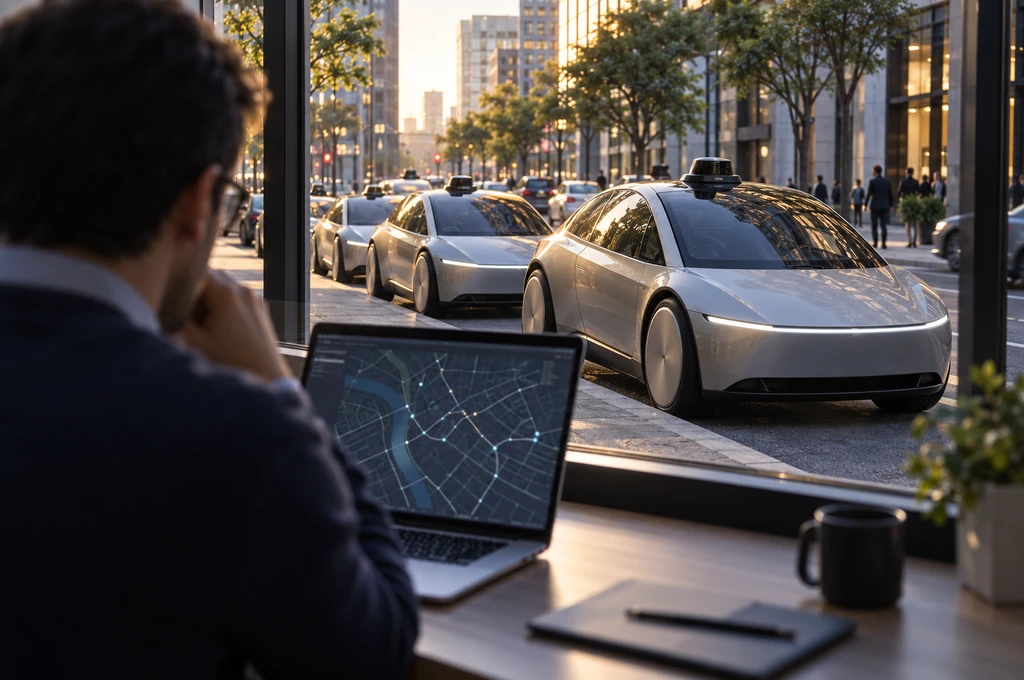
A revised Tesla robotaxi forecast from Wall Street analysts has changed how investors evaluate the future of electric transport. Bank of America updated its valuation models after autonomous test mileage doubled in recent operational reports. The financial institution adjusted price targets to account for software recurring revenues rather than mere hardware deliveries. Behind the headline, there is another story.
⚡ Quick AI Overview & Key Recommendation
Bank of America adjusted its long-term Tesla valuation metrics following reported doubling of autonomous fleet mileage. For individual EV buyers and corporate fleet managers, autonomous ride-hailing economics could reduce per-mile mobility costs below conventional car ownership by 2027, provided regulatory hurdles and camera-only sensor limitations are resolved.
Automotive valuation models now place heavier weight on neural network training hours than assembly plant square footage. Market observers at Reuters noted that institutional funds are recalculating how autonomous software cash flows scale relative to standard vehicle sales. At the same time, regional expansion continues at a rapid clip. Fort Bend County recently approved a 10 billion dollar project agreement offering a ten-year tax incentive package tied to 8,700 local jobs. Capital expenditure on this scale proves that production physicals remain massive even as software margins dominate executive discussions.
Tesla Robotaxi Forecast: Core Evaluation Framework & Decision Matrix
Evaluating commercial autonomy requires looking beyond marketing claims. Investors analyze raw data collection, disengagement rates, and capital expenditure per operating unit. According to corporate filings tracked through the U.S. Securities and Exchange Commission, revenue per vehicle expands significantly if an asset operates during business off-hours as a shared taxi.
However, engineering realities present clear trade-offs. Recent incidents in Austin involving prototype Cybercab units revealed operational blind spots, prompting technical debates covered by outlets like autonocion[dot]com regarding whether camera-only vision can completely replace lidar arrays in complex urban environments. Understanding this technology dynamic is central to reading any updated Tesla robotaxi forecast accurately.
| Evaluation Metric | Vision-Only Fleet (Tesla) | Multi-Sensor Fleet (Waymo/Cruise) | Impact on Consumer Economics |
|---|---|---|---|
| Hardware Unit Cost | Low ($30,000 – $45,000 base) | High ($100,000+ with Lidar) | Vision fleets allow lower retail purchase price |
| Sensor Redundancy | Passive optical cameras | Lidar, radar, and cameras | Multi-sensor fleets face higher maintenance overhead |
| Commercial Readiness | Unsupervised testing stage | Geofenced commercial operations | Direct consumer access remains software-limited |
| Fleet Scalability | Millions of production vehicles | Tens of thousands of units | Tesla scales through existing customer vehicles |
Software governance also draws intense scrutiny across international borders. Regulators are monitoring unauthorized bypass tools, a friction point examined when South Korea refers 80 Tesla drivers to prosecutors over FSD unlocking tools. For drivers considering modern electric cars, software lockouts and regional regulatory approval directly shape utility.
Real-World Calculations: Running Costs, Range & Government Subsidies
Consumer interest in electric mobility hinges on daily operating numbers. Petrol prices fluctuate wildly, whereas electricity delivers predictable cost baselines. Consider a commuter covering 15,000 miles annually. A standard internal combustion engine car achieving 30 miles per gallon burns 500 gallons of fuel. At $3.50 per gallon, annual fuel costs total $1,750.
In contrast, an efficient electric sedan consumes roughly 28 kWh per 100 miles. For that same 15,000-mile year, total consumption is 4,200 kWh. Using an average residential off-peak charging rate of $0.14 per kWh, total annual fuel expense is $588. That produces an immediate net annual savings of $1,162 on fuel alone. Maintenance differences widen this gap further, because electric drivetrains do not require oil changes, timing belt replacements, or exhaust system servicing.
Government incentives alter upfront purchasing calculations. Federal clean vehicle credits provide up to $7,500 for qualifying assembled vehicles, while state programs in regions like California, Colorado, and New York add local rebates between $2,000 and $5,000. These financial dynamics clarify why the Tesla robotaxi forecast draws intense attention from fleet buyers seeking rapid amortisation on depreciating assets.
Crucial Factors & What to Check Before You Buy
Purchasing an electric vehicle in today market demands systematic due diligence. Buyers must look beyond peak horsepower and acceleration figures.
- Battery Warranty Terms: Confirm manufacturer coverage extends at least 8 years or 100,000 miles with a guaranteed 70 percent capacity retention clause.
- Charging Protocol Compatibility: Verify whether the car supports native NACS ports or requires bulky adapters for high-speed corridor charging.
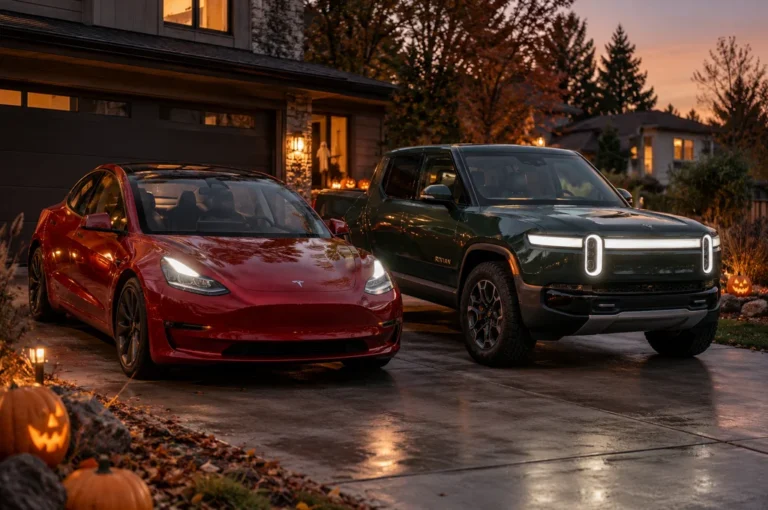
- Software Ecosystem: As shown in the Tesla vs Rivian: Inside the EV Software Rivalry and Halloween Showdown, over-the-air updates determine navigation fidelity, battery preconditioning speeds, and overall vehicle lifespan.
- Autonomous Hardware Build: Check the specific computer generation installed onboard. Older processor suites cannot support upcoming unsupervised autonomous networks.
- Insurance Premiums: Specialty electric models and vehicles packed with bumper cameras often carry higher collision premiums due to costly sensor replacement.
Prospective owners fascinated by performance history can even discover how design philosophy evolved, much like when enthusiasts learn you can now drive the Tesla Roadster in your browser for free. Every buying choice balances hardware longevity against digital upgrade capability.
Frequently Asked Questions
Why did Bank of America update its Tesla valuation model?
The bank revised its outlook after cumulative real-world autonomous fleet mileage doubled. This increase led analysts to project higher software monetization potential over the next decade.
How does the Tesla robotaxi forecast affect standard retail buyers?
The forecast indicates that future vehicle resale values may depend heavily on onboard autonomous computer capabilities. Cars equipped with advanced autonomous hardware could retain higher market value.
What is the primary difference between Tesla and Waymo autonomous platforms?
Tesla uses an optical camera approach without lidar to keep production costs down. Waymo relies on expensive multi-sensor arrays including lidar, radar, and high-precision mapping.
Did recent Cybercab testing accidents affect analyst sentiment?
Minor incidents during testing in Austin prompted debates regarding sensor redundancy. However, institutional analysts treat these occurrences as normal phases of real-world machine learning calibration.
How much does home EV charging cost compared to commercial fast chargers?
Residential off-peak charging generally costs between $0.10 and $0.16 per kWh. Public direct-current fast charging stations typically charge between $0.35 and $0.50 per kWh.
What is the typical battery lifespan of modern electric vehicles?
Current lithium-ion and lithium-iron-phosphate battery packs typically last between 150,000 and 300,000 miles before experiencing capacity degradation below 70 percent.
Why are municipal tax incentives like Fort Bend County important for EV growth?
Large-scale factory tax abatements reduce manufacturing overhead for electric automakers. These savings allow brands to construct high-volume production facilities and employ thousands of domestic workers.
Are private EV owners allowed to add their cars to autonomous ride-hailing networks?
Automakers plan to allow vehicle owners to share their cars on company fleets when idle. However, this model still requires commercial regulatory approval in almost all municipal jurisdictions.
How do software updates impact older electric vehicle performance?
Over-the-air updates optimize thermal efficiency, adjust braking profiles, and refine driver-assistance systems. However, older onboard microprocessors eventually reach processing limits for newer self-driving software builds.
Does cold weather permanently degrade an EV battery?
Cold weather temporarily decreases range by 20 to 30 percent due to cabin heating and chemical resistance in battery cells. Once temperatures normalize, full standard range returns without lasting damage.
Strategic Fleet Decisions and Long-Term Market Impact
Financial revisions from major brokerages underscore how rapidly software models are displacing traditional automotive manufacturing benchmarks. As commercial data collection expands, the updated Tesla robotaxi forecast demonstrates that real-world operational testing will dictate electric vehicle leadership over the next decade.
Source: Yahoo Finance Singapore (sg[dot]finance[dot]yahoo[dot]com)