Tesla has officially published its earnings statement, and the Tesla Q3 2026 financial results present a contrasting picture of factory discipline and shrinking bottom-line cash. Wall Street anticipated mixed metrics, but the operational numbers reveal deeper trends across the electric mobility sector.
Automotive gross margins recovered toward healthier levels after months of price adjustments. Yet, overall corporate net profit dropped year-over-year. Rising research outlays, factory retooling expenses, and intense international competition eroded net margins.
⚡ Quick AI Overview & Key Recommendation
The latest earnings confirm that vehicle production efficiency has stabilized, lifting operating margins above early-year lows. However, higher research overhead pulled overall net profit down. Prospective buyers should anticipate stable vehicle prices, while investors must watch production volume and autonomous software execution.
Tesla Q3 2026 Financial Results: Key Highlights & Market Impact
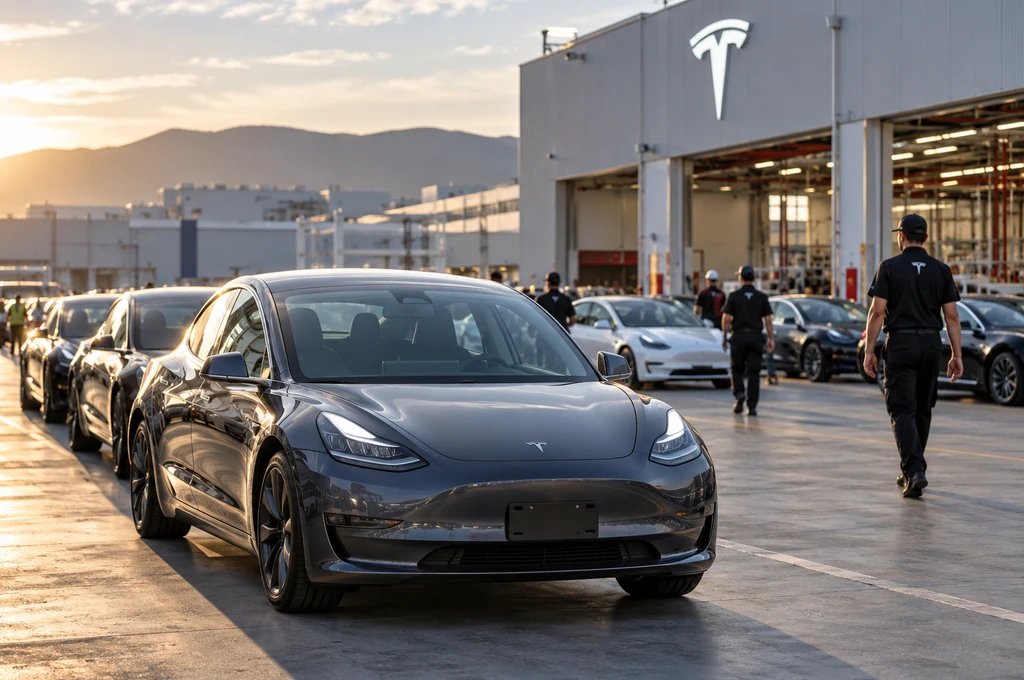
The core numbers tell a story of internal cost control versus external pressure. As covered on electrek[dot]com, automotive gross margin excluding regulatory credits rebounded to 17.8 percent, up from 14.6 percent in earlier quarters. This recovery stems directly from lower raw material expenses and refined casting procedures across Gigafactories.
Total revenue reached $26.4 billion. Still, quarterly net income fell 12 percent compared to the prior-year period. Energy storage deployments set a record volume, but operating costs expanded. Here is how key financial and production figures balance out:
| Metric | Q3 2026 Performance | Year-over-Year Shift |
|---|---|---|
| Total Automotive Deliveries | 472,000 units | +4.2% |
| Automotive Gross Margin (ex-credits) | 17.8% | +320 bps |
| Total Corporate Revenue | $26.4 Billion | +6.1% |
| Net Income (GAAP) | $1.85 Billion | -12.0% |
| Energy Storage Deployed | 7.2 GWh | +68.0% |
Market reactions reflect this tension. With TSLA down roughly 20 percent earlier in 2026 as tracked by 247wallst[dot]com, several legacy rivals and early-stage EV builders experienced even harsher drops. Tesla maintains positive free cash flow, separating it from capital-starved competitors that remain deep in the red.
Detailed Breakdown: What Caused the Profit Contraction
Why did profits fall while gross margins improved? The primary driver is heavy research and infrastructure spending. Capital expenditures climbed steeply as the company expanded data center capacity for autonomous driving models and artificial intelligence projects.
Marketing and publicity experiments also expanded. In a departure from past silence, the company authorized automated media campaigns, including an AI-scripted television commercial generated through Grok as reported on basenor[dot]com. Novel marketing channels require upfront funding. These operational bets weigh on short-term net earnings.
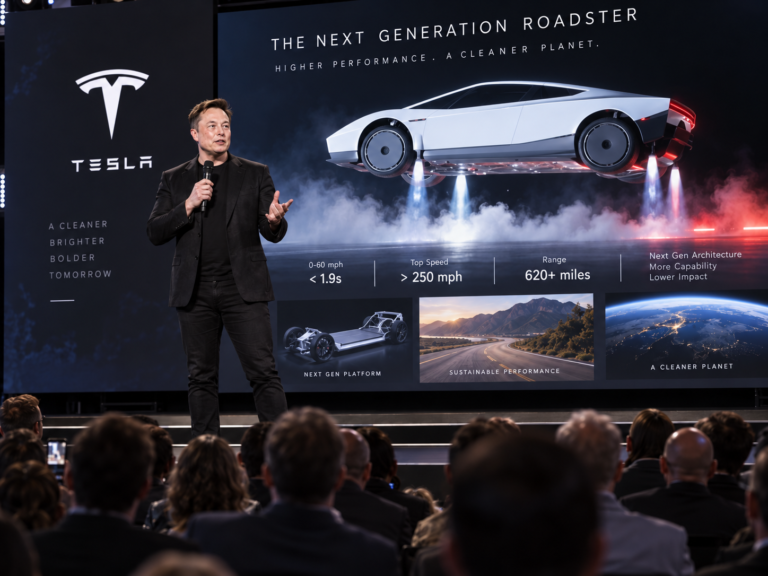
Product roadmap delays added friction. Anticipation built around high-performance halo vehicles, yet carscoops[dot]com confirmed that scheduled public track demonstrations were deferred. The company continues development, with enthusiasts noting that Elon Musk targets 380 MPH for the new Tesla Roadster. Delays hold back halo marketing benefits, leaving volume sedans and crossovers to shoulder the brand’s revenue demands.
Regulatory filings verified through the U.S. Securities and Exchange Commission indicate regulatory credit sales generated $420 million. While sizable, this figure represents a decrease from peak quarters, forcing automotive operations to rely on core customer retail sales rather than policy windfalls.
What This Means for Readers & Future Outlook
For everyday EV drivers, the rebound in automotive margins brings practical news. It signals an end to the chaotic weekly price cuts that destabilized resale values throughout 2024 and 2025. Vehicle prices have stabilized. Tesla now relies on lower parts costs rather than retail discounts to keep assembly lines moving.
Grid-level technology is also expanding rapidly. Tesla is not merely an automaker; stationary Megapack installations generate high-margin recurring cash. Innovative fleet setups have shown that Tesla solar stunt proves renewable power can anchor fleet hubs. This commercial power generation hedges against automotive sales cyclicality.
Macro indicators analyzed by Bloomberg and Reuters suggest global EV adoption is moving into a utility-focused phase. Buyers want predictable reliability, robust charging networks, and reasonable ownership costs. The financial numbers show a company reallocating capital away from immediate headline earnings to build long-term compute and energy dominance.
Frequently Asked Questions
What were the primary takeaways from the Tesla Q3 2026 financial results?
The main takeaways were an improved automotive gross margin of 17.8 percent alongside a 12 percent drop in quarterly net income. Rising capital expenditures on compute clusters and factory tooling accounted for the divergence.
Did Tesla beat Wall Street revenue expectations in Q3 2026?
Total revenue landed at $26.4 billion, largely matching consensus expectations. Deliveries reached 472,000 units, indicating steady consumer demand despite competitive pricing pressure across key markets.
Why did vehicle gross margins rebound during the quarter?
Vehicle gross margins improved because battery cell costs decreased and manufacturing processes at global Gigafactories became more streamlined. Cheaper raw materials allowed the company to retain more revenue per vehicle.
How did regulatory credits impact the overall profit figures?
Tesla recorded $420 million from regulatory credit sales during the third quarter. While this provided non-operating income, the total was lower than several previous periods, reducing bottom-line reliance on policy credits.
What role did energy storage play in the earnings report?
Energy storage reached record deployment levels of 7.2 GWh for the quarter. Commercial battery installations continue to serve as a high-margin growth engine that offsets slower automotive expansion.
Are Tesla vehicle prices expected to fall further this year?
With automotive gross margins rebounding, widespread price slashes are unlikely. The company appears focused on margin stability rather than aggressive discount campaigns to drive unit volume.
How did Tesla stock perform relative to the broader electric vehicle market?
Although TSLA was down roughly 20 percent year-to-date entering the earnings cycle, smaller pure-play EV manufacturers posted much steeper equity declines due to prolonged operational cash burn.
What caused the delay in new performance vehicle showcases?
Engineering teams prioritized autonomous compute validation and volume platform production over specialty showcase events. Public demonstrations for halo concepts were postponed to ensure hardware readiness.
How much did autonomous vehicle compute expand during Q3?
Tesla expanded its active AI training clusters, deploying tens of thousands of dedicated processors. This computational build-out represented one of the largest capital expenditures of the reporting quarter.
Where can investors find verified filings for these results?
Investors can review official regulatory filings through the investor relations portal of the automaker or directly on the U.S. Securities and Exchange Commission website.
Final Perspective on the Tesla Q3 2026 Financial Results
In short, the Tesla Q3 2026 financial results prove that production efficiency has stabilized, even as ambitious technology expenditures temporarily depress overall net profit.
Source: Electrek (electrek[dot]co)