
The Jaguar Type 01 electric car represents a total reinvention for the historic British marque, abandoning mainstream volume to pursue the ultra-luxury segment. First revealed through design publications such as dezeen[dot]com, the concept signals a complete departure from past styling cues in favor of monolithic geometry and bespoke electric architecture.
This shift did not happen in a vacuum. Legacy carmakers face brutal headwinds in battery technology and software integration. Instead of competing directly with mid-tier executive saloons, Jaguar management decided to jump straight into the rarefied price tier occupied by Bentley and Porsche. Reporting from financial outlets like Bloomberg indicates that profitability per unit, rather than raw sales volume, now dictates corporate survival in the premium sector.
Jaguar Type 01 Electric Car: Key Highlights & Market Impact
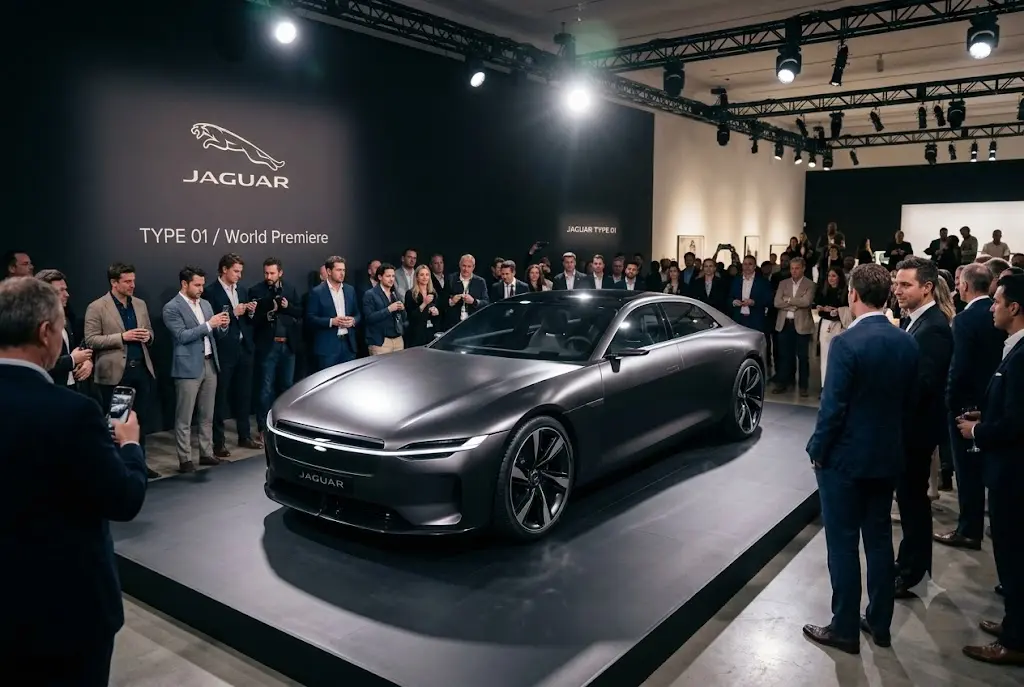
The unveiling of the concept confirms several radical design departures. Gone is the traditional leaping cat on the radiator grille. In its place sits an austere front profile dominated by flush surfaces, ultra-slim lighting signatures, and an extended bonnet proportion that mimics historic grand tourers.
Here is what defines the vehicle:
- Radical Proportions: A long wheelbase paired with a low roofline and imposing rear haunches.
- Bespoke Architecture: Built on the dedicated Jaguar Electrified Architecture (JEA), eliminating shared platforms.
- Ultra-Luxury Pricing: Positioned in the six-figure bracket, far above previous models like the I-Pace.
- Minimalist Exterior: Flush glass, absence of a traditional rear window, and geometric brass exterior accents.
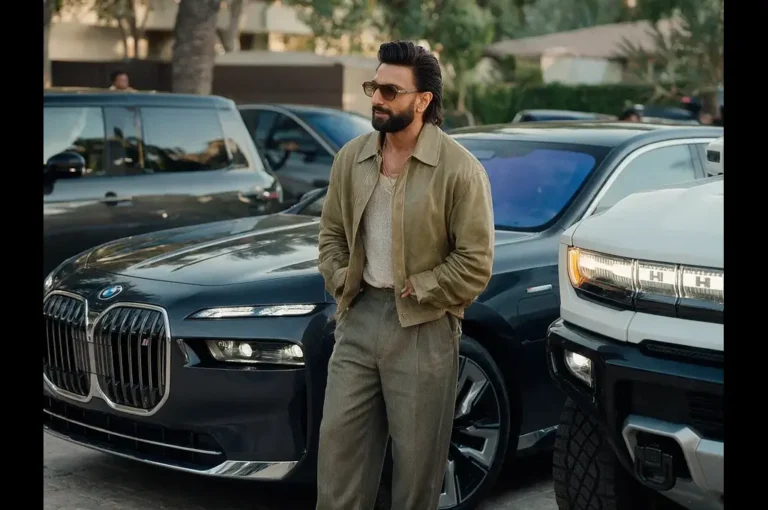
On paper, this sounds risky. In reality, it changes the balance for the entire brand. Industry watchers at Reuters note that premium electric buyers increasingly demand bespoke exclusivity rather than badge familiarity. While high-profile buyers in expanding markets embrace diverse flagships—such as actor Ranveer Singh adding a BMW i7 to his stable alongside a Hummer EV, as noted by ndtv[dot]com—the broader luxury electric market in India and East Asia marks steady growth, according to tracking by deccan-chronicle[dot]com. Jaguar intends to capture that exact tier with the production version of the Jaguar Type 01 electric car.
| Feature | Previous Strategy (I-Pace Era) | New Type 01 Direction |
|---|---|---|
| Market Segment | Premium Executive SUV | Ultra-Luxury Grand Tourer |
| Target Price Bracket | $70,000 – $90,000 | $125,000+ |
| Platform | Modified bespoke aluminum | Dedicated JEA architecture |
| Design Language | Organic curves, classic oval grille | Geometric, monolithic, grille-less |
Detailed Breakdown: What Caused Jaguar’s Radical Pivot
Why did Jaguar abandon its existing customer base? The answer lies in simple commercial arithmetic. The brand struggled for over a decade to match the manufacturing scale of German rivals. Competing against the BMW 3 Series or Mercedes-Benz E-Class drained financial capital while yielding razor-thin margins.
Catalan news outlet diariara[dot]com framed the move bluntly: Jaguar tries to be reborn with an expensive and disruptive electric car because the middle ground has disappeared. Mass-market brands dominate mainstream electric mobility, while new luxury platforms capture fat profit margins. As urban infrastructure advances—with initiatives ensuring on-street electric car charging to get cheaper in Brighton and Hove and across Europe—charging confidence is rising. Yet buyers spending six figures care less about charger access and far more about unmistakable visual distinction.
The Jaguar Type 01 electric car serves as the tip of the spear for this complete institutional overhaul. The design team eliminated nearly every heritage motif. The car looks striking, strange, and distinctly architectural. It draws polarizing reactions, which is precisely what the design chiefs intended.
What This Means for Readers & Future Outlook
For drivers and automotive enthusiasts, the transition reveals a bifurcated market. At the lower end, fleet vehicles and accessible passenger haulers battle for incentives. Meanwhile, ultra-luxury manufacturers build rolling tech statements that double as mobile power hubs. Many new electric flagships incorporate bidirectional hardware, a topic explored in depth in our guide on outage-ready electric cars.
Can Jaguar pull off this leap? The hurdles are formidable. Building exotic bodywork is one thing; mastering proprietary software, high-voltage battery density, and long-range efficiency is quite another. If the production variant of the Jaguar Type 01 electric car retains the striking presence of the concept, it will redefine British automotive identity for the next quarter-century.
Frequently Asked Questions
What is the Jaguar Type 01 electric car?
The Jaguar Type 01 electric car is an ultra-luxury electric design concept that defines Jaguar’s complete brand reboot. It features monolithic styling, radical proportions, and an entirely new corporate visual identity.
When was the concept revealed?
The concept was unveiled at Miami Art Week, followed by comprehensive global coverage across architecture and design publications like dezeen[dot]com.
What platform underpins the Jaguar Type 01?
The vehicle is built on the Jaguar Electrified Architecture (JEA). This dedicated high-voltage platform is exclusive to the next generation of Jaguar models.
How much will the production version cost?
Official pricing is expected to start above £100,000 or roughly $130,000. This places the vehicle squarely in ultra-luxury territory alongside Bentley and higher-tier Porsche models.
Does the car feature a rear window?
No, the concept eliminates a traditional glass rear screen. The design relies entirely on digital camera feeds and roof-mounted optical sensors for rearward visibility.
Why did Jaguar abandon its previous styling language?
Jaguar chose to break away from retro-modern styling to escape commercial stagnation. Management wanted a disruptive look that positions the brand as an avant-garde design house rather than a volume manufacturer.
What is the expected electric driving range?
Jaguar targets a driving range exceeding 400 miles on a single charge. The architecture also supports ultra-fast DC charging to restore long-distance range in under twenty minutes.
Will the leaping cat badge appear on the car?
The leaping cat emblem has been removed from the exterior body panels. The company has replaced it with minimalist brass accents and a stylized new wordmark.
When will customer deliveries begin?
Production models derived from the Type 01 concept are scheduled to reach private buyers in 2026. Prototypes are currently undergoing physical road testing in Europe.
How does this fit into Jaguar Land Rover strategy?
Parent company JLR is dividing its brands into distinct houses of luxury: Range Rover, Defender, Discovery, and Jaguar. Jaguar will occupy the most creative, high-priced artistic tier among them.
Final Verdict on the Jaguar Transformation
The arrival of the Jaguar Type 01 electric car proves that timid half-measures are dead in the premium auto market. By shedding decades of retro styling for uncompromising, geometric luxury, Jaguar has taken the biggest commercial gamble in its history. Whether traditionalists approve or complain matters very little. The brand has reclaimed global attention, and the real test will begin the moment production wheels touch customer driveways.
Source: Dezeen (dezeen[dot]com)