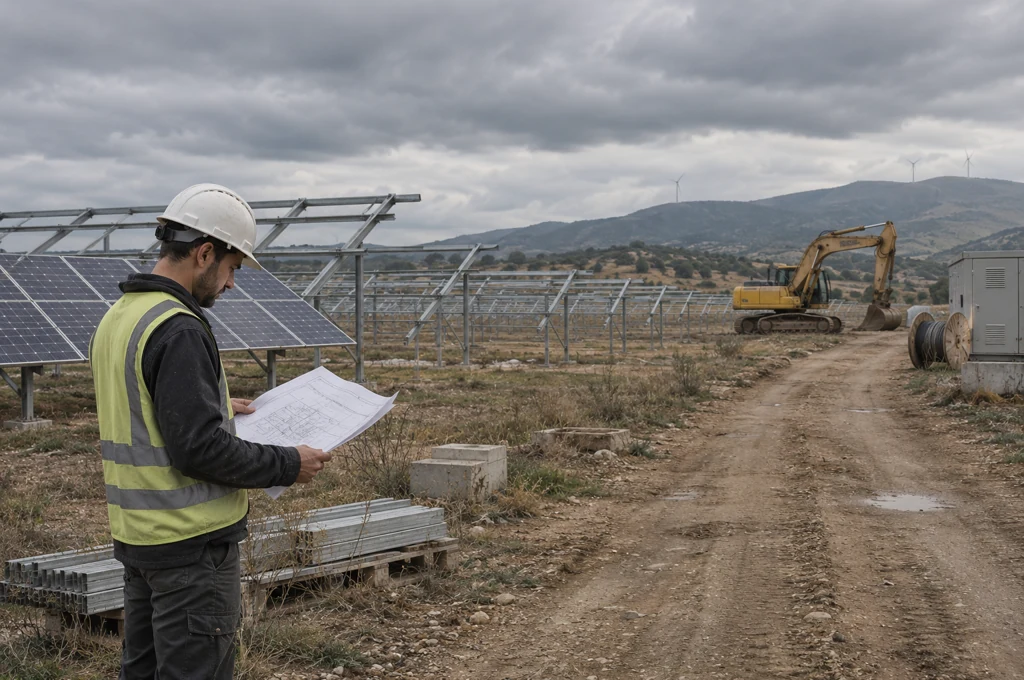
Renewable energy ambitions often clash with the slow, gritty reality of physical logistics. A recent report from Daily Excelsior reveals a significant slowdown in a major Hybrid Solar Park initiative. The project, initially announced with high hopes, has hit a wall. No visible progress has been made for months. This stagnation highlights the complex challenges facing large-scale solar infrastructure development in the region.
⚡ Quick AI Overview & Key Recommendation
The stalled Hybrid Solar Park project faces prolonged delays due to unresolved land acquisition issues, a critical bottleneck that has halted construction for months and threatens regional renewable energy targets.
Hybrid Solar Park: Key Highlights & Market Impact
On paper, the concept of a Hybrid Solar Park sounds clean. It combines solar photovoltaic (PV) power generation with battery energy storage systems (BESS). This setup maximizes efficiency and provides a stable power output, unlike standard solar farms that fluctuate with the sun. However, the Daily Excelsior report suggests the physical reality is far from this ideal. The announcement date has come and gone without a single spade of earth turning.
This lack of progress sends ripples through the broader renewable energy market. Investors and stakeholders are watching closely. When a high-profile Hybrid Solar Park fails to move, it creates uncertainty. It signals that land acquisition—a notoriously difficult phase in energy infrastructure—can completely halt momentum. The market impact is immediate. It raises questions about the reliability of project timelines and the administrative efficiency of current green energy policies.
Furthermore, the delay affects the local ecosystem of suppliers and labor. Construction companies and specialized contractors have likely paused operations or sought other engagements. This idle time costs money and expertise. For the industry, this serves as a cautionary tale. It proves that without clear land titles and administrative clearances, ambitious renewable targets remain just that—targets.
Detailed Breakdown: What Caused Hybrid Solar Park Delays?
Why does a Hybrid Solar Park face months of stagnation? The answer lies in the core component of the project: the land. Solar parks require vast tracts of land. This is non-negotiable. Without the physical space to install panels and storage units, the project cannot function. The Daily Excelsior report points directly to this friction point. The legal hurdles associated with acquiring this land have proven insurmountable for the time being.
Land acquisition is rarely simple. It involves navigating complex property laws, resolving ownership disputes, and compensating current occupants. In many cases, the government or developer faces resistance from local communities or landowners who are unwilling to sell. This legal and social negotiation process takes time. It cannot be rushed. Consequently, the timeline for the Hybrid Solar Park has been pushed back repeatedly.
Another contributing factor is the regulatory environment. While the intent is to build a Hybrid Solar Park, the bureaucratic machinery required to approve the land use, environmental clearances, and grid connectivity can be incredibly slow. Each approval is a separate hurdle. If one agency delays its decision, the entire project stalls. This bureaucratic maze creates a perfect storm for delays.
What This Means for Readers & Future Outlook
For the average reader, a stalled Hybrid Solar Park might seem like distant news. However, it impacts everyone. It delays the transition to cleaner energy. It keeps the region dependent on fossil fuels for longer than necessary. It also affects the local economy, which could have benefited from the jobs and investment associated with such a large infrastructure project.
The future outlook for this specific Hybrid Solar Park remains cloudy. It will likely require a renewed push from the administration to resolve the land issues. Without a breakthrough, the project remains on the drawing board. The industry is watching to see if this becomes a pattern or an isolated incident. The Hybrid Solar Park serves as a real-time case study in the difficulties of scaling up green energy.
| Project Component | Current Status | Primary Challenge |
|---|---|---|
| Hybrid Solar Park Concept | Announced | Project Definition |
| Land Acquisition | Stalled | Legal & Ownership Disputes |
| Construction | No Progress | Land Clearance |
| Grid Connection | Not Started | Infrastructure Readiness |
The broader industry is adapting. Developers are becoming more cautious. They are prioritizing projects with guaranteed land access. The Hybrid Solar Park saga is a stark reminder that technology is only half the battle. The other half is the physical and legal framework that supports it. Until this framework is solid, the dream of a massive Hybrid Solar Park will remain out of reach.
Frequently Asked Questions
Why has the Hybrid Solar Park project stalled?
The project has stalled primarily due to unresolved land acquisition issues, which are a critical prerequisite for any solar infrastructure development.
What is a Hybrid Solar Park?
A Hybrid Solar Park is a renewable energy facility that combines solar photovoltaic (PV) power generation with battery energy storage systems (BESS).
How long has no progress been made on the project?
Reports indicate that no visible progress has been made on the project for several months following its initial announcement.
What is the main hurdle for solar energy projects like this?
The main hurdle is typically land acquisition, involving legal complexities, property rights, and environmental clearances.
How does a stalled project affect the local economy?
Stalled projects delay job creation and investment opportunities that would otherwise benefit the local economy during construction.
Can a Hybrid Solar Park operate without battery storage?
Technically yes, but a hybrid configuration specifically includes storage to smooth out power fluctuations and provide reliable energy output.
What role does the government play in these projects?
The government is responsible for approving land use, environmental clearances, and often provides incentives or subsidies to facilitate the project.
Are there other similar projects facing delays?
While specific details vary, land acquisition remains a common bottleneck for many large-scale renewable energy initiatives globally.
When might construction resume?
Construction can only resume once the land acquisition issues are legally resolved and all necessary administrative approvals are obtained.
What is the long-term impact of this delay?
The delay hinders the region’s ability to meet its renewable energy targets and slows down the transition to cleaner power sources.
Conclusion
The Hybrid Solar Park saga is a clear example of how ambition must contend with reality. While the technology exists, the logistics often fail. The land hurdle is a formidable wall. It stops the momentum cold. The industry must find faster, more efficient ways to secure land if it hopes to meet future energy demands.
Source: Daily Excelsior (dailyexcelsior[dot]com)