

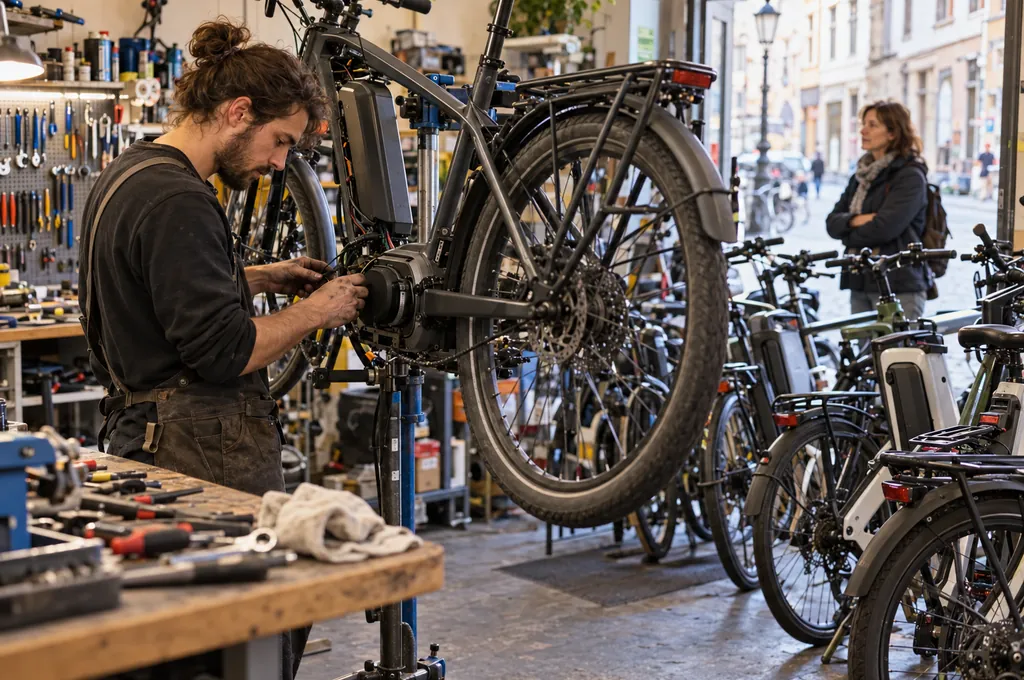
electric bicycle: The rapid boom of e-bikes in Europe has sparked an unintended crisis: millions of commuters now ride battery-powered cycles, yet repair shops lack qualified mechanics to service them. Municipal subsidies and expanded bike lanes convinced drivers to abandon their cars. Today, those same riders find themselves stuck in repair queues lasting up to eight weeks because standard bicycle workshops cannot handle high-voltage electrical diagnostics.
Reports highlighted by electrek[dot]com reveal that micro-mobility adoption has outpaced technical training across Germany, France, and the Netherlands. Bicycles are no longer purely mechanical devices made of steel cables and rubber. They are complex connected vehicles requiring digital calibration, firmware management, and specialized battery safety certifications.
electric bicycle: e-bikes in Europe: Key Highlights & Market Impact
Urban planners spent a decade convincing residents that pedal assist represents the future of personal transport. The campaign worked. Sales figures reported by Reuters demonstrate that electric models now outsell non-powered commuter bikes across multiple Northern European markets. Yet this triumph has created severe logistical friction behind workshop doors.
Traditional bike shops built their business models on quick turnarounds for flat tires and derailleur adjustments. Modern electric bikes break that model. A motor error code or proprietary battery management fault halts standard workflow. When a sensor fails, a technician cannot simply bend a piece of metal back into shape. They need diagnostic tablets and specialized software licenses from individual drive unit manufacturers.
| Metric / Feature | Traditional Bicycle | Modern Electric Commuter |
|---|---|---|
| Primary Failure Modes | Cables, flat tires, chain wear | Torque sensors, wiring harnesses, controller firmware |
| Diagnostic Equipment | Hand tools, truing stands | OBD cables, multimeters, manufacturer software |
| Average Repair Turnaround | 24 to 48 hours | 2 to 6 weeks |
| Technician Certification | General mechanical apprenticeship | High-voltage safety & electronic systems training |
When service infrastructure lags, rider safety drops. Unaddressed brake wear and electronic throttle malfunctions lead directly to road hazards. Mechanical negligence creates serious street dangers, a reality underscored by real-world collision analyses like the Electric Bike Crash in Indiana Borough: Safety and Liability Issues. Riders riding unserviced machinery expose themselves and pedestrians to preventable risks.
Detailed Breakdown: What Caused the Repair Bottleneck
Three distinct structural factors drove the European workshop backlog into an acute crisis:
- Proprietary Ecosystems: Drive unit manufacturers enforce closed diagnostic software. A workshop cannot service a mid-drive motor without explicit manufacturer authorization, proprietary cables, and expensive annual software fees.
- The Vocational Training Gap: European technical academies only recently introduced specialized e-bike credentials. The influx of new certified technicians will take three to five years to meet current street demand.
- Component Fragmentation: Supply chain data from Bloomberg shows that replacement electrical components face erratic distribution timelines compared to standardized mechanical parts.
Economic analyses published by Investopedia show that when capital investment surges into hardware sales without equal funding for downstream services, consumer friction inevitably follows. Urban commuters buy e-bikes in Europe to save transit time. Instead, an electrical glitch leaves their expensive vehicle sitting on a workshop rack for half the summer.
What This Means for Readers & Future Outlook
Riders must adapt their ownership habits to navigate this maintenance vacuum. Relying exclusively on neighborhood repair shops for minor electrical maintenance is no longer practical. Owners should learn basic multimeter testing, protect connectors against water intrusion, and maintain battery charge states between 20 percent and 80 percent to reduce hardware strain.
Fleet operators are responding by hiring in-house electrical technicians rather than outsourcing repairs. Consumer interest is also shifting toward modular, accessible hardware designs. Riders who prioritize alternative electric mobility options often monitor hardware sales like the EcoFlow DELTA 3 Classic Power Stations $889, Segway E-Scooter Sale to maintain backup personal power and short-range transit capability when their main cycle sits in maintenance limbo.
Frequently Asked Questions
Why is there a mechanic shortage for e-bikes in Europe?
Sales of electric bicycles grew faster than vocational schools could train certified electrical technicians. Modern models require digital diagnostics and high-voltage training that traditional bicycle mechanics do not possess.
How long do repair shops take to fix an electric bicycle?
Wait times currently range from two to eight weeks across major European cities. Delays stem from technician shortages and backlogged proprietary replacement parts from motor manufacturers.
Can a standard bicycle mechanic service an electric motor?
Standard mechanics can fix mechanical parts like chains, brakes, and tires. However, motor units and electronic controllers require proprietary software licenses and specialized technical certifications.
What components fail most frequently on commuter e-bikes?
Torque sensors, battery management systems, display wiring harnesses, and hydraulic brake pads wear out or malfunction most often. Electrical faults take far longer to diagnose than mechanical issues.
Are replacement parts standardized across different e-bike brands?
No. Drive unit manufacturers use proprietary communication protocols, wiring connectors, and diagnostic systems. This lack of standardization prevents independent workshops from stocking universal parts.
How are European vocational programs responding to the problem?
Institutes in Germany, the Netherlands, and France have established accredited micro-mobility technician courses. However, graduating enough certified professionals to clear the backlog will take several years.
Does self-repair void an e-bike warranty?
Opening the motor housing or tampering with battery wiring almost always voids manufacturer warranties. Owners can safely perform mechanical upkeep like chain lubrication, but electrical systems require authorized technicians.
How does poor maintenance affect rider safety?
Heavier electric bicycles put extreme stress on braking systems and tires. Unmaintained electrical systems can cause sudden motor cutouts in traffic or thermal runaway risks during charging.
What preventative steps can owners take to reduce repair visits?
Keep software updated, clean contact pins, avoid high-pressure water washing near electrical housings, and store batteries indoors at room temperature to minimize electronic failures.
Will European regulations force manufacturers to make parts more repairable?
Right-to-repair initiatives in the European Union are beginning to target micro-mobility devices. Future rules may force manufacturers to provide universal diagnostic tools and open access to spare parts.
The Path Forward for Urban Transit
The widespread adoption of e-bikes in Europe demonstrates that modern urban decarbonization works. However, vehicle deployment without sufficient maintenance infrastructure creates severe operational bottlenecks. Closing the technical skills gap is now the single most important task for sustaining the European micro-mobility revolution.
Source: Electrek (electrek[dot]co)