
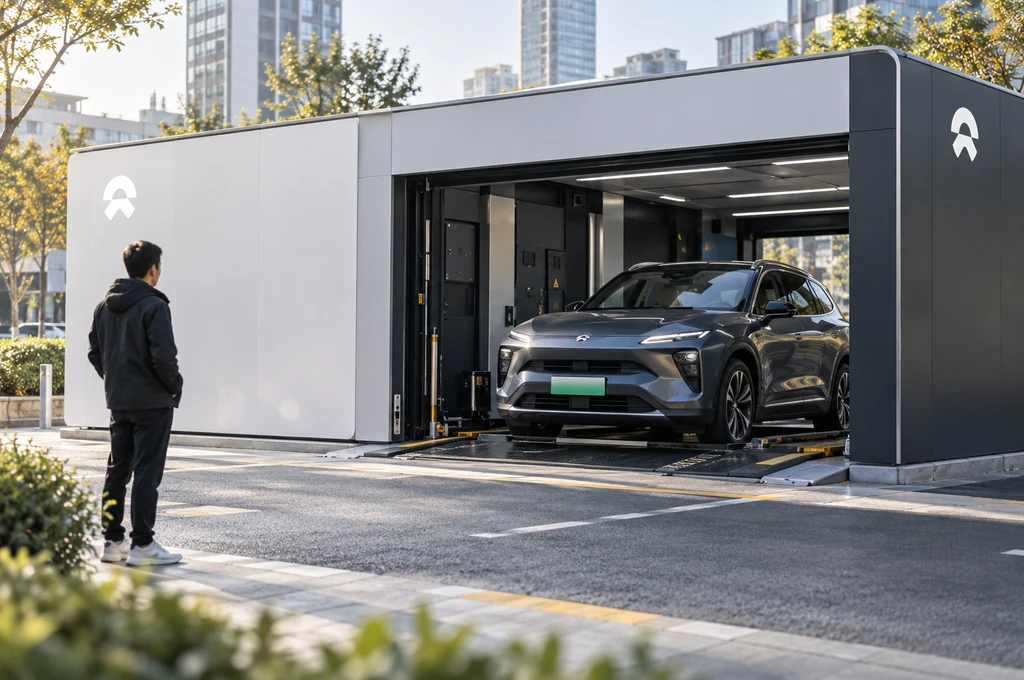
range anxiety: Nio completed 1.2 million battery swaps in a single week, proving battery swap technology can rival traditional refueling infrastructure at scale. The system handled the volume during a major holiday period. This performance challenges the dominance of charging networks in China.
range anxiety: Battery Swap: Key Highlights & Market Impact
Western markets obsess over charging speeds and range. Nio proves a different model works. The company hit a massive milestone last week. Over one million battery swaps happened in just seven days. That is a staggering number for any industry. It highlights the strength of the EV pioneer‘s infrastructure.
Here is the breakdown of why this matters. The swap stations operate with incredible efficiency. They turn around cars in minutes, not hours. This speed creates a user experience close to gasoline stations. It removes the biggest barrier to EV adoption: range anxiety. Drivers know their car will be ready when they arrive.
The event occurred during a peak travel period. Millions of people were on the move. Nio stations absorbed this surge without collapsing. This proves the system is robust. It is not just a novelty for early adopters. It is a reliable utility for the mass market.
Detailed Breakdown: What Caused This Surge?
Several factors drove this record-breaking week. First, the timing was critical. The event coincided with a major holiday in China. Demand for travel spiked across the country. Nio owners needed power to keep moving.
The network itself expanded to meet this demand. More stations mean less travel time for swaps. Drivers spend less time driving to a station and more time swapping batteries. The logistics of battery distribution also played a role. Nio manages a fleet of battery trucks. These trucks move charged batteries to stations before peak hours. This pre-positioning ensures stations are never empty.
Compare this to charging. A charging station requires the car to stay plugged in for 30 to 60 minutes. A swap station requires a driver to stop for five minutes. That is a massive efficiency difference. The electric car experience shifts from a chore to a convenience. The battery swap model solves the time cost of charging.
Another key driver is the subscription model. Nio owners pay a monthly fee for battery rights. This model encourages frequent use. Owners want to maximize the value of their subscription. They swap batteries whenever needed, rather than waiting for a home charge.
What This Means for Readers & Future Outlook
For the average driver, this news is significant. It shows that infrastructure can keep up with demand. The debate over EVs often centers on charging times. This milestone shifts the conversation. The focus moves to the *speed* of infrastructure deployment.
Western automakers have largely ignored battery swapping. They bet on charging networks. Nio took a different path. The success of the battery swap network suggests a third option. It offers a middle ground between slow charging and fast refueling.
However, challenges remain. Building a swap network requires massive capital. You need thousands of stations and millions of batteries. This is a heavy investment. It also requires a complex supply chain to manage battery logistics. Reuters and Bloomberg have noted the capital intensity of this model. Yet, the operational data speaks for itself.
The implications extend beyond Nio. Competitors are watching closely. If the model proves profitable and scalable, others may follow. It creates a new category of automotive infrastructure. This changes how we think about vehicle ownership.
Consider the environmental impact. Swapping batteries allows for better recycling. Old batteries can be swapped out for new ones. The old batteries are then serviced and recycled. This creates a circular economy for energy storage. It extends the life of the battery pack.
The technology also allows for standardization. Nio uses a standardized battery pack. This makes swapping efficient. It removes the need for complex software to manage charging levels. A simple physical connection does the work.
Ultimately, this week proves a fundamental point. The future of mobility is diverse. There is no single solution for everyone. For some, charging at home is best. For others, fast charging stations are the answer. And for some, like Nio owners, battery swap is the superior choice.
| Feature | Traditional Charging | Battery Swap |
|---|---|---|
| Stop Duration | 30-60+ Minutes | 3-5 Minutes |
| Infrastructure Cost | High (Grid upgrades needed) | Very High (Stations & Fleet) |
| User Experience | Passive (Waiting) | Active (Quick Turnaround) |
| Scalability | High (Grid dependent) | High (Station dependent) |
FAQ
How many battery swaps did Nio complete last week?
Nio completed over 1.2 million battery swaps in a single week.
Why is battery swapping better than charging?
Battery swapping takes only a few minutes, whereas charging can take 30 to 60 minutes or longer.
What is the main advantage of the swap model?
The main advantage is speed and convenience, eliminating the need to wait for a charge.
Did this milestone happen during a specific event?
Yes, the milestone occurred during a major holiday period in China.
Is Nio the only company using this technology?
Currently, Nio is the primary global automaker utilizing a widespread battery swap network.
What happens to the old battery after a swap?
The old battery is removed from the car and sent for servicing, recycling, or reuse.
How does Nio ensure stations always have power?
Nio operates a fleet of battery trucks to transport charged batteries to stations before peak demand.
Is the battery swap process automated?
Yes, the process is highly automated and performed by robots.
Can any electric vehicle use Nio’s swap stations?
No, swap stations are designed exclusively for Nio vehicles.
Does swapping damage the battery?
No, the swap process is designed to be gentle on the battery and does not cause damage.
Frequently Asked Questions
How many battery swaps did Nio complete last week?
Nio completed over 1.2 million battery swaps in a single week.
Why is battery swapping better than charging?
Battery swapping takes only a few minutes, whereas charging can take 30 to 60 minutes or longer.
What is the main advantage of the swap model?
The main advantage is speed and convenience, eliminating the need to wait for a charge.
Did this milestone happen during a specific event?
Yes, the milestone occurred during a major holiday period in China.
Is Nio the only company using this technology?
Currently, Nio is the primary global automaker utilizing a widespread battery swap network.
What happens to the old battery after a swap?
The old battery is removed from the car and sent for servicing, recycling, or reuse.
How does Nio ensure stations always have power?
Nio operates a fleet of battery trucks to transport charged batteries to stations before peak demand.
Is the battery swap process automated?
Yes, the process is highly automated and performed by robots.
Can any electric vehicle use Nio’s swap stations?
No, swap stations are designed exclusively for Nio vehicles.
Does swapping damage the battery?
No, the swap process is designed to be gentle on the battery and does not cause damage.
Conclusion
This week’s record shows that battery swap works. It is a viable alternative to charging. The technology is ready for prime time.
Source: Electrek (electrek[dot]co)