
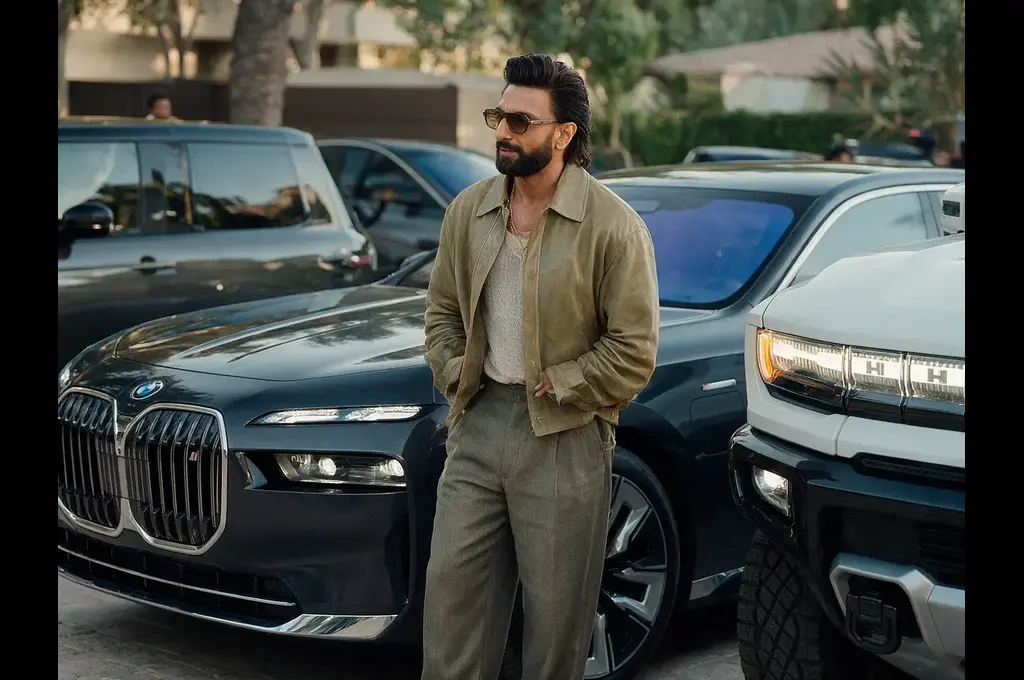
electric car: Bollywood actor Ranveer Singh buys BMW i7 luxury electric sedan to expand his garage, pairing the German flagship with his imported GMC Hummer EV. The acquisition makes the executive sedan the second battery-powered vehicle in his high-profile convoy. According to reporting from ndtv[dot]com, the actor opted for the brand’s top-tier electric saloon to handle daily city transit across Mumbai.
Automotive enthusiasts know the actor for his bold choices. He owns high-displacement performance SUVs, yet his garage is changing. Electric mobility is taking over celebrity motorcades. The transition is practical rather than ideological. High torque suits congested urban streets. Cabin insulation eliminates exterior noise. With the i7, Singh secures effortless acceleration wrapped in executive comfort.
electric car: Ranveer Singh Buys BMW i7: Key Highlights & Market Impact
When Ranveer Singh buys BMW i7 sedans for city transit, it signals a major shift in luxury transport priorities. Premium buyers no longer insist on loud V8 exhausts. The BMW i7 provides whisper-quiet operation without sacrificing status. Here is how the German electric flagship compares with his existing American electric super-truck:
| Vehicle Feature | BMW i7 xDrive60 | GMC Hummer EV |
|---|---|---|
| Body Style | Full-Size Luxury Sedan | Full-Size Electric Pickup / SUV |
| Battery Capacity | 101.7 kWh usable | 205 kWh usable |
| Power Output | 536 bhp | Up to 1,000 bhp |
| Claimed Range | Up to 625 km (WLTP) | Approx. 500 km (EPA) |
| Primary Role | Chauffeured Executive Travel | High-Impact Lifestyle Presence |
The contrast between the two machines is sharp. The Hummer EV is an imposing monster. It takes up two lanes and demands attention. The BMW i7 is an exercise in whisper-quiet poise. Its rear cabin features a 31.3-inch theater screen that drops down from the roof lining. For an actor commuting between studio sets, that lounge environment offers an unmatched mobile office.
Detailed Breakdown: What Caused the Luxury Electric Shift
The news that Ranveer Singh buys BMW i7 hardware reflects a broader shift among India’s elite car buyers. Coverage from deccannchronicle[dot]com notes that India’s luxury electric segment continues to mark steady growth year after year. Import tariffs remain steep, yet wealthy consumers continue to adopt premium clean mobility.
Traditional automotive dynasties are restructuring around this demand. British automaker Jaguar recently announced aggressive plans to transform its line into ultra-luxury electric models. Spanish outlet diariara[dot]com observed Jaguar’s effort to reinvent itself through disruptive electric design, even as The Independent reported that public reception to the radical rebrand drew mixed reactions across the United Kingdom. Automakers are betting their survival on electric flagships. BMW took a different path. It built the i7 on a shared architecture alongside the petrol 7 Series. That decision allowed traditional luxury car buyers to embrace electric power without feeling alienated by foreign ergonomics.
Economics also play a subtle role. Operating costs matter less to ultra-wealthy buyers, but vehicle smoothness and local driving regulations matter immensely. Trackers from electric vehicle sales trackers indicate steady gains in urban centers. As municipal charging stations expand, owning a high-voltage executive car becomes straightforward. Buyers studying long-term ownership trends also monitor luxury asset depreciation, where premium electric sedans are beginning to hold steady value due to low maintenance needs. Many modern owners even explore how battery systems interact with domestic power grids, as seen in Outage-Ready Electric Cars: How Vehicle-to-Home Power Is Redefining Grid Backup.
What This Means for Readers & Future Outlook
Now that Ranveer Singh buys BMW i7 mobility solutions, local buyers are taking note. Celebrity endorsements validate new powertrain tech faster than corporate marketing campaigns. When a movie star rides in an electric saloon, public perceptions shift immediately. Electric cars are no longer viewed merely as experimental commuter appliances.
Urban charging infrastructure is adjusting in response. High-density residential high-rises are installing dedicated fast chargers for residents. While premium cars dominate headlines, mass-market utility vehicles are also adopting clean drivetrains. Fleet buyers are seeing fresh options, such as the Kia PV5 Passenger 7-seat eligible for Electric Car Grant – Motor Trader. Global supply chains monitored through global automotive manufacturing show localized battery assembly reducing regional costs over time.
Every time Ranveer Singh buys BMW i7 engineering, attention turns to the charging habits of high-net-worth individuals. His garage shows that private buyers rarely depend on public roadside chargers. They charge overnight on dedicated home wallboxes. The transition from heavy petrol engines to dual electric motors is smooth, silent, and permanent.
Frequently Asked Questions
Which BMW i7 model did Ranveer Singh buy?
Ranveer Singh purchased the BMW i7 xDrive60 luxury electric sedan. The car features a dual-motor electric setup delivering 536 horsepower and standard all-wheel drive.
What is the price of the BMW i7 in India?
The BMW i7 starts at roughly 2.03 crore rupees ex-showroom in India. On-road prices typically cross 2.25 crore rupees depending on individual cabin customizations and state registration duties.
What was Ranveer Singh’s first electric car?
His first electric vehicle was the GMC Hummer EV pickup truck. That vehicle was imported privately to Mumbai as a left-hand drive display of electric performance.
What is the driving range of the BMW i7?
The BMW i7 features a 101.7 kWh lithium-ion battery pack. It provides an official driving range of up to 625 kilometers on the international WLTP test cycle.
How fast does the BMW i7 charge?
The electric sedan supports DC fast charging up to 195 kW. At that speed, the battery can replenish from 10 percent to 80 percent in approximately 34 minutes.
Does the BMW i7 have the theater screen feature?
Yes, the flagship sedan includes an optional 31.3-inch 8K panoramic theater screen that drops down from the ceiling. It offers rear passengers an integrated streaming entertainment system.
Why are Indian celebrities buying electric cars?
Celebrities choose luxury electric vehicles for immediate low-end torque, near-silent cabins, and zero tailpipe emissions. High-end electric sedans also offer supreme ride comfort for chauffeur-driven commutes.
Is the BMW i7 completely built in India?
No, BMW brings the i7 into the Indian market as a Completely Built Unit (CBU). This direct import status subjects the car to standard luxury vehicle customs duties.
How does the BMW i7 compare to the Mercedes-Benz EQS?
The BMW i7 focuses heavily on executive rear-seat luxury and classic proportions, while the Mercedes-Benz EQS emphasizes aerodynamic efficiency and front-cabin digital displays. Both compete directly in the top-tier luxury electric category.
What other luxury cars are in Ranveer Singh’s garage?
His collection includes a Lamborghini Urus, an Aston Martin Rapide S, a Mercedes-Maybach GLS 600, and his GMC Hummer EV. The BMW i7 provides a quiet, formal alternative for daily commutes.
Final Thoughts on the Growing Electric Luxury Segment
Ultimately, the report that Ranveer Singh buys BMW i7 vehicles points to a permanent shift in how cultural icons select their daily transport. High-end electric motoring delivers unmatched quietness, instant power delivery, and refined road manners that traditional combustion flagships cannot duplicate. As charging speeds improve and battery architectures mature, expect to see more flagship electric saloons replacing petrol V8s in prominent executive garages across the country.
Source: NDTV (ndtv[dot]com)