
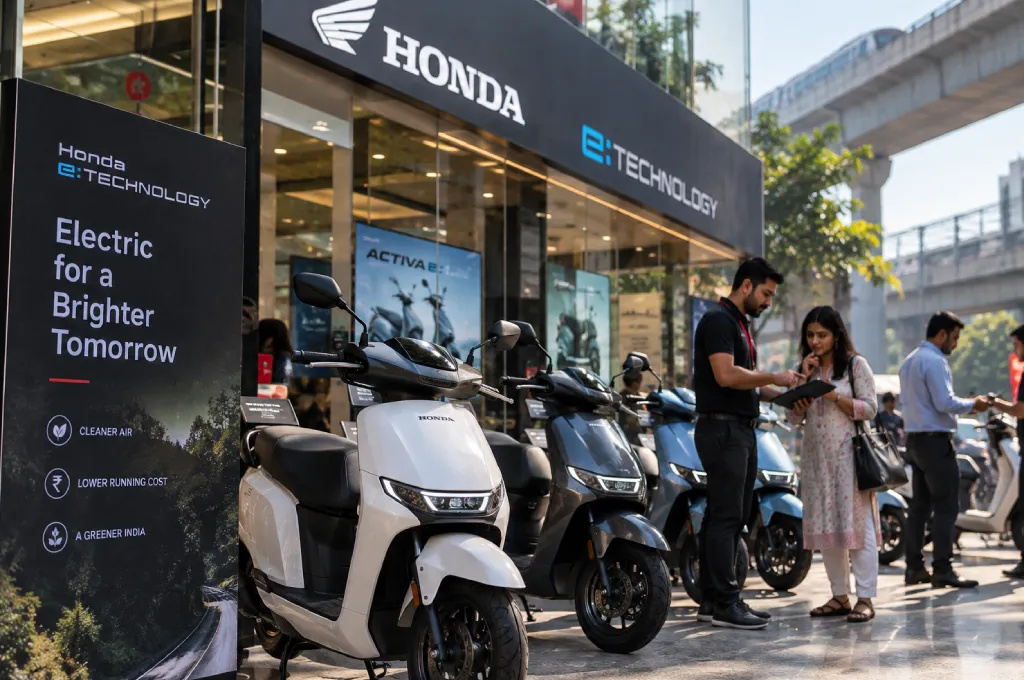
Japanese electric scooter sales in India have hit a major milestone. Honda, Suzuki and Yamaha e-scooter sales cross 10,000 units in 2026, a first for the combined group. This figure represents a significant shift in the Indian two-wheeler market. These manufacturers have delivered 10,735 units between January 1 and October 8, 2026, according to Vahan statistics. This total comes from just three companies. In 2025, Honda was the only Japanese manufacturer selling e-scooters in India. Now, with the entry of Suzuki and Yamaha, the competitive landscape is changing rapidly.
electric scooter: Honda Suzuki Yamaha e-scooter sales: Key Highlights & Market Impact
The 10,735 units sold represent a growing appetite for electric two-wheelers. Honda leads the charge with 5,536 units sold to date. That is 51 percent of the total Japanese e-scooter sales. Honda’s best month so far was September, when it sold 1,107 units. This is the first time the company has crossed the 1,000-unit mark in a single month. The recent launch of the QC3 model is likely driving this increase. The initial rollout of the QC3 is limited to five cities. These cities are Delhi, Agra, Cuttack, Surat and Kollam. A nationwide rollout is expected to follow in a phased manner.
Suzuki entered the market in January 2026 with the e-Access. This model is an electric version of the popular petrol Access 125. Yamaha followed two months later in March with the EC-O6. This makes 2026 the first full year where all three Japanese OEMs compete in the Indian electric scooter market. The collective sales of these three brands have now surpassed the 10,000-unit threshold. This data, sourced from Vahan, shows a consolidated effort by traditional automakers to compete with newer EV startups.
The market share distribution is interesting. Honda holds the lion’s share, but Suzuki and Yamaha are building momentum. The competition is heating up. This pressure will likely force prices down and improve technology. It is a win for the consumer. The Indian electric scooter market is no longer the sole domain of startups. It is becoming a battleground for established global giants.
| OEM | Sales (Jan-Oct 2026) | Share |
|---|---|---|
| Honda | 5,536 units | 51% |
| Suzuki | ~4,199 units | ~39% |
| Yamaha | ~1,000 units | ~10% |
| Total | 10,735 units | 100% |
Detailed Breakdown: What Caused This Surge?
Several factors are driving this sales surge. The primary driver is the recent product launches. Honda’s QC3 has just launched. Suzuki’s e-Access has been on the market since January. Yamaha’s EC-O6 arrived in March. These are not just small upgrades. They are competitive products aimed at the mass market. The e-Access is a direct rival to the Honda Activa-e. The EC-O6 targets the same customer base looking for a reliable electric ride.
Infrastructure is improving. Charging networks are expanding across major Indian cities. This addresses a major pain point for electric scooter owners. Range anxiety is still a concern, but it is diminishing. The availability of home charging solutions is also increasing. These factors make the Japanese electric scooters more attractive to the average commuter.
Consumer perception is also shifting. People are becoming more familiar with electric vehicles. They are seeing them as viable alternatives to petrol scooters. The Japanese brands offer a level of reliability and service network that startups sometimes lack. This trust factor is significant in the Indian market. The entry of these three giants validates the electric scooter segment. It proves there is a sustainable market for electric two-wheelers.
The timing is also right. The Indian government continues to promote electric mobility. Incentives and subsidies are available for buyers. This lowers the initial cost of ownership. It makes the switch to electric more financially appealing. The combined sales of 10,735 units is a strong start. It suggests that the Japanese automakers are serious about this segment. They are not just experimenting. They are building a market presence.
What This Means for Readers & Future Outlook
For the average buyer, this is good news. Increased competition usually leads to better prices and features. You can expect more options in the coming months. The Japanese manufacturers are likely to expand their product lines. We may see new models with longer ranges and faster charging speeds. The price war could intensify. This could make electric scooters even more accessible.
For the industry, this marks a new era. The dominance of startups is being challenged. The established players have the resources to invest heavily. They have the distribution networks. They have the brand loyalty. This will force startups to innovate faster. It will push the entire industry forward. The focus will shift from just selling scooters to building a complete ecosystem.
Looking ahead, the sales numbers are only going to grow. The cumulative sales for the year will likely double. The 10,000-unit mark is just the beginning. As infrastructure improves and prices come down, adoption will accelerate. The Indian electric scooter market is poised for explosive growth. The Japanese manufacturers are well-positioned to capture a large share of this growth. They bring stability and quality to the segment. This is a positive development for the future of electric mobility in India.
Frequently Asked Questions
How many electric scooters did Honda, Suzuki, and Yamaha sell in 2026?
Combined retail sales for Honda, Suzuki, and Yamaha e-scooters in India crossed 10,735 units between January 1 and October 8, 2026.
Which Japanese company sold the most e-scooters in India in 2026?
Honda sold the most units with 5,536, accounting for 51 percent of the total Japanese e-scooter sales in India during this period.
What models are driving these sales figures?
Honda’s Activa-e and QC3 are key models, while Suzuki’s e-Access and Yamaha’s EC-O6 are the primary models contributing to the collective sales.
When did Suzuki and Yamaha enter the Indian e-scooter market?
Suzuki entered in January 2026 with the e-Access, and Yamaha followed two months later in March 2026 with the EC-O6.
Is the 10,000-unit sales figure a record for these brands?
Yes, this is the first time the combined sales of Honda, Suzuki, and Yamaha have crossed the 10,000-unit mark in a calendar year in India.
What is the focus of Honda’s recent sales push?
Honda is focusing on its new QC3 model, which has a limited initial rollout in five cities before a phased nationwide launch.
How does this market growth impact Indian electric scooter buyers?
Increased competition from established brands like Honda, Suzuki, and Yamaha is expected to lead to better prices and more features for consumers.
What is the market share of the Japanese electric scooter manufacturers?
Honda holds a 51 percent share, Suzuki has approximately 39 percent, and Yamaha has about 10 percent of the total Japanese e-scooter market in India.
Where can I find more details on Indian EV regulations?
You can find detailed information on government regulations and incentives at authoritative sources like reuters[dot]com.
How can a buyer choose the right electric scooter in India?
Prospective buyers should consider their daily commute distance, charging infrastructure availability, and brand service network coverage.
Conclusion
The Japanese automakers are proving their electric mobility strategy. Honda, Suzuki and Yamaha e-scooter sales cross 10,000 units, showing strong demand for these reliable machines in India.
Source: Autocar India (autocarindia[dot]com)