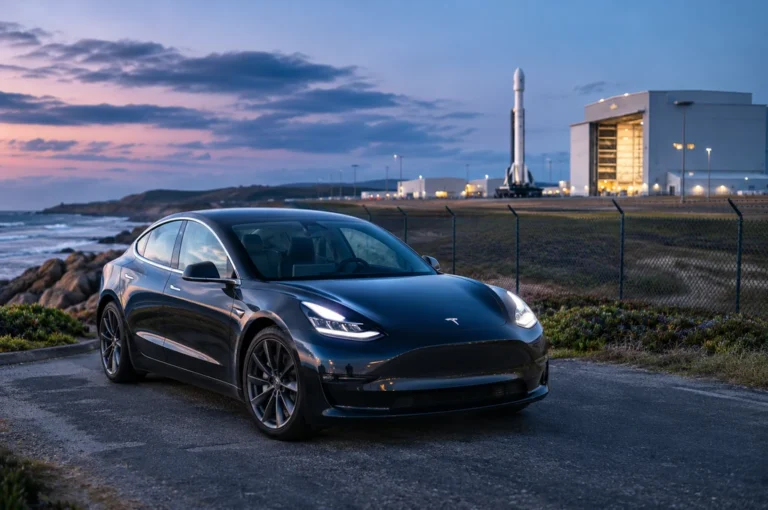


Choosing between Tesla or SpaceX stock presents investors with a fundamental dilemma regarding liquidity, valuation, and industrial exposure. Wall Street analysts at motleyfool[dot]com frequently debate whether Elon Musk will combine his corporate empire into a single holding company. Such an event would redefine the electric vehicle sector by integrating space-grade communications directly into commercial automotive platforms.
⚡ Quick AI Overview & Key Recommendation
Retail investors seeking direct liquidity should buy Tesla today via public exchanges. Accompanying merger rumors offer speculative upside, but Tesla already monetizes vehicle hardware and energy storage. SpaceX requires accredited secondary market access. Therefore, Tesla remains the practical automotive investment vehicle right now.
Rumors of a corporate combination have circulated for years. Musk created X Holdings to streamline administrative control across his corporate assets. A unified entity could pool capital, share computational clusters, and consolidate battery research. According to filings reviewed by the U.S. Securities and Exchange Commission, public companies face rigorous reporting mandates that private startups often avoid. That administrative barrier makes a straightforward corporate tie-up complex.
Tesla or SpaceX Stock: Head-to-Head Specification Comparison
Investors must evaluate the operational mechanics of each business before committing capital. Tesla functions as an electric vehicle and clean energy manufacturer with public market liquidity. SpaceX operates as a launch services provider and satellite broadband operator financed through private funding rounds. The table below outlines how both enterprises compare across core investment metrics.
| Metric | Tesla (Public: TSLA) | SpaceX (Private Entity) |
|---|---|---|
| Core Business Model | EV manufacturing, software, stationary energy | Orbital rocket launches, Starlink satellite network |
| Market Valuation | Public market capitalization over $700 billion | Private secondary market valuation near $180 billion |
| Retail Accessibility | Available on major stock exchanges instantly | Restricted to accredited investors and venture funds |
| Automotive Synergy | Direct consumer sales, Supercharger network | Satellite data backhaul for fleet autonomy |
| Regulatory Scrutiny | High; quarterly 10-K and 10-Q reports | Moderate; private operations with FAA oversight |
Evaluating Tesla or SpaceX stock requires recognizing this structural divide. Tesla has transparent balance sheets, audited cash reserves, and public share pricing. SpaceX relies on private tender offers reported by financial outlets like Bloomberg. Retail buyers cannot purchase SpaceX equity without accredited status or specialized pre-IPO platforms.
Key Differences: Real-World Performance, Comfort & Features
Tesla and SpaceX share institutional engineering talent, but their balance sheets serve different markets. Tesla generates cash from volume automotive manufacturing. It delivered roughly 1.8 million passenger electric cars annually and produces battery packs at scale. Reports from Reuters show that automotive gross margins have compressed due to global price cuts, yet energy storage deployments continue to set records.
SpaceX depends on launch contracts and monthly subscription revenue from Starlink. The space venture uses specialized materials developed alongside automotive metallurgy teams. For example, stainless steel alloys engineered for Starship informed the external panels of the Cybertruck. Even so, the operational risk profiles remain distinct.
Autonomous driving represents the real intersection between these companies. Unsupervised full self-driving demands high-bandwidth data transfers and reliable rural connectivity. If Tesla deploys purpose-built robotaxis, Starlink satellites could provide the remote connectivity foundation. Readers tracking commercial fleet developments can examine the Tesla Cybercab: The $29,990 Robotaxi Disrupting the EV Market for context on automated mobility architecture.
Capital allocation is another differentiator. Tesla funds its projects through operational cash flow and past capital raises. SpaceX reinvests capital into orbital launch infrastructure that generates returns over decades. A merger would force conservative automotive investors to absorb rocket development risks. Some institutional managers fear that folding SpaceX into Tesla would dilute automotive valuation multiples, while others view it as an opportunity to secure vertical technology dominance.
Final Buying Verdict: Which One Should You Buy?
Deciding whether to allocate capital into Tesla or SpaceX stock comes down to liquidity and time horizon. Speculating on an unannounced corporate merger is rarely a sound financial strategy. Both companies have distinct governance structures and corporate charters.
Buy Tesla stock if:
- You want liquid public shares that you can buy or sell instantly through standard brokerage accounts.
- You believe in electric vehicle adoption, home energy storage expansion, and autonomous fleet monetization.
- You prefer audited financial statements and quarterly earnings disclosures.
Pursue SpaceX shares if:
- You are an accredited investor with access to vetted secondary marketplaces.
- You seek direct exposure to orbital launch infrastructure and broadband satellite coverage.
- You are comfortable holding private securities without daily market pricing.
For investors weighing long-term technology themes, holding public automotive equity remains the practical path. Those assessing long-range industrial prospects can review Tesla vs. SpaceX: The Only EV Stock to Hold Through 2030 for a deep examination of automotive cash flows. Furthermore, broader market analyses like SpaceX, Tesla and Anthropic may reshape the S&P 500—but not right away explain how capital markets treat high-growth private tech firms compared to established public automakers. Financial primers on Investopedia remind investors to evaluate balance sheet fundamentals rather than hypothetical mergers.
Frequently Asked Questions
Can retail investors buy SpaceX stock directly right now?
Retail investors cannot buy SpaceX stock on public exchanges because it remains a private corporation. Only accredited investors and venture capital funds can purchase shares through secondary tender offers.
Is a merger between Tesla and SpaceX officially confirmed?
No official merger proposal exists between Tesla and SpaceX. Market analysts and commentators speculate on potential parent holding companies, but neither corporate board has filed merger documents.
How would a merger affect current Tesla shareholders?
A merger would likely involve issuing new Tesla shares or debt to acquire SpaceX assets. This transaction could dilute existing equity while providing direct ownership in Starlink and commercial rocket contracts.
What is the primary revenue driver for Tesla today?
Tesla generates most of its revenue from electric vehicle sales and regulatory automotive credits. Stationary energy storage systems like the Megapack are growing rapidly as secondary income streams.
How does SpaceX make money?
SpaceX earns revenue by launching payloads for commercial satellite operators, NASA, and defense agencies. It also generates substantial recurring subscription revenue from its consumer and enterprise Starlink service.
Does SpaceX technology directly benefit Tesla electric vehicles?
Yes, engineers between both companies have shared material science research, including cold-rolled stainless steel alloys. Starlink connectivity also offers potential data backhaul for Tesla fleet software updates.
What are the risks of holding private SpaceX shares?
Private shares lack liquidity, meaning investors cannot sell their positions at will. Valuations are subject to internal pricing rounds, and private firms disclose far less financial data than public corporations.
Why does Elon Musk prefer to keep SpaceX private?
Musk has stated that public market quarterly earnings pressures conflict with long-term capital-intensive exploration goals. Keeping SpaceX private shields orbital development programs from short-term market speculation.
Are there public funds that offer indirect exposure to SpaceX?
Certain closed-end funds and venture trusts hold private SpaceX equity in their portfolios. However, these vehicles trade with management expense ratios and often hold other non-space assets.
Should investors buy Tesla or SpaceX stock for EV sector growth?
Tesla is the only option that directly tracks the electric vehicle and energy storage market. SpaceX offers aerospace and telecommunications exposure rather than clean transportation revenue.
Evaluating Your Investment in Musk’s Corporate Ecosystem
Allocating capital to Tesla or SpaceX stock requires assessing your risk tolerance and need for liquidity. While corporate restructuring rumors make for entertaining headlines, Tesla remains the only practical choice for everyday investors targeting the clean mobility transition. Do not base your investment thesis on speculative mergers; evaluate Tesla on its automotive margins, energy storage growth, and software execution.
Source: The Motley Fool (fool[dot]com)